
New Freightliner Dump Trucks For Sale
Shop new Freightliner dump trucks built for construction, aggregate, and municipal work, with M2 106 and 114SD options in single or tandem axle.
Selling a new freightliner dump truck? List your new freightliner dump truck for sale and reach thousands of commercial buyers.
New Freightliner Dump Trucks
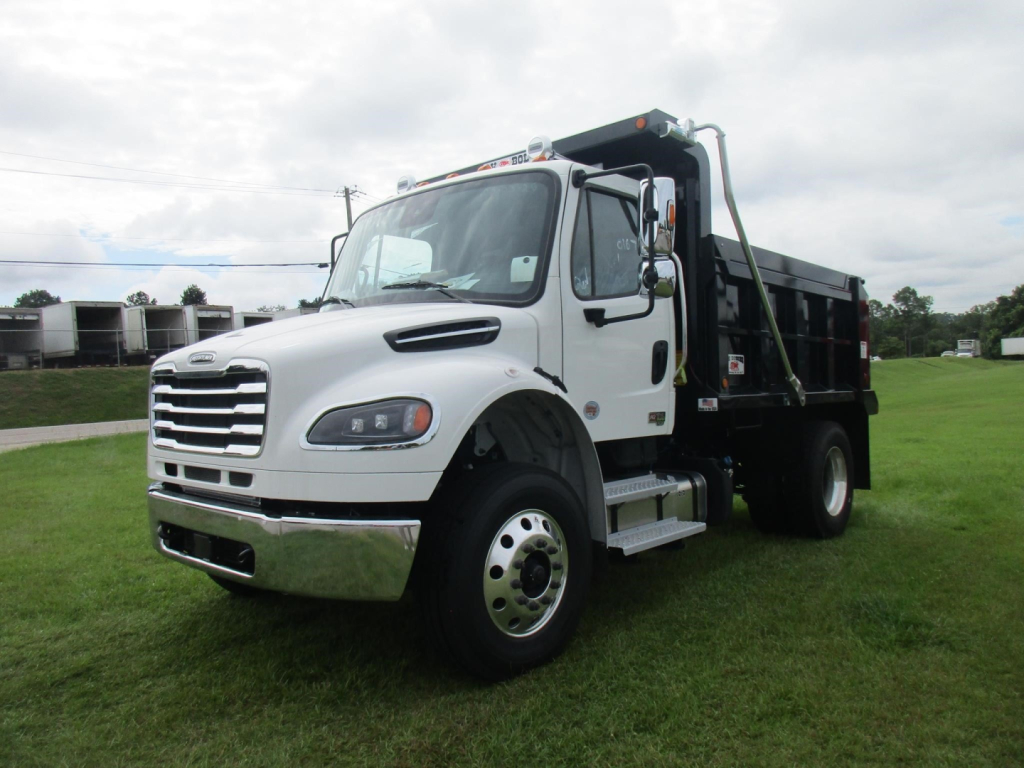
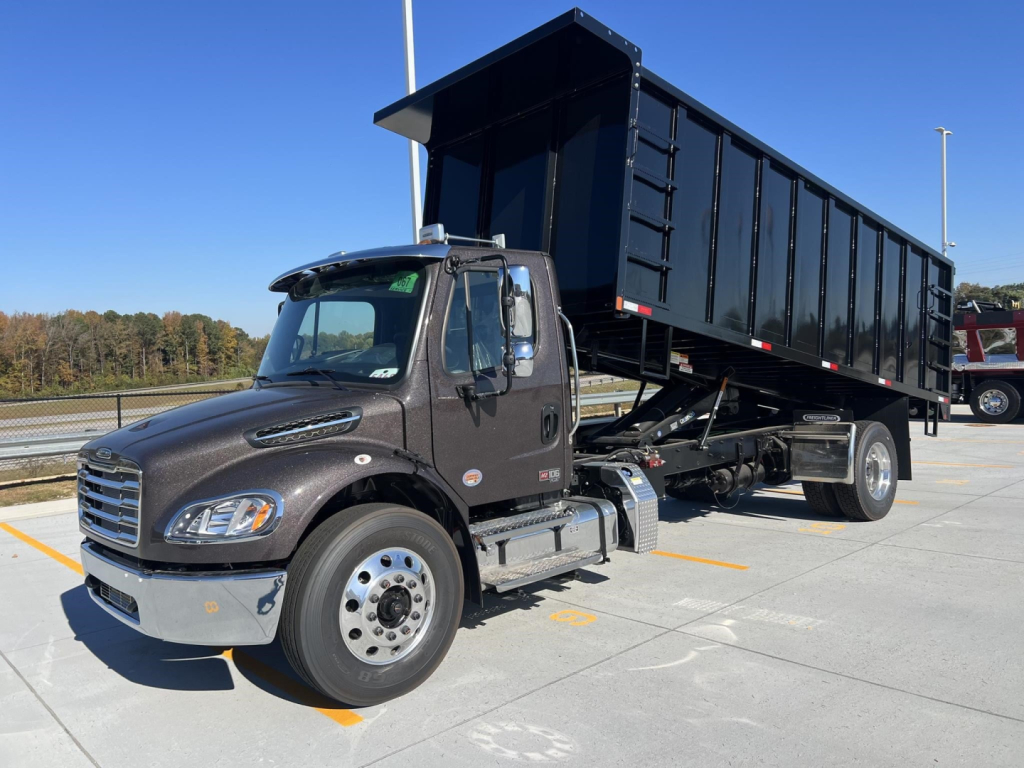
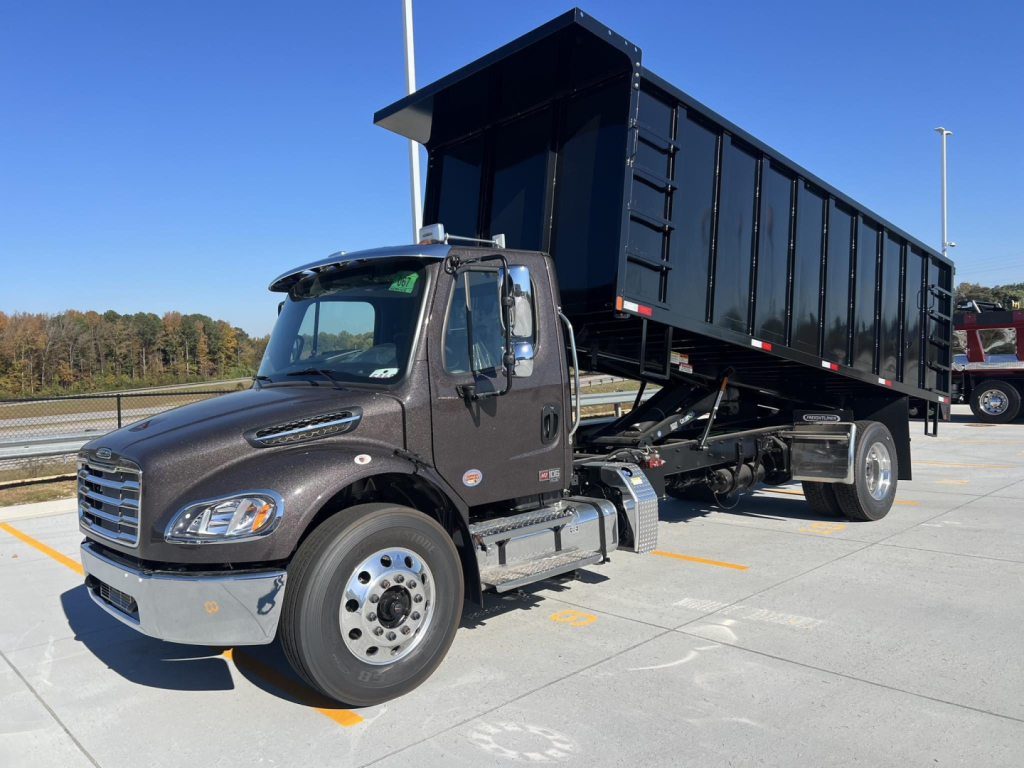
A big buying decision is single axle versus tandem axle. Single axle Freightliner dump trucks are often spec'd for tighter job sites, municipal routes, landscape supply, and smaller payload requirements. Common setups include Cummins B6.7 or L9 power, Allison RDS automatic transmissions, spring suspension, and rectangular steel dump bodies. Tandem axle 114SD models are built for heavier payloads and tougher terrain, often with a Detroit DD13, 6x4 drivetrain, 20,000-lb front axles, 40,000-lb to 46,000-lb rear axles, double frame rails, locking differentials, and body specs that support asphalt, demolition debris, rock, and wet material. Buyers comparing listings should pay close attention to axle ratings, wheelbase, rear ratio, suspension type, and body length because those specs drive payload, turning radius, bridge compliance, and how the truck performs with a paver, tag trailer, or full legal load.
Body and vocational details matter as much as the chassis. Many new Freightliner dump trucks are equipped with Warren, Ox Bodies, or similar contractor-grade bodies in steel construction, with options such as electric tarp systems, standard or high-lift gates, coal chutes, hitch packages, and backup camera prep. If the truck will spend time in asphalt service, insulated bodies are worth a close look. If it will handle abrasive aggregate or demolition, heavier floor thickness, reinforced side walls, and proper hoist capacity become more important. A short wheelbase truck can maneuver better in urban work, but a longer wheelbase may provide better body fit and weight distribution depending on body size and axle placement.
Freightliner's appeal in the dump segment comes from broad dealer support, familiar switchgear, straightforward service access, and proven vocational platforms that body installers know well. For many fleets, the right spec comes down to matching engine torque, automatic transmission calibration, suspension, and axle package to the material being hauled and the roads it runs every day. A Class 6 or Class 7 M2 106 can be an efficient fit for local material delivery and lighter construction duty, while a Class 8 114SD is better suited for severe-service work where durability, legal payload, and frame strength take priority.
Frequently Asked Questions about New Freightliner Dump Trucks
What is the difference between a Freightliner M2 106 dump truck and a Freightliner 114SD dump truck?
The Freightliner M2 106 is generally used for lighter to medium-duty dump applications, often in Class 6 or Class 7 configurations with single axles, shorter wheelbases, and engines such as the Cummins B6.7 or L9. The Freightliner 114SD is a heavier vocational platform built for severe-duty work, commonly in Class 8 tandem axle form with higher front and rear axle ratings, stronger frame options, and larger engines such as the Detroit DD13. Buyers hauling dense aggregate, demolition, or asphalt usually lean toward the 114SD, while municipal and lighter contractor work often fits the M2 106 well.
Is a single axle or tandem axle Freightliner dump truck better for construction work?
It depends on payload, jobsite access, and local bridge and road regulations. A single axle Freightliner dump truck is usually easier to maneuver, lighter, and well suited for landscaping, small construction projects, and municipal service. A tandem axle truck carries more legal payload and handles rougher terrain and heavier materials more effectively, especially in 6x4 configuration with locking differentials and higher-capacity suspension. For buyers working in aggregate, excavation, or paving, tandem axle specs usually provide the durability and axle capacity needed for daily heavy hauling.
What engine and transmission combinations are common in new Freightliner dump trucks?
Common combinations include Cummins B6.7 or L9 engines paired with Allison RDS automatic transmissions in Freightliner M2 106 dump trucks, and Detroit DD13 engines with heavier Allison automatic transmissions in Freightliner 114SD models. Automatic transmissions are popular in dump applications because they reduce driver fatigue, improve consistency in stop-and-go work, and perform well with PTO-driven hydraulic systems. Engine horsepower is only part of the equation, so buyers should also compare torque output, rear axle ratio, and transmission series to make sure the truck matches the load and terrain.
What dump body features should buyers look for on a new Freightliner dump truck?
The right dump body depends on the material and duty cycle. Steel bodies are common for aggregate, demolition, and general contractor work because they stand up well to abrasion and impact. Buyers should also review body length, floor and side thickness, hoist rating, gate style, tarp system, and whether the body is insulated for asphalt service. Hitch packages, trailer wiring, and gladhands to the rear can also be important if the truck will pull equipment or material trailers. A well-matched body and chassis package usually matters more than brand name alone.
Why are Freightliner dump trucks popular in fleet and municipal service?
Freightliner dump trucks are widely used because the chassis platforms are familiar to technicians, body builders, and drivers across many regions. They offer strong dealer and parts support, practical vocational layouts, and a broad range of axle, engine, and suspension configurations. For municipal and contractor fleets, that usually translates to easier service scheduling, simpler driver onboarding, and better flexibility when spec'ing trucks for snow equipment, dump bodies, pintle hitches, and other vocational attachments.