
Used Mack Crane Trucks For Sale
Browse used Mack crane trucks, including boom and knuckle boom setups, built for lifting, service work, utility jobs, and material delivery.
No exact matches found for your search
Showing Used Crane Trucks instead.
Selling a used mack crane truck? List your used mack crane truck for sale and reach thousands of commercial buyers.
Used Mack Crane Trucks
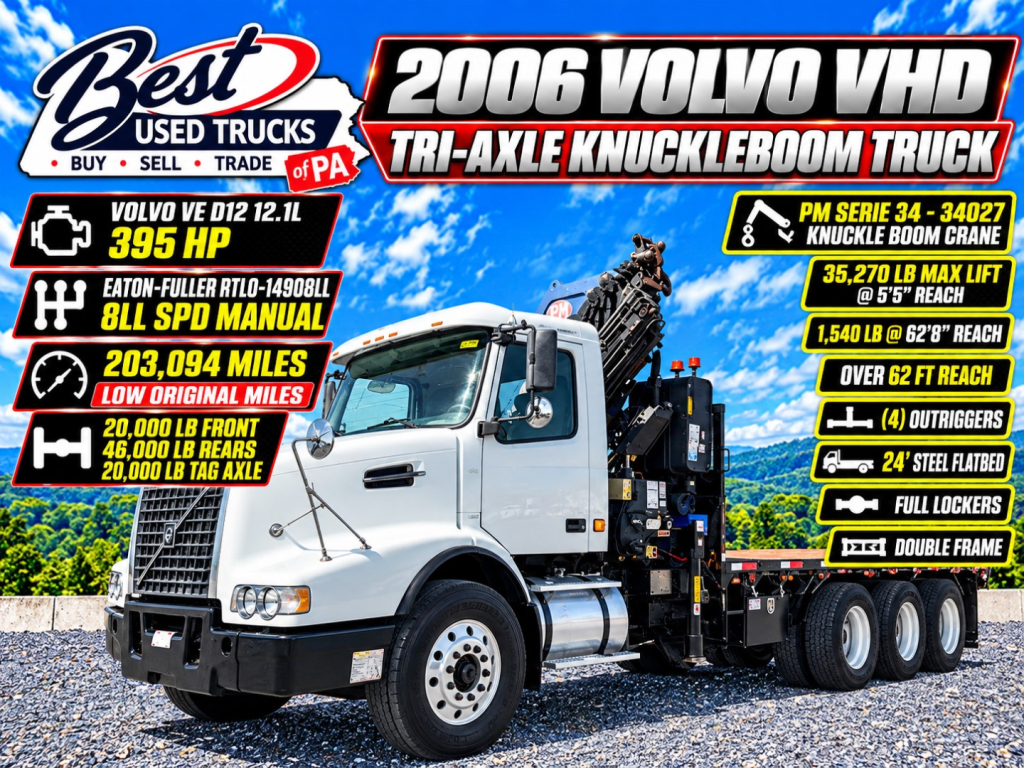
A buyer should start with the crane itself, not just the truck. Crane type changes the truck’s value and best use. A knuckle boom offers compact stowage, strong load control, and easier loading in tighter spaces. A straight boom crane can offer longer reach and a more traditional lifting pattern for setting materials or equipment. Key specs include rated lifting capacity, hydraulic reach, body length, stabilizer design, PTO and pump setup, and whether the truck has a flatbed, mechanics body, or dedicated material-handling body. On used units, pay close attention to outrigger condition, rotation bearing wear, hose age, hydraulic leaks, and signs of structural repair around the crane mount and subframe.
On the chassis side, Mack crane trucks are often equipped with diesel engines suited for PTO operation and repeated stop-and-work duty cycles. Axle rating, wheelbase, suspension type, and GVWR matter because they determine legal payload and how stable the truck will be when the crane is deployed. Buyers should also confirm front axle capacity, since crane installation and body equipment can put substantial weight on the steer axle. If the truck will run in urban delivery or utility work, overall length, turning radius, and cab configuration can matter as much as engine horsepower. If the truck will support heavier picks, check for double frame reinforcement, locking rear differentials, and tire condition matched to the truck’s actual operating environment.
Inspection on a used Mack crane truck should include both DOT roadworthiness and crane functionality. Service records for the truck, PTO, and hydraulic system are important, but so are annual crane inspection history, load test documentation if available, and any evidence of certification compliance required by the buyer’s state or industry. A good used crane truck is not just a running chassis with a working boom. It is a properly integrated vocational unit with stable lifting geometry, usable deck space, predictable hydraulic performance, and a chassis spec that supports the crane’s real-world workload.
Frequently Asked Questions about Used Mack Crane Trucks
What should I check first on a used Mack crane truck?
Start with the crane installation and weight ratings. Confirm the crane model, lifting capacity, reach, outrigger setup, and the condition of the subframe and mounting area. Then verify that the Mack chassis has the axle ratings, frame strength, and PTO-hydraulic system to support that crane safely. A truck can look clean and still be poorly matched to the crane or overloaded on the front axle.
Are Mack crane trucks better suited for boom cranes or knuckle booms?
Mack vocational chassis can support either configuration, and the better choice depends on the work. Knuckle booms are popular for material delivery, tighter jobsites, and applications where compact stowage matters. Straight boom cranes are often preferred when lift path, height, or reach profile better fits the job. The chassis strength is only part of the equation. The body style, wheelbase, and axle placement need to match the crane type and intended load handling.
How important is PTO and hydraulic system condition on a used crane truck?
It is critical. The PTO, pump, valves, hoses, reservoir, and controls determine how the crane performs under load. Weak hydraulic performance can mean slow function, heat buildup, poor lifting response, or expensive repair needs. On a used truck, look for leaks, contaminated fluid, noisy pump operation, and inconsistent crane speed. A roadworthy chassis does not guarantee a healthy crane hydraulic system.
What axle and chassis specs matter most on a Mack crane truck?
Front axle rating, rear axle rating, GVWR, wheelbase, frame reinforcement, and suspension are the core chassis specs to review. Crane trucks often carry concentrated weight from the crane, body, and payload, so steer axle loading is a common issue. Wheelbase affects both body space and stability. Buyers should compare the truck’s actual configuration against the crane manufacturer’s mounting and load requirements, not just the engine or transmission spec.
Do used crane trucks need special inspections or certifications?
In many applications, yes. Requirements vary by state, insurance carrier, and industry, but buyers often need current crane inspection records, safety device verification, and sometimes documented load testing. Utility, municipal, and contractor fleets may also require operator and equipment compliance with applicable OSHA or ANSI standards. Before purchase, confirm what documentation is needed for your specific use so the truck can go to work without delays.