
2018 Volvo Conventional Daycab Trucks For Sale
Shop 2018 Volvo conventional daycab trucks with D13 power, I-Shift transmissions, and specs suited for regional haul, drayage, and local fleet work.
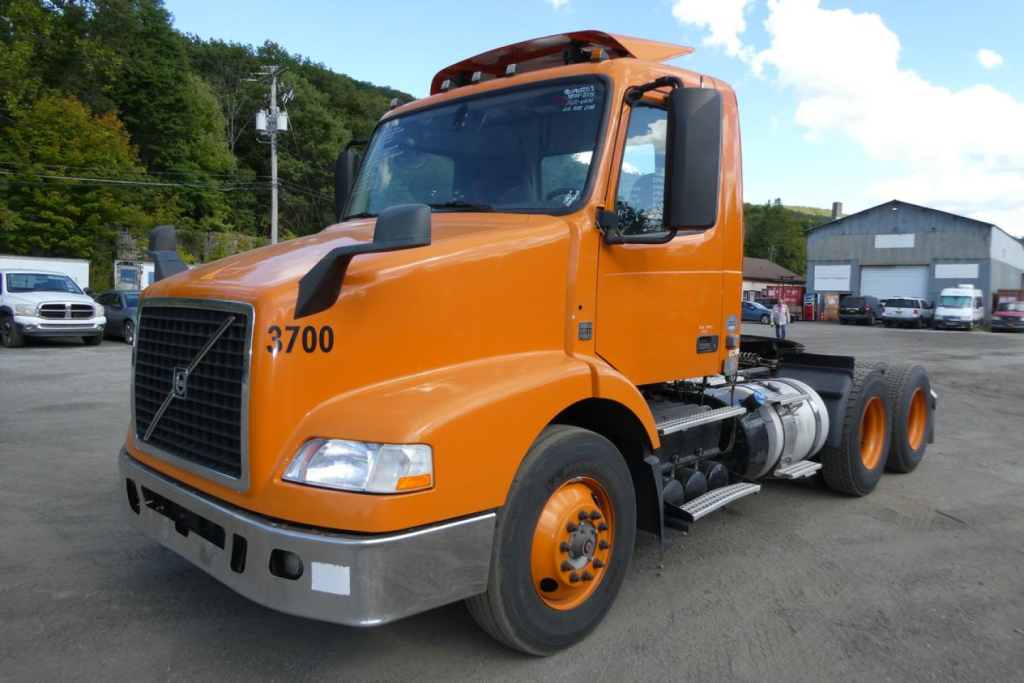
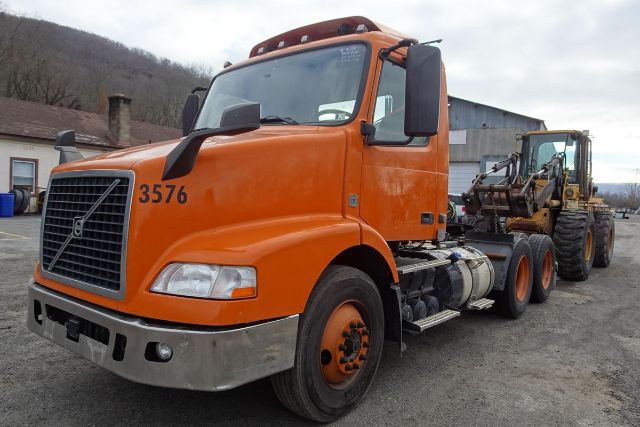
2018 Volvo VNM64T
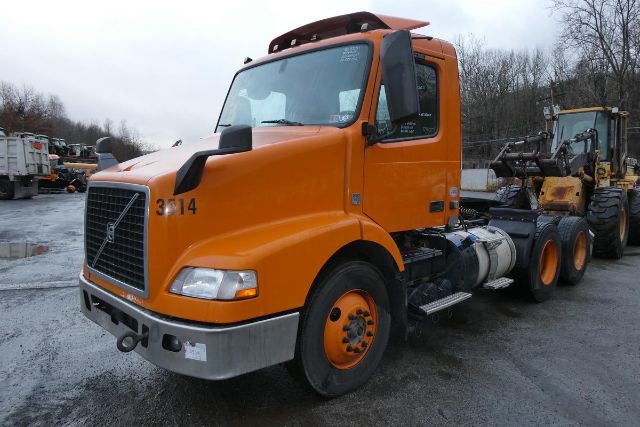

Selling a 2018 volvo conventional daycab truck? List your 2018 volvo conventional daycab truck for sale and reach thousands of commercial buyers.
2018 Volvo Conventional Daycab Trucks
One of the biggest buying decisions in this category is the chassis spec. Many 2018 Volvo daycabs are equipped with a 12,000 to 12,350 lb front axle, 40,000 lb rears, air ride suspension, and wheelbases around the mid-170 inch range. That kind of setup works well for van, reefer, and general freight operations. Buyers hauling heavier commodities or operating in severe-service conditions may want to pay closer attention to rear axle ratings, suspension capacity, frame spec, and whether the truck has a sliding or stationary fifth wheel. Rear axle ratio is also important. Faster ratios such as 2.64 favor fuel-efficient highway and regional use, while other specs may better suit stop-and-go or heavier loads.
Volvo daycabs from this period are also known for their integrated powertrain strategy. The D13 paired with the I-Shift automated manual is a common combination because it balances drivability, fuel economy, and reduced driver fatigue. Many trucks in this class include engine brakes, air disc brakes, power divider, traction control, and aerodynamic trim, all of which can matter depending on terrain and duty cycle. A buyer comparing listings should look closely at maintenance history, fault codes, engine hours versus odometer miles, emissions system condition, and transmission operation. On a 2018 emissions-era truck, DEF system health, injector performance, and aftertreatment service records can be just as important as mileage.
Cab layout and operating environment also deserve attention. Volvo conventional daycabs generally offer good visibility, easy dash access, and a comfortable driving position for multi-stop days. Common features include air ride seats, power windows and mirrors, and a cab designed to reduce driver fatigue on regional lanes. For fleet buyers, these trucks are attractive because parts availability is strong and many technicians are familiar with the Volvo platform. For owner-operators, the value usually comes down to matching the truck's horsepower, axle ratio, wheelbase, and fifth wheel setup to the trailer and route profile instead of buying on mileage alone.
Frequently Asked Questions about 2018 Volvo Conventional Daycab Trucks
What engine and transmission are most common in a 2018 Volvo conventional daycab?
The most common powertrain in a 2018 Volvo conventional daycab is the Volvo D13 diesel engine paired with a 12-speed Volvo I-Shift automated manual transmission. Horsepower is often in the 425 to 455 hp range, which is well suited for regional freight, local delivery, drayage, and general tractor work. This combination is popular because it offers strong fuel economy, smooth shifting, and lower driver fatigue than a manual transmission in stop-and-go service.
Is a 2018 Volvo daycab better suited for local work or highway use?
A 2018 Volvo daycab can handle both, but most are best suited for local and regional applications rather than long-haul over-the-road use. The daycab layout saves weight and improves maneuverability, which helps in urban freight, distribution, short regional lanes, and port operations. Spec details determine where the truck fits best. A lighter wheelbase and fuel-efficient axle ratio favor regional highway work, while heavier axle and suspension ratings are better for demanding vocational or heavier trailer applications.
What specs should I check first on a used 2018 Volvo daycab?
Start with engine model, horsepower, transmission type, rear axle ratio, axle ratings, suspension, wheelbase, and fifth wheel setup. After that, focus on maintenance records, engine hours, emissions system history, and any active warning lights or fault codes. On a truck in this age range, the condition of the DPF, DEF components, injectors, and transmission calibration can have a major effect on operating cost. Tire size, brake type, and frame configuration also matter if the truck will be assigned to a specific trailer or route.
Are air disc brakes common on 2018 Volvo conventional daycabs?
Air disc brakes are fairly common on late-model Volvo daycabs and are often viewed as a desirable feature. They typically provide stronger, more consistent stopping performance and can simplify certain maintenance tasks compared with traditional drum brakes. For fleets operating in regional or urban service with frequent braking, air disc brakes can be a real advantage. Buyers should still inspect pad life, rotor condition, and service history rather than assuming the system is trouble-free.
How important is rear axle ratio on a 2018 Volvo daycab?
Rear axle ratio is one of the most important spec points because it affects fuel economy, launch performance, cruise RPM, and how well the truck matches the trailer and terrain. A faster ratio such as 2.64 is commonly used for fuel-efficient regional hauling on flatter lanes with lighter to moderate loads. A different ratio may be a better fit for steep grades, heavier freight, or frequent stop-and-go operation. The right choice depends on duty cycle, not just horsepower.