
New Kenworth Conventional Daycab Trucks For Sale
Shop new Kenworth conventional daycab trucks built for vocational and on-highway work, with Cummins power, tandem axles, and durable 6x4 specs.
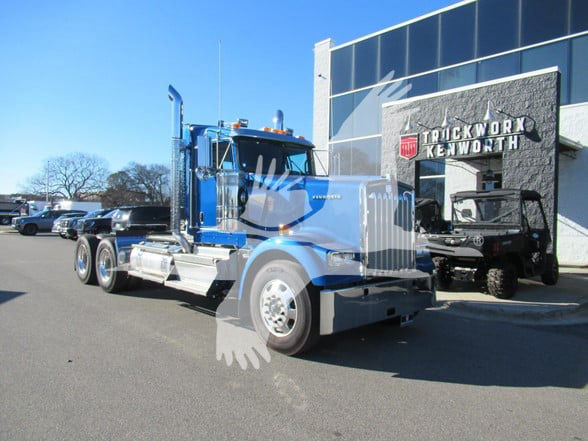
Showing 29 to 29 of 29 results
Looking for the easiest place to sell your new kenworth conventional daycab truck? List it here to reach thousands of buyers.
New Kenworth Conventional Daycab Trucks
The Kenworth T880 is one of the most common choices in this class because it is designed for severe-service and vocational use while still working well in regional highway service. Buyers often spec a T880 daycab with a Cummins X15, tandem rear axles, 6x4 driveline, and a suspension such as the AG460 for durability and traction under load. Horsepower ratings commonly reach into the 500 to 565 HP range when the truck is intended for heavy trailers, steep grades, or demanding start-stop work. Wheelbase matters more than many first-time buyers expect. A shorter wheelbase can improve maneuverability around jobsites and tight yards, while a longer wheelbase can help with ride quality, bridge law strategy, and room for accessories like larger fuel tanks or hydraulic systems.
Kenworth W900L daycab trucks appeal to buyers who want a long-hood conventional with a traditional platform and strong owner-operator presence. The longer hood and extended hood layout can be attractive for certain heavy-spec applications, and many buyers pair that chassis with a manual transmission and higher-horsepower X15 setup. Compared with a more vocational-forward T880, a W900L daycab is often chosen for regional hauling, specialized open-deck work, and operators who care about long-wheelbase appearance as much as function. On either model, buyers should pay close attention to rear axle ratio, transmission gearing, and tire size because those three items strongly affect low-speed pulling power, cruise RPM, fuel burn, and how the truck performs with different trailer weights.
For a new Kenworth conventional daycab, spec quality matters more than model name alone. Look closely at front axle capacity, suspension rating, frame reinforcement, PTO provisions, fifth wheel setup, and cab configuration. Aluminum wheels can reduce weight and improve appearance, while 24.5-inch rubber remains a common choice for linehaul and vocational combinations. If the truck will spend most of its life in city and terminal work, an automatic transmission may improve productivity and reduce driver fatigue. If it will be used in specialized hauling or terrain-sensitive work, a manual or automated manual with the right ratio package may offer better control. A well-matched Kenworth daycab should fit the trailer, payload, route profile, and body equipment from the start, because correcting a poor spec after purchase is usually far more expensive than ordering the right truck on the front end.
Frequently Asked Questions about New Kenworth Conventional Daycab Trucks
What is a Kenworth conventional daycab truck best used for?
A Kenworth conventional daycab is best suited for local, regional, and vocational work where a sleeper is not necessary. Common applications include dump service, flatbed, tanker, heavy haul, equipment transport, and other operations that require a durable chassis, good visibility, and room for PTO or hydraulic equipment. The daycab configuration reduces overall weight and can improve maneuverability compared with a sleeper truck.
What is the difference between a Kenworth T880 daycab and a W900L daycab?
The Kenworth T880 daycab is generally favored for vocational and severe-duty work because it is widely spec'd for rugged applications, body-builder flexibility, and practical day-to-day operation. The Kenworth W900L daycab is a long-hood conventional that is often selected for specialized hauling, regional transport, and buyers who prefer a traditional platform and appearance. The right choice depends on wheelbase needs, hood layout preference, application severity, and how the truck will be equipped.
What engine and horsepower range is common in new Kenworth daycab trucks?
A common engine choice in new Kenworth conventional daycab trucks is the Cummins X15. In heavier applications, buyers often spec these trucks in the 500 to 565 horsepower range to handle gross combination weight, grades, and demanding trailer work. The ideal horsepower depends on load profile, terrain, rear axle ratio, and whether the truck will operate in local stop-start service or higher-speed regional hauling.
Should I choose an automatic or manual transmission in a Kenworth daycab?
An automatic transmission can be a strong fit for urban routes, frequent traffic, and fleets focused on driver consistency and reduced fatigue. A manual transmission may still appeal in specialized hauling or operations where drivers want direct gear control. The decision should be made with the axle ratio, engine rating, route conditions, and trailer type in mind, because the transmission has a major effect on launch performance, cruise efficiency, and driver acceptance.
Why does wheelbase matter on a new conventional daycab truck?
Wheelbase affects turning radius, ride quality, bridge compliance strategy, equipment packaging, and fifth wheel placement. A shorter wheelbase usually improves maneuverability in tight spaces and jobsites, while a longer wheelbase can provide more stability, smoother ride characteristics, and extra space for fuel capacity or hydraulic components. Matching wheelbase to trailer length, kingpin setting, and intended use is an important part of getting the truck spec right.