
Used Ford Conventional Daycab Trucks For Sale in New York
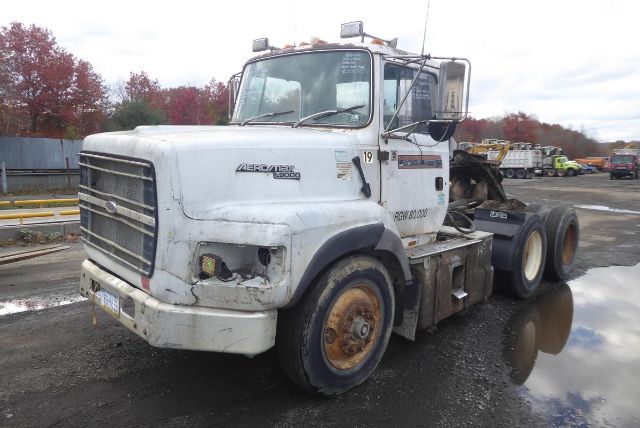
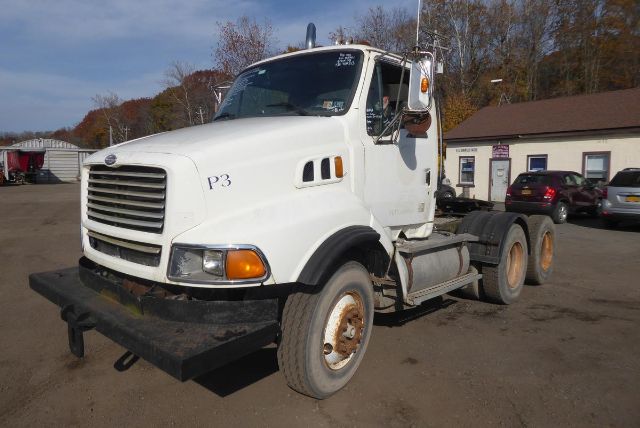
Have used ford conventional daycab truck to sell? List it here to reach thousands of buyers.
Used Ford Conventional Daycab Trucks in New York
The first buying decision is usually drivetrain and application. Many used Ford daycabs are spec'd with proven engines such as the Detroit Diesel 12.7L Series 60 or Caterpillar 3406, paired with Fuller 9-speed or 10-speed manual transmissions. Rear axles commonly land in the 36,000 to 40,000 lb range from Rockwell, often with power divider and sometimes full lockers, which makes these trucks relevant for heavier vocational use and mixed-surface job sites. Ratios in the mid-3s to 3.90 are common and give a good clue about intended use. A 3.73 setup generally leans toward regional road speed, while 3.90 gearing is better suited to heavier starts, short hauls, and off-road pulling power.
Buyers should pay close attention to frame spec, wheelbase, PTO setup, and suspension type. A single-frame truck may work well for some fifth-wheel or hydraulic applications, but severe-duty work may call for a double-frame chassis or at least a close inspection for prior upfitting and stress. Many Ford conventional daycabs in the used market were equipped with wet kits, air-operated PTOs, hydraulic pumps, sliding fifth wheels, pintle hooks, and air lines to the rear, which can save substantial setup cost if the truck matches the intended body or trailer. Wheelbases in the mid-150-inch to 160-inch range are common on these trucks and can provide a useful balance between maneuverability and bridge law flexibility, especially for local and regional operation.
Condition matters more than model year in this segment. On an older Ford daycab, buyers should inspect engine blow-by, oil seepage, cooling system condition, clutch and transmission operation, suspension wear, and the state of hydraulic components if the truck has a PTO or wetline system. Cab condition, parts support, and brake system health are also important because many of these trucks have earned their miles in demanding commercial service. A well-spec'd used Ford conventional daycab can still be a practical choice for fleets and owner-operators who value a simple platform, heavy axle capacity, and proven component brands over late-model complexity.
Frequently Asked Questions about Used Ford Conventional Daycab Trucks in New York
What are the most common Ford conventional daycab models on the used market?
The Ford Aeromax and Ford L9000 are the most common conventional daycab models buyers encounter in the used heavy-duty market. Both were built for regional and vocational work and are often found with diesel engines from Detroit Diesel or Caterpillar, manual Fuller transmissions, and heavy rear axle ratings. These models are popular with buyers who need a basic daycab chassis for hauling, wet kit applications, or local tractor work.
What should I look for when buying a used Ford daycab truck?
Focus on drivetrain condition first, then application-specific equipment. Engine health, blow-by, oil leaks, transmission shift quality, rear axle noise, suspension wear, and brake condition should all be checked carefully. If the truck has a PTO, wet kit, hydraulic pump, or sliding fifth wheel, inspect for leaks, pump function, control operation, and signs of frame stress around mounting points. On older Ford conventionals, maintenance history and current mechanical condition are usually more important than mileage alone.
Are Ford conventional daycab trucks good for vocational work?
Yes, many used Ford conventional daycabs were originally spec'd for vocational service and still fit that role well. Common setups include heavy Rockwell rear axles, power divider, manual transmissions, air suspensions or spring suspensions, and PTO-driven hydraulic systems. That makes them suitable for dump-related work, lowboy and equipment hauling, tanker service, and other local or regional applications where durability and chassis utility matter more than sleeper space.
What axle and suspension specs are common on used Ford daycabs?
Many Ford daycabs in this category carry rear axle ratings between 36,000 and 40,000 lbs, often with tandem drive axles and power divider. Buyers will see both spring and air-ride suspensions, depending on how the truck was ordered for its original job. Spring suspension is often favored for tougher vocational use, while air-ride can improve ride quality and traction characteristics for certain trailer applications. The right choice depends on payload, road conditions, and how the truck will be used.
Do older Ford daycab trucks still make sense for local hauling in New York?
They can, especially when the truck is being purchased for limited-radius commercial work where lower acquisition cost is a priority. A used Ford conventional daycab can make sense for farm support, equipment transport, dump-related hauling, and other jobs that do not require a sleeper or late-model emissions systems. The key is making sure the truck's wheelbase, gearing, PTO equipment, axle ratings, and overall mechanical condition match the intended workload and operating environment.