
Used Ford Conventional Daycab Trucks For Sale
Have used ford conventional daycab truck to sell? List it here to reach thousands of buyers.
Used Ford Conventional Daycab Trucks
The first buying decision is usually duty class and chassis configuration. An F-650 daycab is commonly spec'd as a Class 6 or Class 7 truck with gas, CNG, or diesel power, automatic transmissions, and axle ratings suited for pickup and delivery, municipal work, and box truck applications. Wheelbase matters because it determines body length, bridge spacing, and turning radius. A longer wheelbase may support a 24-foot van body or larger upfit, while a shorter wheelbase is easier to place in tight urban routes, yards, and job sites. If the truck is set up as a tractor, check fifth wheel type, frame rating, rear suspension, and rear axle ratio to make sure it matches the trailer weight and road speed you expect.
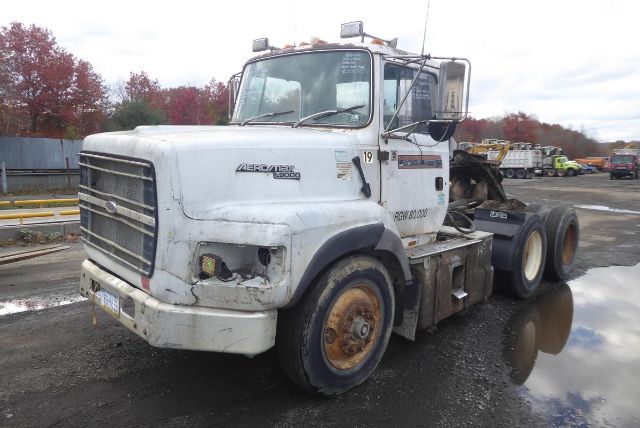
Older Ford conventional daycab trucks like the Aeromax are a different type of buy. These trucks were often spec'd with tandem axles, 10-speed manual transmissions, Detroit diesel engines, heavy spring suspension, and 40,000-pound rear axles for vocational hauling, equipment transport, or farm use. On a used unit, condition matters more than brand familiarity. Pay attention to oil seepage, blow-by, clutch feel, brake percentage, suspension wear, steering play, and the condition of the air system. If the truck has PTO, wet kit plumbing, pintle hitch, air to rear, or an air-slide fifth wheel, those details can add real value depending on the job. Tire size, wheel type, cab-to-axle measurement, and cab-to-end dimensions also matter if you are planning to mount or swap a body.
Ford daycab trucks are often chosen by fleets and owner-operators who need a practical chassis with straightforward service access and good visibility. For local delivery, beverage, landscape, utility, towing, or municipal work, focus on front axle capacity, rear axle rating, body compatibility, and transmission type. For tractor use, verify GVWR, axle configuration, suspension capacity, and how the engine horsepower and gearing line up with your route profile. A clean used Ford conventional daycab with the right wheelbase, axle spec, and body or hitch setup can be a very efficient truck for operations that earn their money close to home.
Frequently Asked Questions about Used Ford Conventional Daycab Trucks
What is a Ford conventional daycab truck best used for?
A Ford conventional daycab truck is best suited for local and regional work where a sleeper is not needed. Common applications include straight truck delivery, municipal service, towing, utility work, landscaping, dump service, and short-haul tractor duty. The daycab design improves maneuverability, reduces curb weight, and keeps the truck easier to access for drivers who make frequent stops.
What should I check first on a used Ford F-650 daycab?
Start with the truck's intended use and compare that to its wheelbase, GVWR, axle ratings, engine, and transmission. On body-equipped trucks, confirm the body length, liftgate capacity, floor condition, roll-up door operation, and cargo control equipment such as E-track or scuff liners. On fuel-alternative units such as CNG trucks, confirm tank certification, fuel system service history, and local fueling support before purchase.
Are older Ford Aeromax daycabs still a practical buy?
They can be, especially for vocational or farm applications where a heavier drivetrain and simpler spec are more important than modern cab features. Many Aeromax trucks were built with tandem axles, manual transmissions, and durable diesel engines that remain serviceable in the right operation. The key is mechanical condition, parts support in your area, and whether the frame, suspension, and driveline match the work you need the truck to do.
How important is wheelbase on a used Ford daycab?
Wheelbase is one of the most important measurements because it affects body fitment, turning radius, bridge law compliance, and overall drivability. A truck with a 261-inch wheelbase may work well for a 24-foot van body, while a shorter wheelbase is usually better for tight city delivery or jobsite access. If you plan to rebody the chassis or pull a trailer, also check cab-to-axle and cab-to-end dimensions before making a decision.
What specs matter most if I want a Ford daycab tractor instead of a straight truck?
Focus on axle configuration, rear axle ratio, suspension type, fifth wheel setup, engine horsepower, transmission, and legal GVWR. A tandem-axle 6x4 daycab with a 10-speed manual and 40,000-pound rears is a very different tool than a medium-duty single-axle F-650 with an automatic. Matching those specs to trailer weight, terrain, and daily miles is what determines whether the truck will perform efficiently and hold up in service.