
Used Peterbilt Car Carrier Trucks For Sale
Used Peterbilt car carrier trucks for sale: compare 379 and 389 rack geometry, drivetrain history and axle capacity before choosing an auto transport rig.
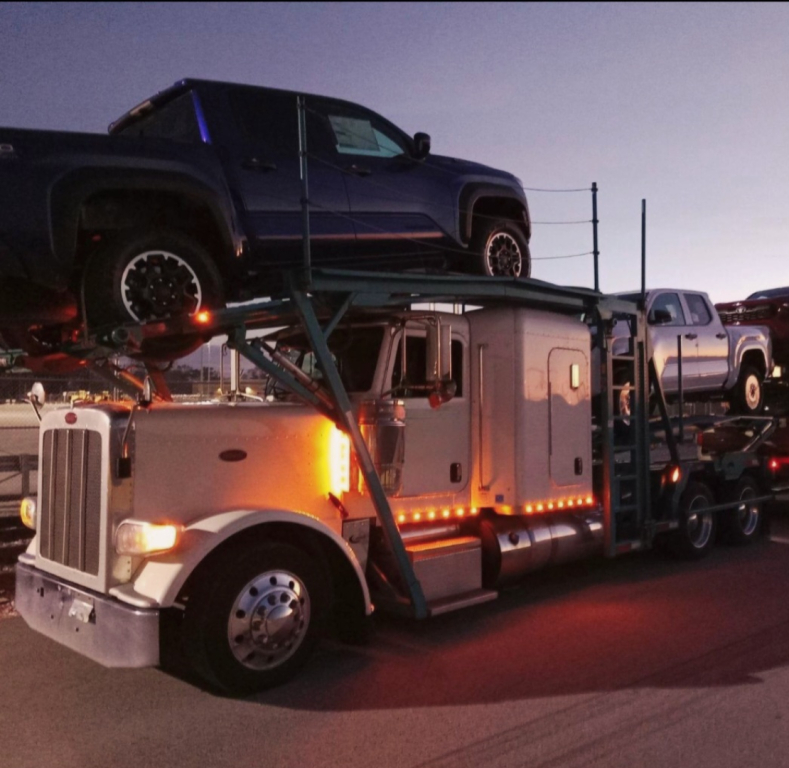
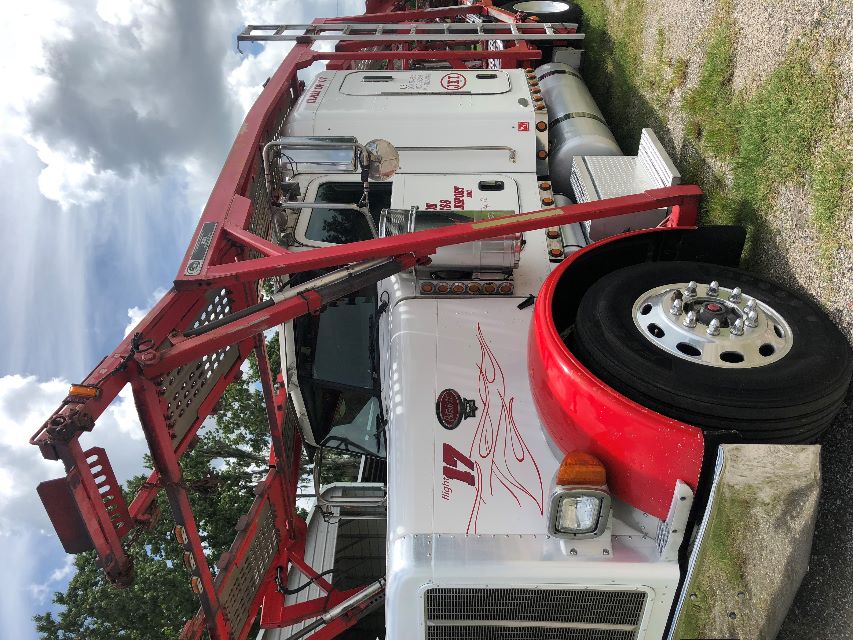

Selling a used peterbilt car carrier truck? List your used peterbilt car carrier truck for sale and reach thousands of commercial buyers.
Used Peterbilt Car Carrier Trucks
Maintenance records need to cover both the chassis and the hauling equipment. Compare ECM mileage and hours with service invoices, and verify claimed engine or transmission replacements by serial number and repair documentation. Inspect rack welds, cylinder rods, hoses, pivot pins, deck locks and tie-down attachment points, then cycle the hydraulics through their full travel. Check frame rails around rack mounts, steering components, clutch operation, driveline joints and suspension bushings. Road-salt exposure makes concealed corrosion especially important on northern US and Canadian equipment.
Engine certification labels and build dates establish the emissions equipment, not appearance or model year alone. Later trucks may require DPF, SCR and DEF service; emissions deletes can create registration and compliance problems. California buyers should verify applicable CARB requirements before purchase. Across the US and Canada, match axle ratings, tire capacity and loaded dimensions to the actual route and vehicle mix. Larger pickups and SUVs can exhaust weight or clearance margins before every deck position is occupied.
Frequently Asked Questions about Used Peterbilt Car Carrier Trucks
How do I know how many pickups or SUVs a Peterbilt car carrier can haul?
A loaded axle-weight and clearance check determines pickup and SUV capacity more reliably than the advertised car count. For a Peterbilt car carrier, obtain deck dimensions and weight ratings, then build a load plan using actual vehicle weights, heights and wheelbases. Verify each axle group on a scale. Heavy electric vehicles can consume payload quickly, while long pickups may occupy space that would accommodate more compact cars.
How should I test the hydraulics on a used Peterbilt car hauler?
A controlled load-holding test is the key check for hydraulic drift on a used Peterbilt car hauler. Have a qualified technician operate the decks, observe cylinder movement and verify that mechanical locks engage correctly. Uncommanded movement can indicate cylinder seal or valve problems even when no external leak is visible. Check operation after the hydraulic oil reaches operating temperature, and never work beneath an unsupported deck.
What is the legal length for a stinger-steered Peterbilt car carrier?
An 80-foot stinger-steered automobile transporter is permitted on the US National Network under federal rules, with up to 4 feet of front cargo overhang and 6 feet at the rear. Those allowances do not give every high-mount Peterbilt combination the same length entitlement. Confirm the coupling configuration, state access routes and loaded height separately. Canadian operations require checking provincial dimension rules rather than applying US allowances.
Is an automated transmission a good choice for a used Peterbilt auto transporter?
An automated transmission can reduce shifting workload on a Peterbilt auto transporter, but low-speed control deserves a loaded road test. Evaluate starts on grades, backing, clutch engagement and maneuvering around loading areas. Confirm the transmission model and review clutch service history, fault records and calibration status. An Eaton Fuller manual remains a practical choice for drivers comfortable managing clutch wear and gear selection, especially in frequent low-speed work.
Does a replacement engine make a used Peterbilt car carrier a low-mileage truck?
A replacement engine does not reset chassis mileage or eliminate wear in a used Peterbilt car carrier. Verify whether the replacement was new, remanufactured or used, and obtain its serial number, installation invoice and any transferable warranty terms. Review cooling-system and aftertreatment work completed with the installation. Frame fatigue, rack wear, transmission condition and axle maintenance still reflect the carrier's total service history, not just miles accumulated since the engine change.