
Used Freightliner Bucket Trucks For Sale in New York
Used Freightliner bucket trucks in New York. Compare boom height, payload, tare weight, corrosion resistance, PTO and chassis specs for utility work.
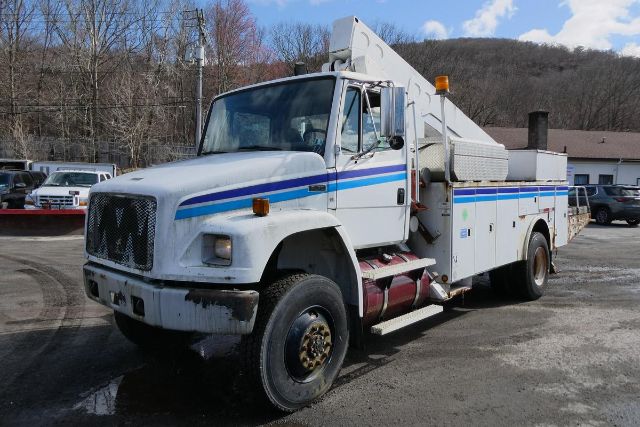
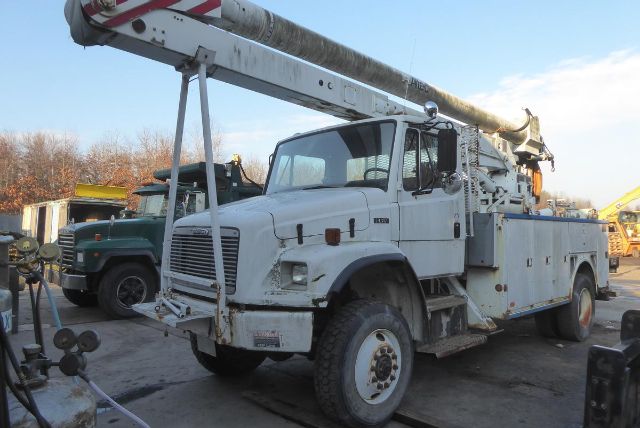
Have used freightliner bucket truck to sell? List it here to reach thousands of buyers.
Used Freightliner Bucket Trucks in New York
Tare weight drives payload and compliance. A typical M2 106 single axle with a 45 to 60 foot insulated boom and fiberglass service body will sit near 22,000 to 26,000 pounds empty depending on tool storage, jib, and hydraulic circuits, while a 108SD or 114SD with a 70 to 100 foot boom and tandem axles can exceed 30,000 pounds empty. Lighter aluminum or galvanneal bodies reduce tare and improve payload for tools, cones, and parts, while steel bodies add durability. Verify axle and suspension specs, spring or air, to ensure legal payload on each axle with the crew on board, full fuel, and tools loaded. Engine choices commonly include Cummins B6.7 or L9 and Detroit DD5 or DD8, matched to Allison 2500 or 3000 with hot shift or clutch shift PTOs for smooth hydraulic pump engagement.
Thermal integrity matters for insulated booms and for work in New York winters. Insulated fiberglass sections rely on sound gelcoat, sealed fasteners, and clean liner interfaces to maintain dielectric performance, moisture ingress and UV damage degrade insulation and tool circuit isolation. Compartments with weather seals, optional heaters, and proper ventilation protect batteries, resins, and sensitive electronics. Cold weather packages, block heaters, heated mirrors, high output alternators, arctic grade hydraulic fluid, and auto-idle elevating PTO logic improve uptime and tool performance in freezing conditions. Confirm ANSI A92.2 compliance, annual dielectric test records, stability testing, and current inspection tags.
Corrosion resistance separates good used units from costly projects in a salt environment. Freightliner frames with e-coat and upfit bodies with powder coat or aluminum construction hold up better, look for stainless latches, sealed harnesses, and drain paths in outriggers and stabilizer boxes. Inspect service body floors for soft spots, rust at seam welds, and cracking near crane or jib mounts, check outrigger cylinders and pins for pitting, and examine frame flanges, crossmembers, battery boxes, and air tanks for scale. Dielectric performance and structural integrity go hand in hand, a clean boom, tight turntable, and solid subframe preserve platform capacity and safe side reach. Tie this to tire condition, brake spec, diff locks or 4x4 when needed, and you have a bucket truck that works efficiently and stays compliant in New York traffic and weather.
Frequently Asked Questions about Used Freightliner Bucket Trucks in New York
Which Freightliner chassis and boom pairings are most common on used bucket trucks?
The Freightliner M2 106 with 40 to 60 foot insulated booms from Altec, Terex, or Versalift is the most common single axle configuration for utility and streetlight work. For heavier lifts or 60 to 75 foot class machines, many units move to the 108SD with higher RBM rails and 16,000 to 20,000 pound front axles. Large 75 to 100 foot units, often with two man platforms, jib and winch, and tandem rears, are typically on 108SD or 114SD chassis. Insulated Category C units are preferred for distribution lines, non insulated models fit sign and lighting applications where dielectric protection is not required.
How does tare weight affect payload and CDL requirements on a bucket truck?
Tare weight subtracts directly from the chassis GVWR to determine payload for crew, tools, parts, and upfit options like jibs and extra tool circuits. An M2 single axle with a mid height insulated boom can approach the 26,000 pound threshold with tools and fuel, which impacts CDL requirements when GVWR exceeds 26,000 pounds. Choosing aluminum or galvanneal bodies, careful compartment spec, and right sized outrigger packages can lower tare and increase usable payload while keeping axle weights legal. Always weigh a fully outfitted unit to verify front and rear axle loading before deployment.
What should I inspect for corrosion and structural integrity in New York conditions?
Focus on frame flanges and web near the outrigger subframe, outrigger pedestals and boxes, service body floors, battery boxes, crossmembers, and suspension hangers. Look for blistered powder coat, flaking scale, and soft spots in deck plates. Inspect boom sections for gelcoat chalking, cracks around fasteners, and moisture signs at the lower boom insert. Check turntable bearings, rotation gearboxes, and pin bores for pitting. Electrical harnesses should have sealed connectors and intact loom, hydraulic lines should be clean and free of rust bleed at crimp collars. Undercoating helps, but proper drainage and regular rinsing matter more in salt exposure.
Which powertrain and PTO setup works best for hydraulic tools in cold weather?
A Cummins B6.7 or L9 or Detroit DD5 or DD8 paired with an Allison 2500 or 3000 and a hot shift PTO offers reliable engagement for fixed displacement or load sensing pumps. Specify a high output alternator for tool batteries, block heater, heated mirrors, and an arctic hydraulic fluid that maintains viscosity at low temperatures. Engine idle management that raises RPM during tool use stabilizes flow and pressure, and a return line filter plus oil sample history help validate pump and valve health. Verify that the PTO ratio matches pump displacement to deliver the required GPM at a practical engine speed.
How do floor strength and outrigger design affect stability and platform capacity?
Floor strength is a function of the service body deck, torque box, and the subframe that connects outrigger forces into the chassis rails. A well designed subframe with proper crossmember spacing and reinforcements keeps the rails straight and maintains platform capacity and side reach. Weak or corroded floors around stabilizer pedestals lead to flex, which reduces stability and accelerates wear at pins and bushings. Inspect welds, mounting hardware torque, and any frame inserts or fishplates to ensure loads are distributed correctly, then confirm platform capacity on the data plate matches your intended tooling and crew weight.