
2024 Commercial Trucks For Sale in California
Browse 2024 trucks for sale in California, including day cabs and sleepers with modern powertrains, emissions systems, and safety tech.

Selling a 2024 commercial truck? List your 2024 commercial truck for sale and reach thousands of commercial buyers.
2024 Commercial Trucks in California
On the highway side, many 2024 trucks are built around automated manual transmissions, downsped rear axle ratios, and aerodynamic packages designed to improve fuel economy at sustained interstate speeds. Common heavy-duty specs include 400 to 505 horsepower engines, 12-speed automated transmissions, 40,000 lb tandem rears, air ride suspension, and low-profile 22.5 tires. Sleepers are typically chosen for long-haul lanes and team operations, while day cabs fit port work, regional freight, drayage, LTL, and short-cycle hauling. Buyers in California should pay close attention to aftertreatment design, idle strategy, and service support for systems like DPF, SCR, and EGR, because uptime can depend as much on diagnostics access as on base engine brand.
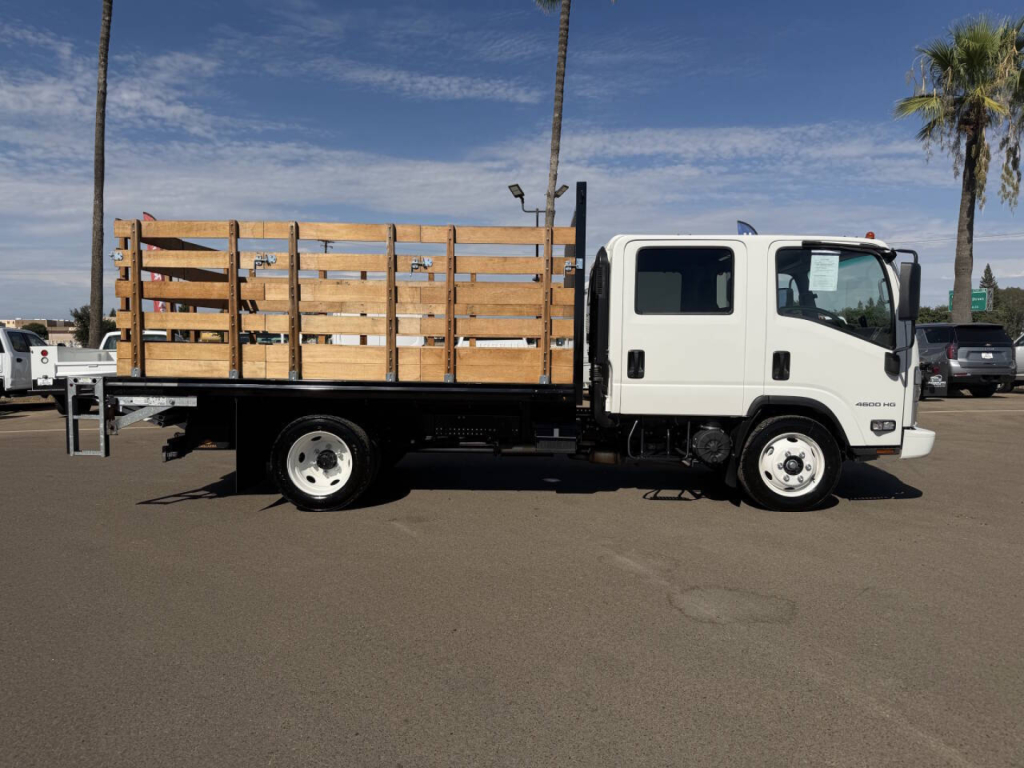
For vocational and medium-duty 2024 trucks, the important specs shift toward GVWR, front axle capacity, PTO compatibility, frame rail options, and body upfit readiness. A truck intended for local delivery, dump, rollback, flatbed, reefer, or utility work needs the right suspension, wheelbase, and cab-to-axle measurement before body installation. Even within the same model family, one 2024 truck may be optimized for fuel-efficient linehaul use while another is built for tighter urban maneuvering, heavier front-end loads, or frequent stop-and-go duty. California buyers also tend to weigh visibility, turning radius, and driver-assist features heavily, especially in metro freight and dense traffic corridors.
A careful buyer should compare more than engine make and mileage. Look at axle ratio, fifth wheel setup, wheelbase, tire configuration, brake type, fuel tank capacity, and whether the truck was ordered for long-haul, regional, or vocational service. Newer 2024 trucks often include collision mitigation, lane departure warning, adaptive cruise functions, and improved telematics integration, all of which can add value for fleet management and insurance considerations. The best 2024 truck is the one whose cab style, powertrain, axle package, and compliance profile match the freight, terrain, and operating rules it will face every week in California.
Frequently Asked Questions about 2024 Commercial Trucks in California
What should I look for first when comparing 2024 trucks for sale in California?
Start with the truck’s intended application and its compliance profile. In California, buyers should confirm the engine year, emissions configuration, and any CARB-related operating considerations before focusing on comfort or appearance. After that, match cab style, axle ratings, wheelbase, transmission type, and horsepower to the actual work the truck will do, because a linehaul sleeper, port day cab, and medium-duty vocational truck all require very different specifications.
Are most 2024 heavy-duty trucks equipped with automatic transmissions?
Yes, many 2024 heavy-duty trucks are spec'd with automated manual transmissions rather than traditional manual gearboxes. These transmissions are common in fleet and owner-operator use because they help with fuel economy, driver recruitment, and consistency across different operators. They are especially common in aerodynamic highway tractors paired with downsped drivelines and integrated engine-transmission controls.
What is the difference between a 2024 day cab and a 2024 sleeper truck?
A day cab is built without a sleeping compartment and is generally used for local, regional, drayage, and short-haul operations where the driver returns regularly. A sleeper includes a bunk area and is intended for overnight or long-haul work. The sleeper usually adds wheelbase, weight, and fuel capacity, while a day cab often offers lower tare weight, tighter maneuverability, and simpler packaging for short-cycle freight.
Why do axle ratio and wheelbase matter on a 2024 truck?
Axle ratio and wheelbase have a direct effect on fuel economy, startability, maneuverability, and trailer compatibility. A taller highway ratio can reduce engine rpm and improve cruise efficiency, while a shorter ratio may suit heavier loads or more stop-and-go work. Wheelbase affects turning radius, ride quality, and how the truck handles different trailer lengths and kingpin settings, so it should be matched to route conditions and load requirements.
Do 2024 trucks typically include more safety technology than older models?
Yes, 2024 trucks commonly offer more advanced safety and driver-assist systems than older equipment. Features such as collision mitigation, lane departure warning, adaptive cruise control, electronic stability systems, and integrated telematics are increasingly common. These systems can improve driver awareness, support fleet monitoring, and in some cases help with insurance and risk management, but buyers should still verify which features are actually installed on a given truck.