
Used Strick Van Trailers For Sale
Browse used Strick van trailers, including dry vans and pups, with common specs like air ride, roll-up doors, logistics posts, and sliding tandems.
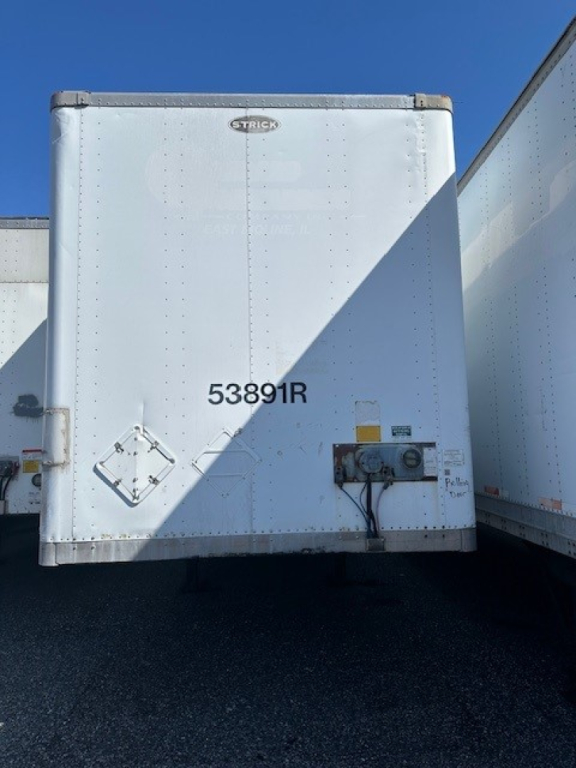

Have used strick van trailer to sell? List it here to reach thousands of buyers.
Used Strick Van Trailers
A lot of the value in a used Strick van trailer comes down to the trailer's body spec and how it was worked. Common configurations include full-size 40-foot vans and shorter pup trailers around 32 feet, often with single-axle or tandem layouts depending on the intended application. Interior features such as plywood or composite liners, scuff plates, threshold plates, wood floors, E-track, and full logistics posts matter because they directly affect load securement flexibility and wall protection. Rear door style is another key decision. Roll-up doors are common on route and city applications because they save rear clearance at the dock, while buyers should still inspect door tracks, seals, and header condition closely.
Suspension and running gear deserve just as much attention as the box itself. Many used Strick vans are equipped with air ride suspension, which helps protect fragile freight and improves ride quality compared with spring ride. Sliding tandems are important if the trailer will run in multiple states or through tight loading environments where axle spread and kingpin settings affect bridge law compliance and maneuverability. Low-profile 22.5 tires, disc or steel wheels, and optional tire inflation systems are also common on fleet units. On used trailers, check for uneven tire wear, suspension bushing wear, brake condition, frame corrosion around the rear sill and slider area, and floor integrity at high-traffic forklift zones.
For buyers comparing used Strick van trailers, the smartest approach is to match trailer length, axle setup, interior lining, and cargo control package to the freight mix. A 32-foot pup can make sense for metro delivery and LTL-style work, while a 40-foot van may fit shuttle lanes, warehouse transfers, or lighter-volume dry freight. Composite or plywood lining, galvanized rear components, and well-maintained floors can extend service life in tough dock environments. A used Strick van trailer is usually most attractive when the body is straight, the roof and sidewalls are dry, the logistics system matches your freight, and the running gear has enough remaining life to avoid immediate reconditioning costs.
Frequently Asked Questions about Used Strick Van Trailers
What should I inspect first on a used Strick van trailer?
Start with the structure and the floor. Check the roof, sidewalls, front wall, rear frame, and floor for leaks, delamination, punctures, and forklift damage. On vans used in distribution service, the rear sill, threshold, scuff liner area, and roll-up door opening often show the most wear. After that, inspect the suspension, brakes, tires, slider assembly if equipped, and any cargo control system such as E-track or logistics posts to make sure the trailer is ready for the freight you plan to haul.
Are Strick van trailers commonly used for city and regional delivery?
Yes. Many used Strick van trailers on the market were originally fleet-operated in regional and urban freight service. That is why buyers often see 32-foot pups, 40-foot vans, roll-up doors, air ride suspension, plywood or composite lining, and cargo securement systems already installed. These specs are well suited for dock-to-dock freight, palletized deliveries, and mixed loads that require enclosed protection and frequent loading cycles.
What is the advantage of a pup van trailer compared with a full-size van?
A pup van trailer, often around 32 feet, is easier to maneuver in tighter delivery environments and can be a strong fit for city routes, LTL operations, and terminal-to-terminal transfer work. A full-size van offers more cubic capacity and is generally better suited for linehaul or higher-volume dry freight. The right choice depends on your route density, dock space, axle requirements, and how much freight cube you need on a typical run.
Do used Strick van trailers usually come with air ride and sliding tandems?
Many do, especially fleet-spec dry vans built for broader operational flexibility. Air ride helps reduce cargo shock and can be a better match for sensitive freight. Sliding tandems allow the axle position to be adjusted for bridge law compliance, weight distribution, and dock maneuvering. Not every trailer will have both, so buyers should confirm the axle layout, slider condition, and suspension type before purchase.
Which interior features matter most in a used dry van trailer?
The most important interior features are the floor condition, wall lining, and cargo securement system. A solid wood floor with minimal forklift damage is critical for service life. Plywood or composite liners and scuff plates help protect the walls from pallet contact. E-track or logistics posts add flexibility for securing different freight types. These items affect not only usability but also how much immediate repair or retrofit work may be needed after purchase.