
Gallegos Vacuum Trailers For Sale
Have gallegos vacuum trailer to sell? List it here to reach thousands of buyers.
Gallegos Vacuum Trailers
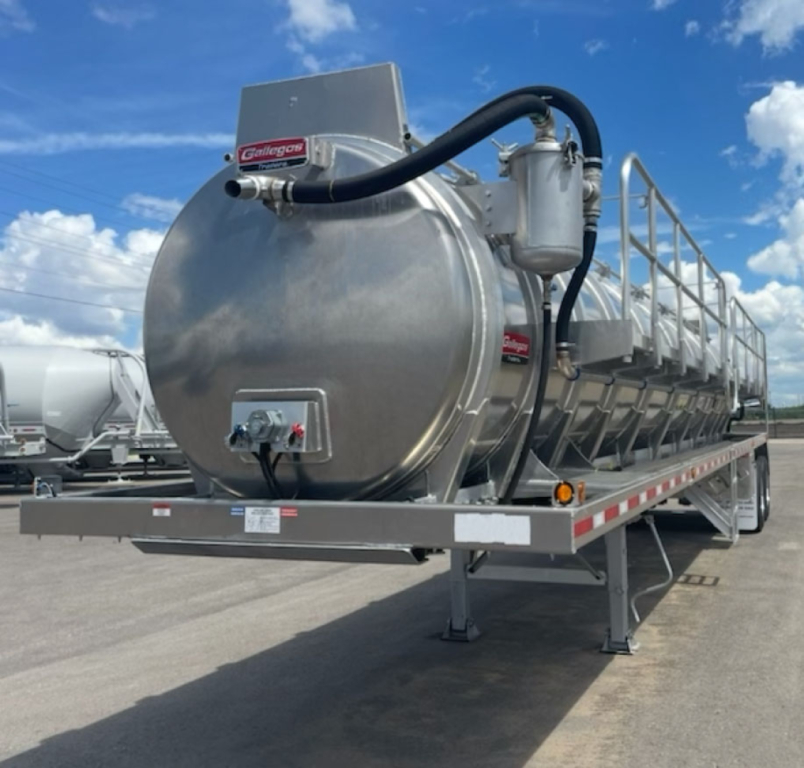
Tank construction is one of the biggest buying decisions. Aluminum tanks are popular for corrosion resistance and lighter tare weight, which can improve payload on legal routes, while steel components may still be used in structural areas and protected with coatings. On Gallegos units, buyers may see features such as ASME-style heads, internal baffles, ring stiffeners, interior epoxy lining, rear discharge plumbing, manholes, sight glasses, scrubber systems, and butterfly or ball valves sized for faster load and unload cycles. Details like hose trays, catwalk access, ladder placement, toolboxes, and work lights also matter in daily use because vacuum trailers spend real time in the field, not just on the highway.
Running gear should match the job and the roads. Tandem 30,000 lb axles, air suspension, ABS, auto slack adjusters, and 22.5-inch rubber are common on this class of trailer. Air ride helps protect the tank and piping on rough lease roads and uneven industrial yards, while proper wheel alignment and brake spec can reduce tire wear and maintenance cost over time. Buyers should also confirm landing gear capacity, bumper design, discharge location, and how the trailer is set up for the vacuum package, including primary and secondary shutoff protection, booster configuration, drain valves, and pressure monitoring. These are the details that affect uptime, safety, and how easily a trailer integrates into an existing fleet.
A good Gallegos vacuum trailer is not just a tank on wheels. It is a purpose-built liquid handling platform. The best fit depends on what is being hauled, how often the trailer is loaded and dumped, the corrosiveness of the product, and state weight limits on the lanes it will run. If the work includes oilfield service, industrial cleanup, or municipal and septic applications, compare barrel size, tank material, lining, valve layout, suspension, and access features closely. Small spec differences can have a major effect on payload, cleaning time, operator safety, and long-term durability.
Frequently Asked Questions about Gallegos Vacuum Trailers
What is a Gallegos vacuum trailer used for?
A Gallegos vacuum trailer is used to load, transport, and discharge liquids, sludge, slurry, and waste materials through a vacuum system. Common applications include produced water hauling, drilling fluid recovery, industrial cleanup, septic service, and other environmental or oilfield jobs where suction loading is required. The exact suitability depends on tank material, lining, valve configuration, and the type of vacuum package paired with the trailer.
What tank size is common on Gallegos vacuum trailers?
A common size in this category is around 150 barrels, which is about 6,300 gallons. That capacity is popular because it offers strong productivity for oilfield and industrial liquid hauling while still fitting typical tandem-axle trailer layouts. Buyers should always balance tank volume against tare weight, axle ratings, and state bridge and gross weight limits to understand legal payload on their routes.
Are aluminum vacuum trailers better than steel?
Aluminum vacuum trailers are often chosen for lighter weight and strong corrosion resistance, especially when hauling liquids that can be hard on untreated metal. A lighter trailer can improve payload potential, but the best choice depends on the cargo, operating environment, and maintenance program. Steel may still be preferred in some applications for repair familiarity or structural preference, but many buyers like aluminum tanks with protective coatings and linings where needed.
What specs matter most when comparing vacuum trailers?
The most important specs are tank capacity, tank material, number of axles, axle rating, suspension type, internal baffling, head thickness, valve and discharge layout, and safety equipment such as shutoff protection and pressure gauges. Buyers should also look at practical field features like hose trays, manholes, scrubbers, ladders, catwalks, work lights, and tool storage. These details affect payload, serviceability, loading speed, operator safety, and overall uptime.
How do I choose the right vacuum trailer for oilfield or industrial service?
Start with the product being hauled and the roads the trailer will run. Produced water, sludge, corrosive liquids, and mixed waste streams can each point to different tank materials, linings, and plumbing setups. Then verify the trailer's capacity, axle group, suspension, and discharge arrangement against your legal weight targets and unloading process. A trailer that is slightly better matched to your product and route can lower cleanup time, reduce corrosion issues, and improve long-term operating cost.