
New Dragon Vacuum Trailers For Sale in Wyoming
New Dragon vacuum trailers for oilfield and water hauling, with common barrel capacities, axle setups, pump options, and spec considerations.
Selling a new dragon vacuum trailer? List your new dragon vacuum trailer for sale and reach thousands of commercial buyers.
New Dragon Vacuum Trailers in Wyoming
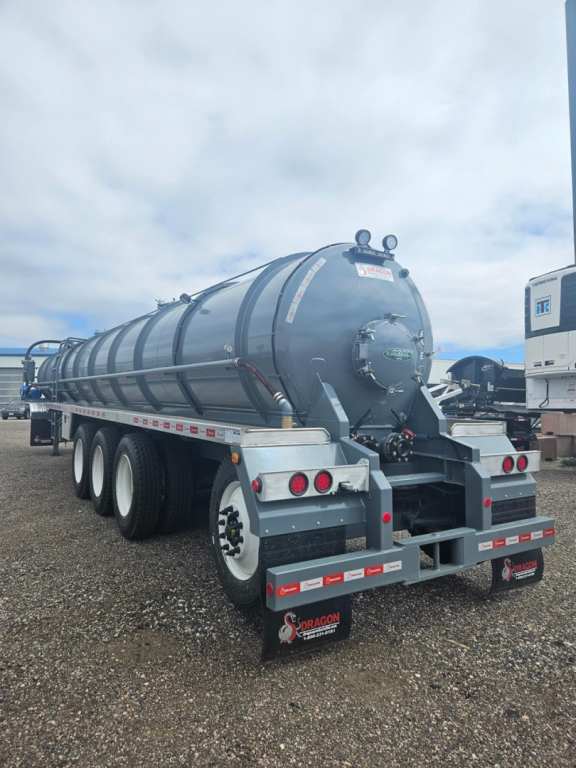
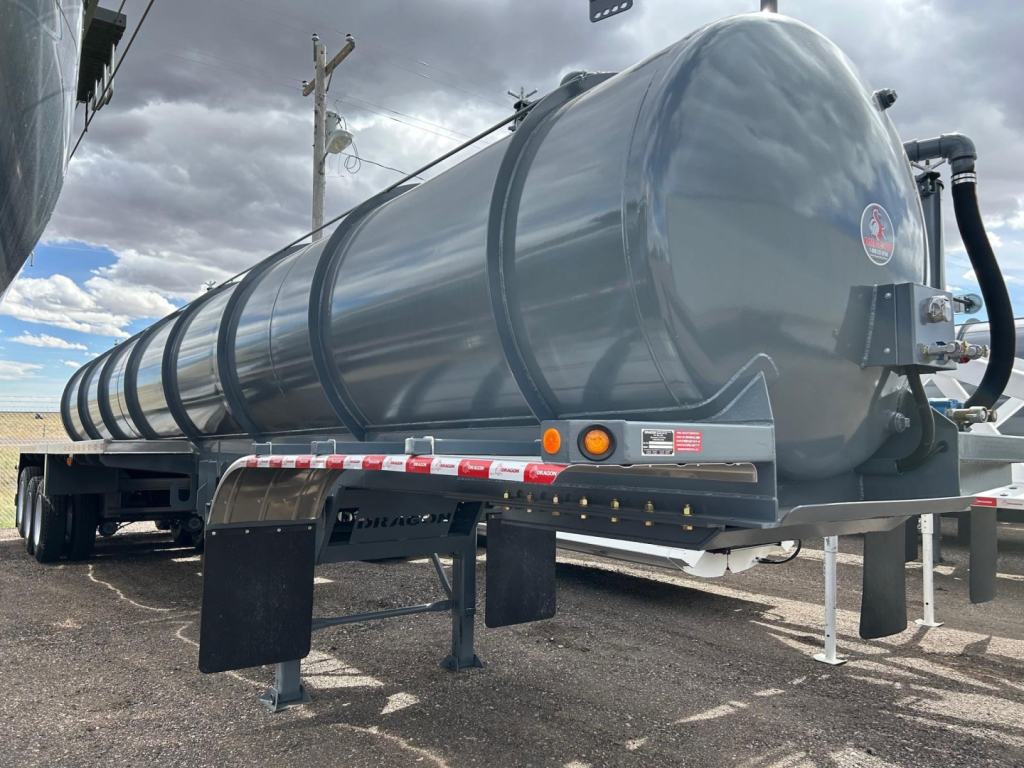
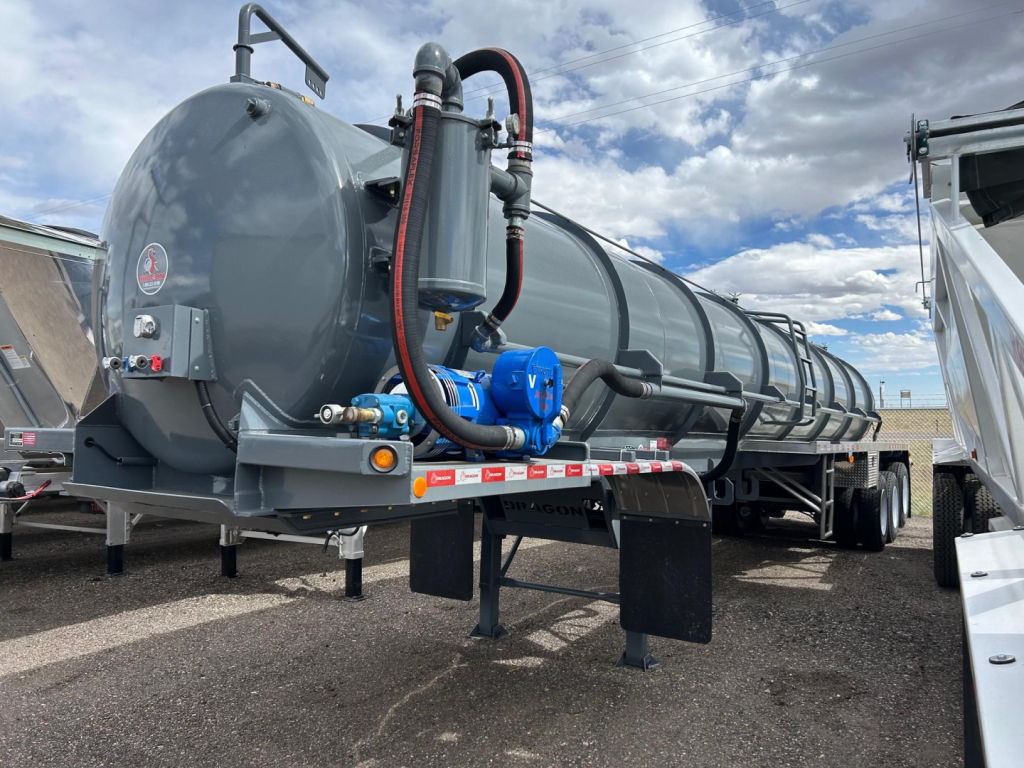
A buyer comparing Dragon vac tanks should look closely at the tank design and running gear before anything else. Typical specs include a single-compartment tank, internal baffles for surge control, multiple dome lids for top access, air ride suspension, and lift axles to help manage tire wear when running empty or lightly loaded. On larger Rocky Mountain style trailers, a steerable rear axle can be a major advantage on lease roads, tank batteries, and tight yard entrances. Trailer length, axle spread, tire size, and fender layout all affect how the unit tracks, how easily it backs, and how well it holds up in heavy field service.
Pump choice matters because it directly affects loading speed, unloading efficiency, and maintenance planning. Fruitland pumps are common in this category and are widely recognized in vacuum tanker service for dependable performance and straightforward parts support. Buyers should also evaluate practical details such as level gauges, work lights, ICC bumpers, tow hooks, and access points because these features affect everyday jobsite use more than the sales sheet sometimes suggests. For non-code vacuum trailers, the intended commodity and operating region matter. Water service, saltwater disposal support, and fluid recovery have different wear patterns and operating demands, even when the trailer looks similar on paper.
New Dragon vacuum trailers appeal to fleets that want current-spec equipment, reduced startup maintenance, and a configuration tailored to regional hauling needs. In Wyoming, that often means paying attention to winter conditions, unpaved access roads, and the tradeoff between maximum capacity and axle count. A properly spec'd vacuum trailer can improve turnaround time, reduce empty-mile tire scrub, and stay compliant with site and highway requirements. Buyers comparing listings should weigh BBL capacity, trailer length, suspension, lift axle arrangement, and vacuum system brand together, because the right combination usually determines long-term operating cost more than any single feature alone.
Frequently Asked Questions about New Dragon Vacuum Trailers in Wyoming
What is the typical capacity range for a Dragon vacuum trailer?
Dragon vacuum trailers in oilfield and water service are commonly spec'd in the mid-100 BBL range, with examples around 165 BBL to 193 BBL being common. The right size depends on commodity, legal weight limits, route conditions, and axle configuration. Higher barrel capacity can improve productivity, but only if the trailer can stay compliant and practical on the roads and locations where it will operate.
What is the difference between a tri-axle and a quad-axle vacuum trailer?
A tri-axle vacuum trailer is often simpler, lighter, and easier to maneuver, while a quad-axle setup is typically chosen to support greater capacity and better distribute weight. In field service, quad-axle trailers may also include lift axles or a steerable rear axle to improve tire life and turning performance. The better choice depends on payload targets, bridge laws, jobsite access, and how often the trailer runs full versus empty.
What does non-code mean on a vacuum trailer?
Non-code generally means the tank is not built to ASME pressure vessel code for pressure-rated product service. In this category, non-code vacuum trailers are commonly used for water, saltwater, and similar fluid handling applications where the operating requirements fit that design. Buyers should always confirm the intended commodity and regulatory requirements for their operation, because tank code status affects where and how the trailer can be used.
Why is a steerable or lift axle important on a vacuum trailer?
Lift axles help reduce tire scrub and rolling resistance when the trailer is not fully loaded, which can lower operating costs over time. A steerable rear axle can make a long vacuum trailer easier to turn on narrow lease roads, in disposal sites, and around crowded yard entrances. These features are especially useful on larger-capacity trailers where axle spread and overall length can otherwise work against maneuverability.
What should buyers look for in a vacuum pump package?
The pump package should match the trailer's intended duty cycle, loading and unloading times, and maintenance expectations. Fruitland pumps are a common choice in vacuum tanker service because they are well known in the industry and generally supported with accessible parts and service knowledge. Buyers should also consider how the pump system integrates with the trailer layout, access for maintenance, and the type of fluid being handled, since those details affect reliability in daily operation.