
New 2027 Dragon Vacuum Trailers For Sale
Shop new 2027 Dragon vacuum trailers, including water vacuum tankers with common BBL capacities, axle setups, pump options, and field-ready specs.
Selling a new 2027 dragon vacuum trailer? List your new 2027 dragon vacuum trailer for sale and reach thousands of commercial buyers.
New 2027 Dragon Vacuum Trailers
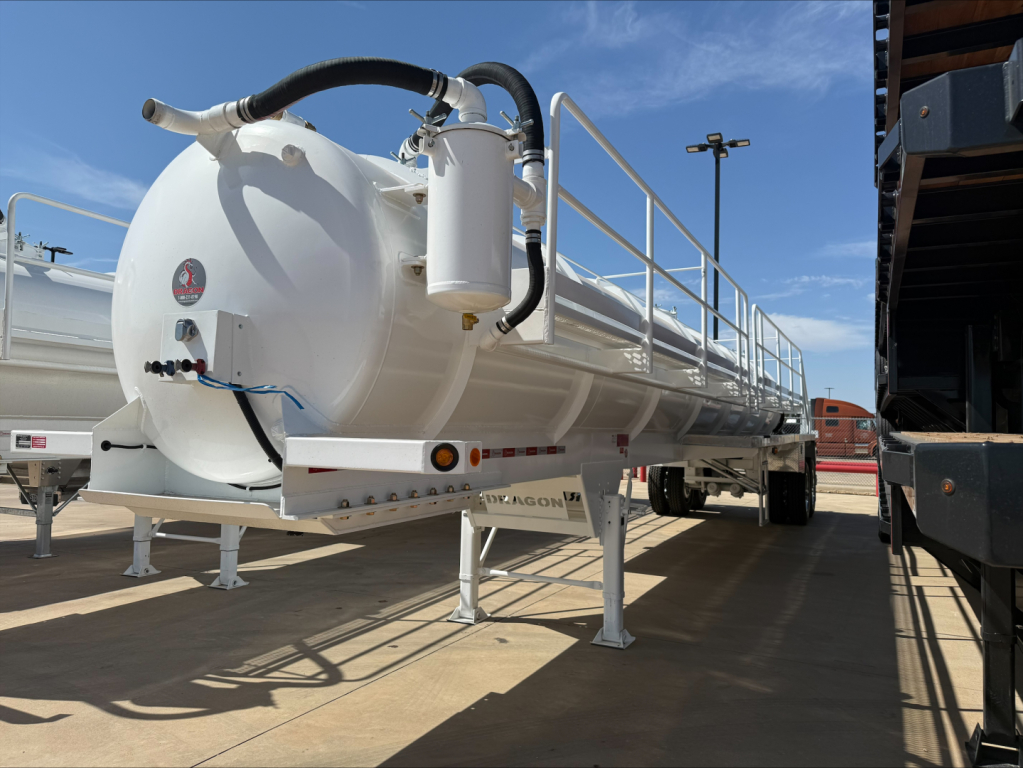
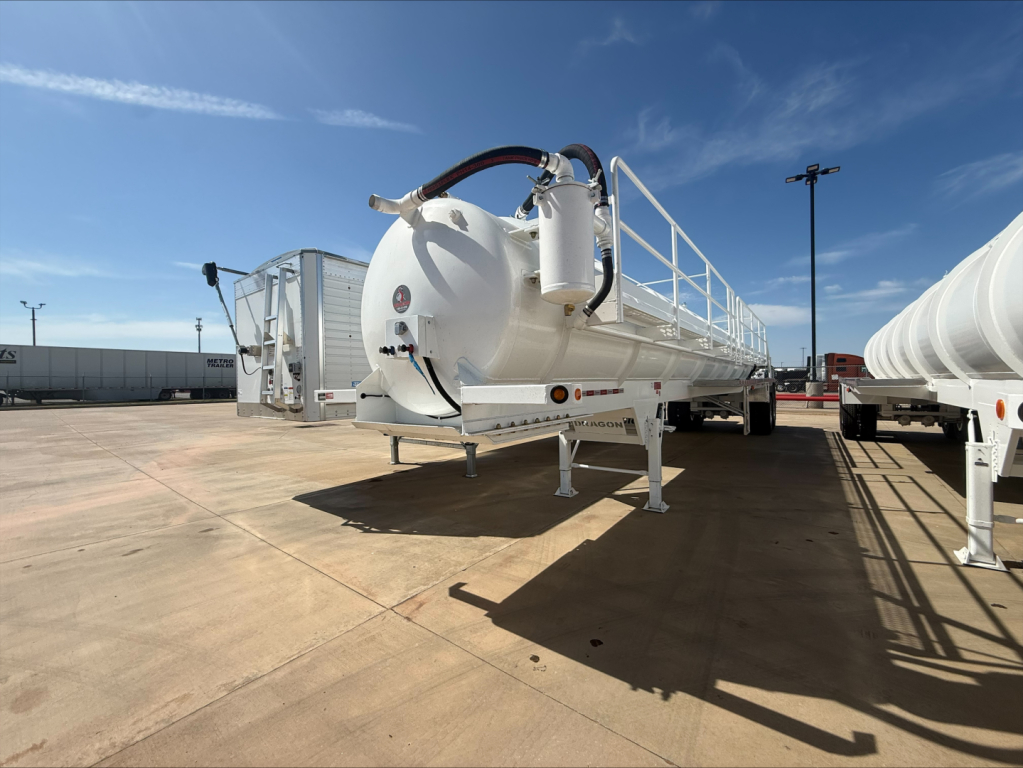
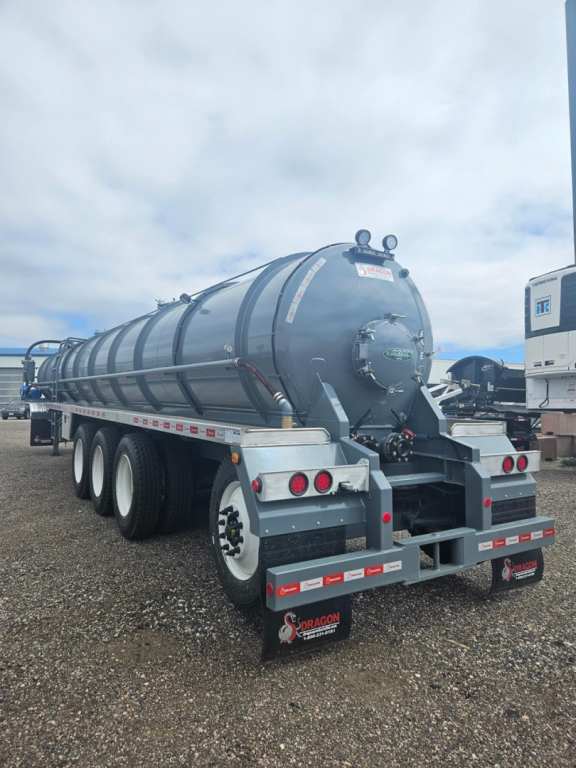
Most Dragon vacuum trailers in this class are non-code water vacuum tankers built for moving produced water, drilling fluids, wash water, and other non-hazardous liquids. Common trailer specs include single-compartment tanks, internal baffles for surge control, multiple dome lids for top access, and level gauges for load monitoring. Buyers should pay close attention to overall trailer length, barrel capacity, suspension type, and tire package. Air ride suspension is common for ride quality and equipment protection, while a rear lift axle can help with tire wear, bridge compliance, and maneuverability when the trailer is running light.
Pump package and operator layout are just as important as tank size. Many Dragon vacuum trailers are equipped with proven vacuum pump brands such as Fruitland, along with manual dump valves, hose troughs, catwalks with safety rails, chain hangers, toolboxes, work lights, tow hooks, and ICC bumpers. These details affect daily uptime in the field. A practical layout with accessible controls, secure hose storage, and safe top access can make a real difference on multi-stop routes or remote lease work where loading and unloading conditions are less predictable.
For buyers comparing new 2027 Dragon vacuum trailers, the key is matching barrel capacity and running gear to the actual job cycle. A 130 BBL unit can be a strong fit where shorter wheelbase and lighter weight improve access, while a 165 BBL trailer may pencil out better for long hauls and higher-volume water movement. It also helps to confirm whether the trailer is configured strictly for water service or for a broader vacuum application, and to review dome count, baffle design, landing gear, fenders, wheel spec, and overall service access before making a final decision.
Frequently Asked Questions about New 2027 Dragon Vacuum Trailers
What are the most common capacities for Dragon vacuum trailers?
Common Dragon vacuum trailer capacities in this category include 130 BBL and 165 BBL tanks. The right size depends on haul distance, site access, legal weight limits, and the type of fluid being moved. A 130 BBL trailer is often easier to maneuver in tighter areas, while a 165 BBL trailer can improve efficiency when the operation supports the added capacity.
What is a non-code water vacuum trailer used for?
A non-code water vacuum trailer is generally used for transporting non-hazardous liquids such as produced water, drilling fluids, wash water, and similar materials in oilfield or industrial service. It is not the same as a code trailer built for regulated hazardous service. Buyers should verify the intended product, disposal route, and any local or customer-specific compliance requirements before choosing a tank configuration.
Why would a buyer choose a tri-axle vacuum trailer with a lift axle?
A tri-axle vacuum trailer with a rear lift axle can offer better weight distribution at higher capacities while also reducing scrub and improving maneuverability when the trailer is unloaded or lightly loaded. This setup can be useful for operators balancing payload needs with road restrictions and tire costs. It is especially relevant on larger barrel trailers where axle placement directly affects legal loading and turning performance.
What features matter most on a vacuum trailer besides tank capacity?
Beyond capacity, buyers should look closely at the vacuum pump brand and service access, baffle layout, compartment design, dome lid count, suspension type, hose storage, catwalk safety, dump valve arrangement, and overall trailer length. Work lights, toolboxes, fenders, landing gear, and level gauges also matter because they affect day-to-day usability. The best spec is the one that supports faster loading, safer unloading, and easier maintenance in the field.
Are Dragon vacuum trailers mainly used in oilfield service?
Oilfield service is a major application, but Dragon vacuum trailers are also used in construction support, environmental cleanup, industrial plant work, and municipal or contractor fluid handling. Their core role is moving liquid efficiently while standing up to demanding duty cycles. The exact spec should be matched to the fluid type, terrain, route length, and loading environment rather than the industry label alone.