
New Talbert Tag Trailers For Sale in Ohio
Compare new Talbert tag trailers for sale in Ohio by axle layout, ramp setup, pintle compatibility, and legal loaded weight before ordering a trailer.
Selling a new talbert tag trailer? List your new talbert tag trailer for sale and reach thousands of commercial buyers.
New Talbert Tag Trailers in Ohio
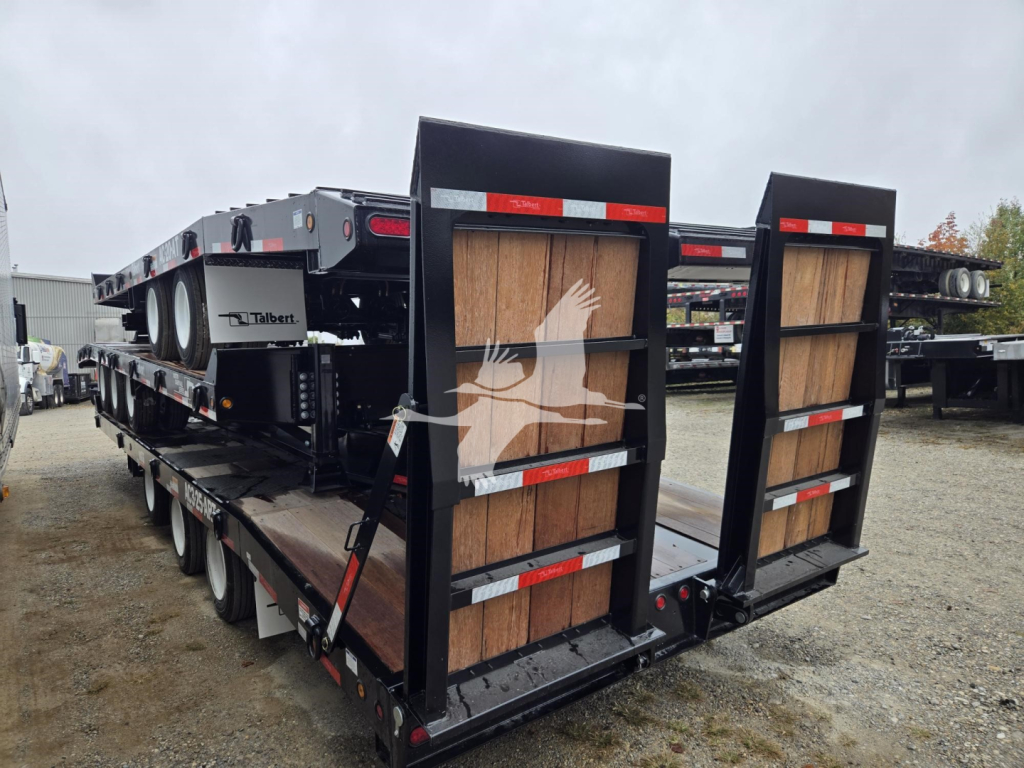
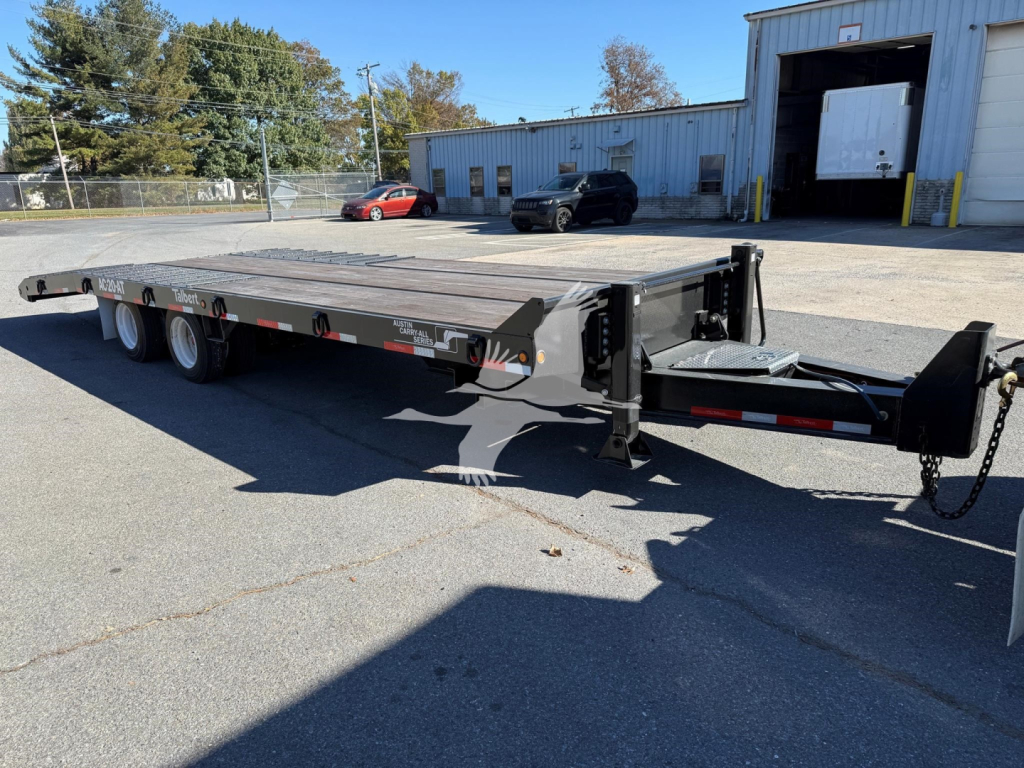
Deck length and loading geometry deserve as much attention as tonnage. Measure the machine's transport length, track or tire contact area, ground clearance, and attachment overhang before choosing the main deck and beavertail. Common AC configurations combine hardwood decking, 17.5-inch wheels, spring suspension, and an adjustable lunette eye. Confirm whether ramps are included, their individual ratings, their spacing, and whether air assistance is specified. A beavertail without suitable ramps is not a complete loading arrangement for equipment that cannot be lifted onto the trailer.
The towing truck needs adequate GCWR, hitch capacity, and rear axle reserve after its own body, fuel, tools, and cargo are counted. Match the lunette eye to an approved pintle hook and check both gross trailer and vertical load ratings throughout the hitch installation, including the truck's frame attachment. Air-braked trailers require compatible supply and service connections. Specify accessible tie-down points, adequate landing gear, and tongue clearance that permits turns without contact between the truck body and trailer.
Ohio road construction, excavation, utility work, and agricultural support create different loading requirements, but every application must satisfy axle and route limits. A third axle does not automatically make a heavier load legal; axle spacing, actual axle weights, bridge restrictions, and the complete combination matter. Check Ohio Department of Transportation permit requirements for state routes and obtain separate local authorization where required. Winter salt exposure also makes coating preparation, protected wiring, sealed lighting connections, and accessible washout areas worthwhile specification priorities, even on a factory-new trailer.
Before accepting a new trailer, verify the completed build sheet, certification label, tire and axle ratings, brake operation, wheel-end condition, and all ordered loading equipment. Record the warranty start date and establish which claims go through Talbert versus component suppliers. Confirm whether paint, corrosion, decking, and wear items have separate limitations rather than assuming uniform coverage. Qualifying new heavy trailers carry a 12% federal excise tax unless an exemption applies, so the purchase paperwork should clearly document the tax treatment. Retain the loading instructions and initial inspection records with the trailer's maintenance file.
Frequently Asked Questions about New Talbert Tag Trailers in Ohio
Do I need a Class A CDL to pull a Talbert tag trailer in Ohio?
An Ohio commercial combination generally requires a Class A CDL when combined rated or actual weight reaches 26,001 pounds and the towed unit exceeds 10,000 pounds rated or actual weight. A heavy Talbert tag trailer behind a dump truck commonly meets those thresholds. The driver must also satisfy applicable air-brake requirements, and any claimed farm or other exemption should be verified for the specific operation.
How many tie-downs do I need for an excavator on a Talbert tag trailer?
An excavator weighing 10,000 pounds or more requires at least four tie-downs under federal heavy-equipment securement rules. On a Talbert tag trailer, use suitable attachment points near the machine's front and rear, and verify chain, binder, and anchor working load limits. Lower and secure accessory equipment such as the bucket or boom as required; the four machine tie-downs do not automatically satisfy every attachment-securement requirement.
Should I order a lift axle on a three-axle Talbert tag trailer?
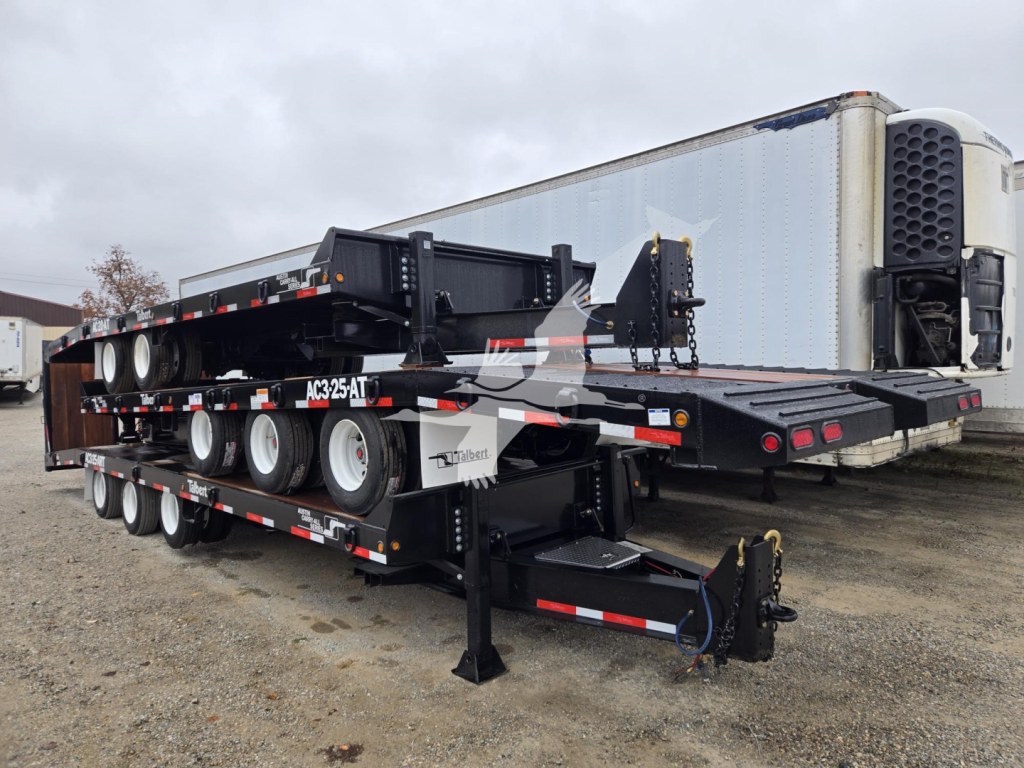
A lift axle can be useful for empty travel, but it does not increase a Talbert tag trailer's GVWR or legal payload. On an AC3-25 configuration equipped with a liftable front axle, confirm the manufacturer's operating instructions and loaded axle requirements. Raising an axle transfers weight to the remaining axles and changes the effective axle spacing, which can affect legal weight limits.
Does a factory-new Talbert tag trailer need an annual DOT inspection?
A commercially operated Talbert tag trailer subject to federal periodic inspection rules needs a qualifying inspection at least every 12 months, even when purchased new. A documented manufacturer or pre-delivery inspection may satisfy the initial requirement only if it meets the applicable inspection standards. Do not assume the production date or a routine delivery checklist establishes compliance; obtain the inspection documentation.