
New 2027 Stoughton Trailers For Sale in Kansas
Shop new 2027 Stoughton trailers for sale in Kansas, including lightweight grain hopper trailers with modern specs for ag hauling.
Selling a new 2027 stoughton trailer? List your new 2027 stoughton trailer for sale and reach thousands of commercial buyers.
New 2027 Stoughton Trailers in Kansas
Capacity and overall height matter more than many buyers realize. A 40-foot hopper with 68-inch sides may land around 1,370 cubic feet and roughly 1,100 bushels, while a 42- or 43-foot trailer with 74- to 80-inch sides can push into the 1,555 to 1,757 cubic foot range. That extra volume can improve revenue on lighter commodities, but it also raises overall trailer height and can affect route flexibility, farm access, and legal loading strategy. In Kansas, where operators often run grain from field to local elevator and then into broader regional lanes, the right body size depends on crop mix, payload targets, and how often the trailer sees uneven approaches, soft lots, or older dump pits.
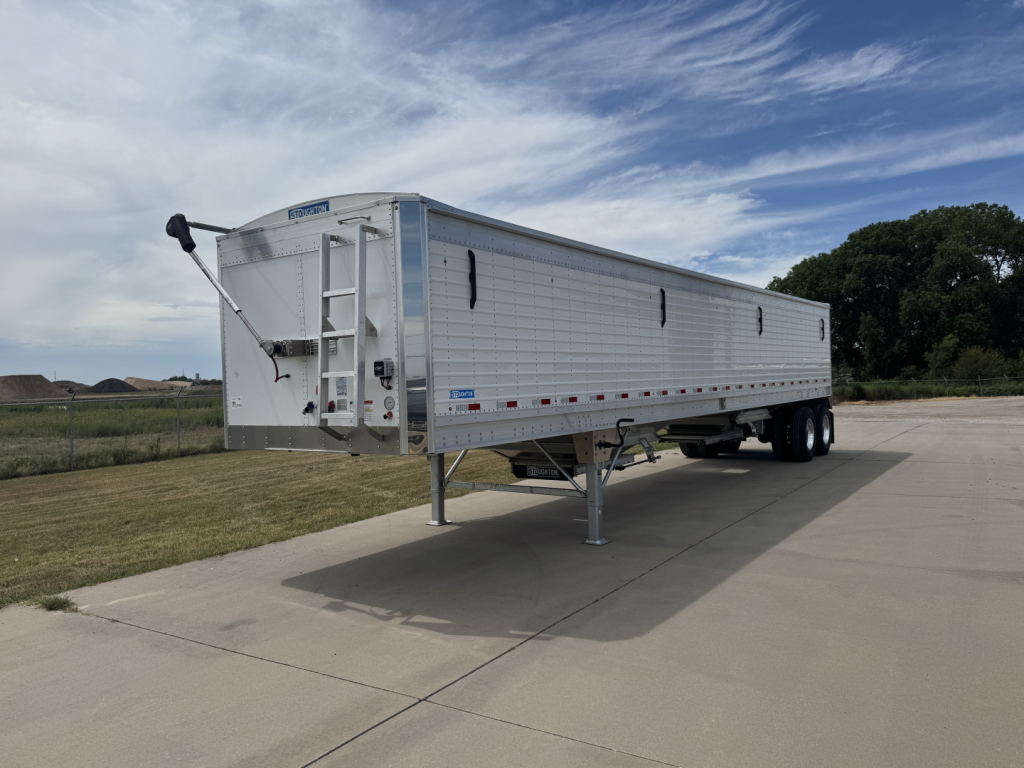
Construction details on Stoughton hopper trailers are worth a close look. Many are spec'd with aluminum sidewalls and front panels to keep weight down, paired with galvanized steel subframes and landing gear for durability in corrosive, high-use environments. Stainless rear wall components and corner inserts are common wear-focused upgrades, especially for trailers that see repeated loading and unloading cycles. Buyers should also compare corrugated versus flat sidewall designs, post spacing, removable inner liners, and 2-stage manual trapdoor systems. Trapdoor opening size and ground clearance affect unload speed and pit compatibility, while front and rear ladders, electric tarp systems with remote control, LED lighting, splash guards, and optional tire inflation systems all contribute to day-to-day usability and lower downtime.
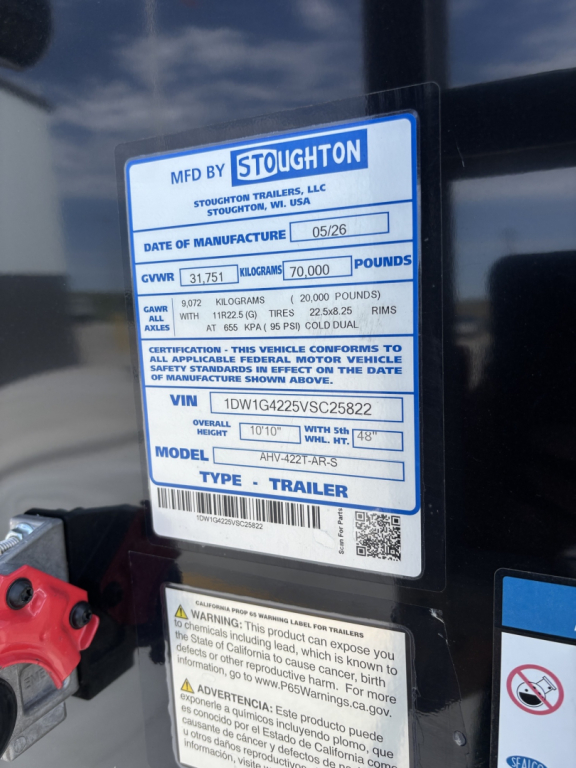
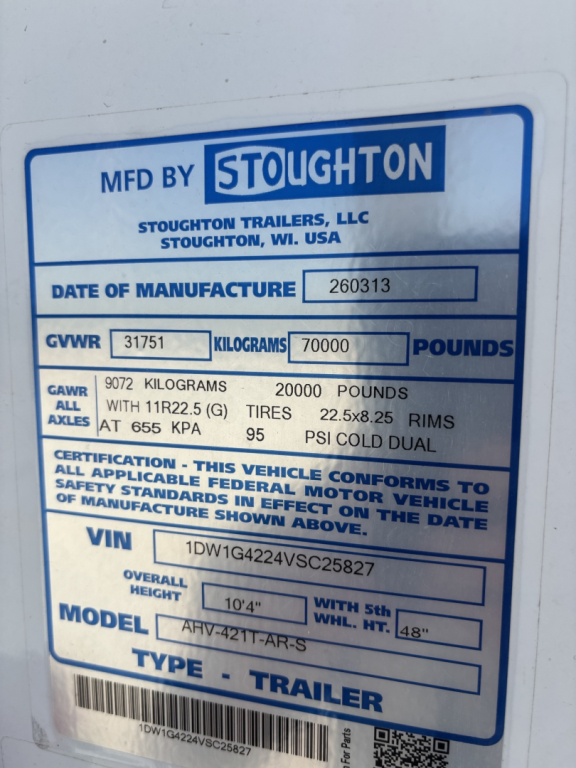
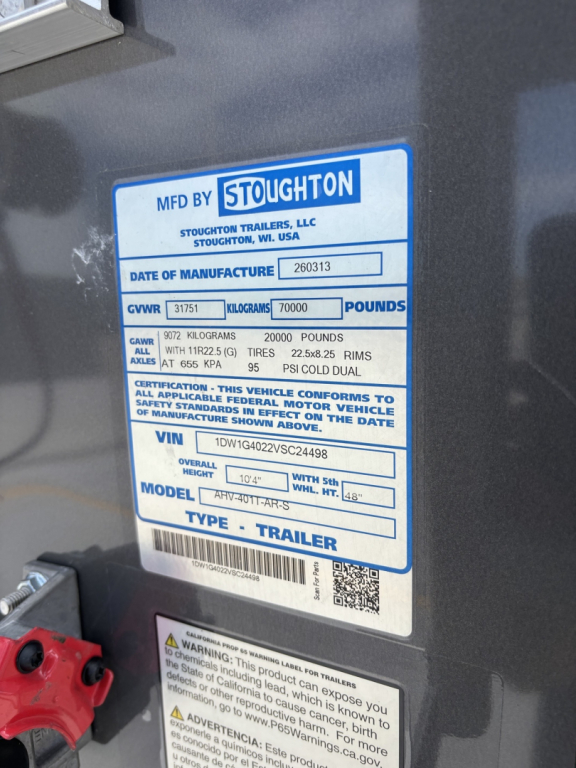
Running gear specs in this category are typically straightforward but important. Many new Stoughton hoppers use air ride suspension, drum brakes, 2S1M ABS, 11R22.5 tires, aluminum wheels, 48-inch fifth wheel height, and a 20-inch kingpin setting. Those numbers matter because they influence tractor match, bridge compliance, ride quality, and serviceability across a fleet. A buyer comparing new 2027 Stoughton trailers should pay close attention to empty weight versus capacity, side height versus legal loading needs, and component choices that affect long-term maintenance. For Kansas grain hauling, a well-matched Stoughton hopper trailer can be a durable, lightweight solution for corn, wheat, soybeans, milo, and other free-flowing ag commodities.
Frequently Asked Questions about New 2027 Stoughton Trailers in Kansas
What type of Stoughton trailers are most common in this category?
The sample units in this category are aluminum grain hopper trailers, also called hopper bottom trailers or grain hoppers. These trailers are designed for bulk agricultural commodities that unload by gravity through bottom trapdoors. They are a common choice for hauling wheat, corn, soybeans, milo, and similar free-flowing products in farm, elevator, and regional commodity lanes.
What size Stoughton grain hopper should I choose?
The right size depends on the commodities you haul, target payload, and the routes you run. Shorter 40-foot models with 68-inch sides can be easier to manage in tighter farm approaches and may still offer around 1,100 bushels. Larger 42- to 43-foot trailers with taller sidewalls provide more cubic capacity, which helps on lighter products, but added height and volume need to be matched to legal weight limits, route restrictions, and unloading locations.
Why do buyers look closely at trailer weight and construction materials on a grain hopper?
Empty weight directly affects how much legal payload you can carry, so aluminum body construction is a major advantage in grain hauling. At the same time, buyers still want strength in high-stress areas, which is why galvanized steel subframes, stainless rear wall sections, and reinforced corner panels are common specs. The goal is to maximize payload without sacrificing durability in repetitive loading, unloading, and rural road use.
Are air ride suspension and drum brakes typical on new Stoughton hopper trailers?
Yes. Air ride suspension is common because it helps protect the trailer structure and cargo while improving ride quality on mixed road conditions. Drum brakes remain a standard spec on many grain hoppers because they are familiar to service, widely supported, and cost-effective for this application. Buyers should still confirm axle spread, ABS configuration, tire size, and wheel material so the trailer matches their tractors and maintenance practices.
What options have the biggest impact on daily use for a grain hopper trailer?
Electric tarp systems, trapdoor design, liner options, lighting, and tire inflation systems are some of the most useful day-to-day features. An electric tarp speeds loading and covering, especially in poor weather or frequent stop-and-go work. Proper trapdoor sizing and ground clearance improve unloading efficiency, while LED lighting and tire inflation systems can reduce service interruptions. Removable inner liners can also help protect the trailer and support cleaner unloads depending on the commodity mix.