
Utility Refrigerated Trailers For Sale in South Dakota
Shop Utility refrigerated trailers for temperature-controlled freight, with spec insights on suspension, axle settings, tires, and reefer use.
Learn more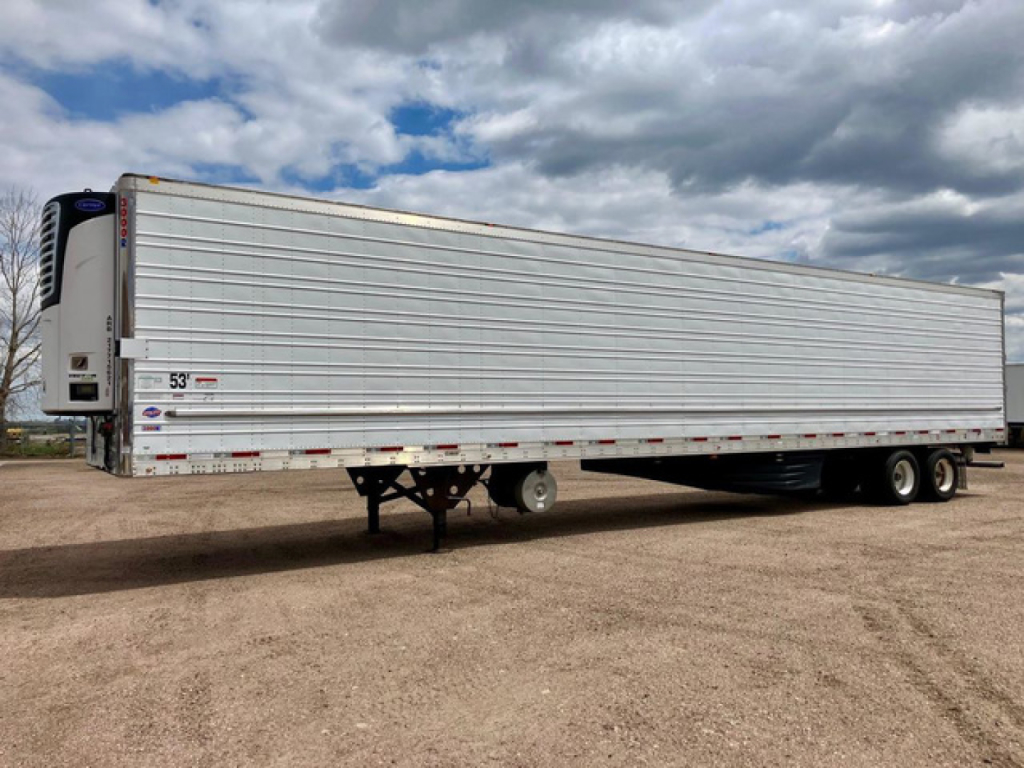

Showing 61 to 72 of 121 results
Have utility refrigerated trailer to sell? List it here to reach thousands of buyers.
About Utility Refrigerated Trailers in South Dakota
On many Utility reefers, the core trailer decisions come down to suspension, axle configuration, and tire and wheel package. Air ride suspension is common because it helps protect sensitive freight and reduces shock transfer over rough roads. Sliding tandem axle spacing matters for bridge law compliance, dock approach, and weight distribution, especially for fleets running multi-state lanes. Standard 22.5-inch rubber is common in this class, and aluminum wheels remain a popular choice for corrosion resistance and tare weight savings. Buyers should also look closely at floor type, crossmember spacing, rear frame design, and roof construction, since these details affect durability under constant forklift traffic and repeated cold-cycle use.
In South Dakota, reefer trailer buyers often pay extra attention to insulation efficiency, door performance, and structural condition because trailers may see both extreme winter cold and summer heat. A good refrigerated trailer needs to hold setpoint consistently, manage moisture, and stand up to frequent loading cycles at distribution centers, grocery docks, and food service stops. Features such as scuff liners, duct floors or chute-style air delivery, interior lights, and trailer skirts can all matter depending on the freight mix and lane profile. If the operation includes mixed fresh and frozen freight, it is also worth checking airflow design and how evenly the trailer maintains temperature from nose to doors.
Utility has long been a recognized name in reefer trailers, and many buyers focus on practical ownership factors such as parts support, panel condition, seal integrity, and resale value. When comparing units, inspect the trailer body for sidewall repairs, floor wear, swing door alignment, and signs of moisture intrusion around the front wall, roof seams, and evaporator area. Also confirm the kingpin setting, overall trailer length, inside width, and dock-height compatibility with the tractors and facilities in your fleet. A well-spec'd Utility refrigerated trailer can serve regional grocery work, dedicated food hauling, or long-haul frozen lanes with the durability and temperature control this segment demands.
Frequently Asked Questions
What should I look for first when buying a Utility refrigerated trailer?
Start with the trailer body, insulation integrity, floor condition, and door seal performance. Refrigerated trailers depend on a tight thermal envelope, so damage to sidewalls, the front wall, roof seams, or rear doors can hurt temperature control and increase reefer run time. After that, review suspension type, axle slider function, tire condition, wheel material, and overall structural wear from forklift traffic and dock impact.
Why is sliding tandem axle spacing important on a reefer trailer?
Sliding tandem axle spacing affects legal weight distribution, bridge law compliance, and how the trailer handles at docks and in tight yards. A slider gives more flexibility when balancing heavy palletized freight or adapting to different state requirements. For many reefer operations, that adjustability is important because load density can vary significantly between fresh, frozen, and mixed-temperature shipments.
Are Utility reefer trailers a good fit for food-grade freight?
Yes, Utility refrigerated trailers are commonly used for food-grade applications when the interior, floor, and seals are in proper condition. Buyers should verify that the interior lining is clean and sound, the floor is not compromised, and the air delivery system supports even temperature distribution. Food shippers also tend to value cleanable surfaces, strong door seals, and protection against moisture intrusion and contamination.
What trailer specs matter most in colder climates like South Dakota?
In colder climates, buyers should pay close attention to insulation performance, door seal condition, floor integrity, and overall body tightness. Extreme cold can expose weak seals, moisture problems, and structural issues that may not show up as quickly in milder regions. Reliable suspension components, good tire condition, and corrosion-resistant wheel and undercarriage components also matter when trailers operate on winter roads and through freeze-thaw cycles.
How do aluminum wheels and air ride suspension benefit a refrigerated trailer?
Aluminum wheels help reduce weight and resist corrosion, which can be valuable on trailers that run year-round in harsh weather. Air ride suspension helps protect delicate freight by reducing vibration and shock transfer, and it can improve ride quality over rough pavement. On a refrigerated trailer, that combination supports both payload efficiency and cargo protection, especially for higher-value or damage-sensitive loads.