
Used Wabash Reefer Trailers For Sale in Georgia
Browse used Wabash reefer trailers in Georgia, including 51 ft and 53 ft specs, reefer units, doors, suspension, brakes, and cargo options.
No exact matches found for your search
Showing Used Reefer Trailers in Georgia instead.
Selling a used wabash reefer trailer? List your used wabash reefer trailer for sale and reach thousands of commercial buyers.
Used Wabash Reefer Trailers in Georgia
Wabash reefers in this class are often 53-foot trailers, with some 51-foot configurations showing up for specialized regional or urban work. Typical dimensions include 102-inch overall width and 13-foot 6-inch overall height, with inside heights around 93 inches depending on floor and roof design. Common features include aluminum flat floors, scuff liners or scuff plate protection, E-track, stainless steel rear door frames, sliding tandems, and 22.5 low-profile tires. Buyers comparing used units should pay close attention to rear door style, since roll-up doors can improve dock convenience but may slightly affect insulation efficiency and door opening clearance compared with swing doors. Side doors and liftgates add flexibility for multi-stop distribution but also add weight and maintenance points.
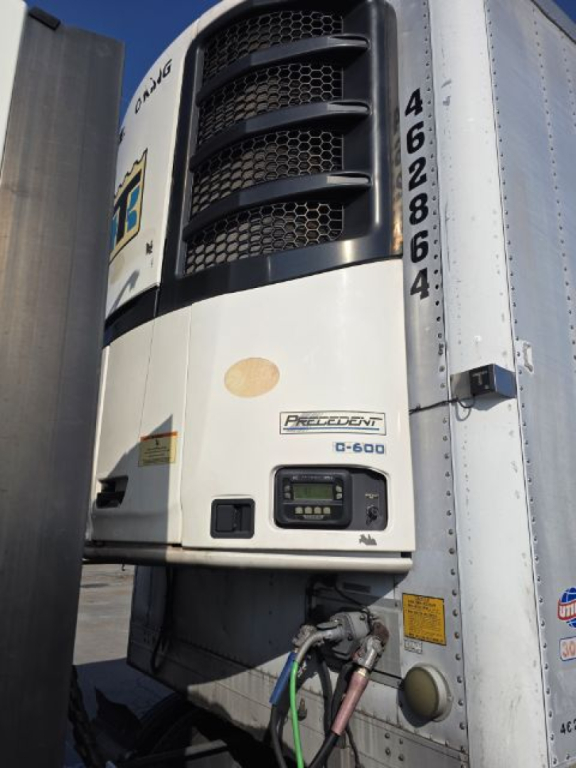
Reefer unit spec matters as much as the trailer body. Many used Wabash reefer trailers are paired with Carrier or Thermo King units, and for higher-cycle delivery applications a unit such as a Carrier Vector series can indicate stronger performance for frequent door openings and tighter temperature control. Check engine hours, run hours, service records, fuel system condition, evaporator and condenser condition, and whether the trailer has been used for frozen, chilled, or mixed-temp freight. The floor condition, wall lining, drain setup, and door seals tell you a lot about how hard the trailer has worked. Disc brakes, tire inflation systems, and side skirts can also be valuable on a used reefer, especially for fleets looking to reduce brake wear, roadside tire issues, and operating cost on longer Georgia and Southeast lanes.
A used Wabash reefer trailer should also be evaluated for suspension type, tandem slide range, and structural condition around the crossmembers, threshold, and rear frame. Spring suspension remains common and straightforward to maintain, while sliding tandems help with bridge law compliance and dock positioning. For Georgia buyers, reefer performance in hot and humid conditions is a real consideration, so insulation integrity and unit pull-down performance matter more than a simple start-and-run check. A solid used Wabash reefer can fit everything from regional grocery distribution to pharmaceutical support freight, but the best choice comes down to cargo profile, stop frequency, dock setup, and how much emphasis your operation places on payload, temperature recovery, and maintenance simplicity.
Frequently Asked Questions about Used Wabash Reefer Trailers in Georgia
What should I check first on a used Wabash reefer trailer?
Start with the reefer unit, the trailer body, and the interior condition. Review engine hours and run hours on the refrigeration unit, then inspect service records, fuel system components, and evidence of recent repairs. On the trailer itself, check the floor for soft spots or heavy wear, inspect scuff liners and wall condition, and look closely at door seals, the rear frame, and the roof. Structural condition and insulation integrity usually matter more than cosmetic appearance on a used reefer.
Are 53-foot Wabash reefer trailers better than 51-foot models?
A 53-foot reefer trailer is the standard choice for maximum cubic capacity and broad freight compatibility, especially in grocery, cold chain, and distribution work. A 51-foot model can make sense when the operation values maneuverability, lighter loading profiles, or a specific route and dock setup. The better choice depends on cube needs, stop density, and whether the trailer is running regional delivery or linehaul temperature-controlled freight.
What features are most useful on a used reefer trailer for Georgia routes?
For Georgia operations, strong refrigeration performance in heat and humidity is critical. Buyers often prioritize a well-maintained reefer unit, good insulation, sound door seals, and fast temperature recovery after repeated openings. Practical equipment such as disc brakes, tire inflation systems, side skirts, sliding tandems, roll-up doors, curbside doors, and liftgates can also add value depending on whether the trailer is used for linehaul, foodservice, or multi-stop urban delivery.
How important is the reefer unit brand on a used Wabash trailer?
The brand matters, but condition and service history matter more. Carrier and Thermo King units both have strong market presence and established support networks, which helps with parts availability and technician familiarity. A well-documented unit with clean maintenance records, proper temperature control, and good pull-down performance is usually a better buy than a neglected unit from any major brand.
Do disc brakes and tire inflation systems add value on a used reefer trailer?
Yes, they can. Disc brakes typically offer more consistent stopping performance, easier inspection, and potentially lower brake-related downtime in high-mileage service. Automatic tire inflation systems help maintain correct pressure, which can reduce irregular wear, improve fuel efficiency, and cut roadside tire failures. On a reefer trailer that runs steady regional or long-haul miles, both features can support lower operating costs over time.