
Kaufman Lowboy Trailers For Sale
Browse Kaufman lowboy trailers built for heavy equipment hauling, with detachable neck options, deep wells, outriggers, and multi-axle capacity.
Learn more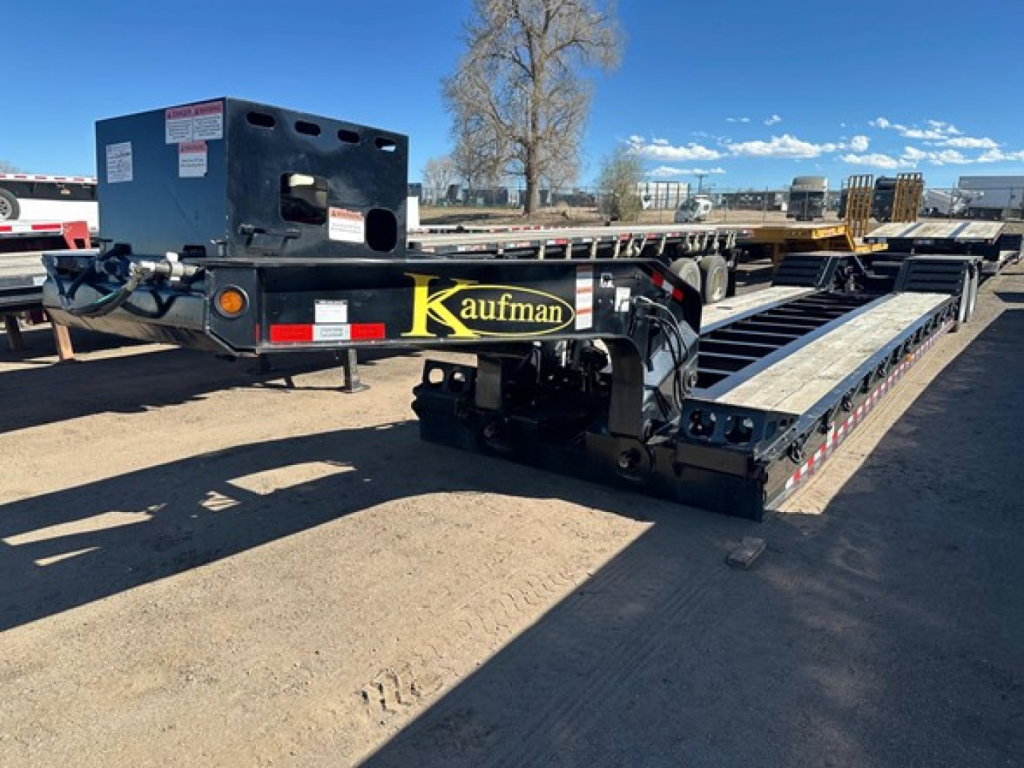
Have kaufman lowboy trailer to sell? List it here to reach thousands of buyers.
About Kaufman Lowboy Trailers
One of the first decisions is detachable neck style. Many Kaufman lowboy trailers are set up with a hydraulic detachable neck, and some include a pony motor so the trailer can be detached without relying on a wet kit from the tractor. That matters for fleets running multiple trucks or owner-operators who want flexibility in tractor assignment. Buyers should also pay close attention to well length, rear bridge length, overall width, and whether the trailer has outriggers or a deck extension setup for wider machines. A 24-foot well, 102-inch width, wood or apitong deck, D-rings, load bearing fenders, and loading ramps are all common features that affect how easily the trailer handles different equipment classes.
Capacity and running gear deserve a close look because the listed ton rating is only part of the story. On Kaufman lowboys, axle spacing, closed or spread tandem design, lift axles, tire size, suspension type, and kingpin setting all influence bridge law compliance and how usable the trailer is in real-world hauling. Air ride suspension can help protect both the trailer and the machine during transport, while low-profile 22.5 tires are often used to preserve deck height. If your work involves state-to-state permitting, verify the axle group, bridge dimensions, and concentrated load rating against the kind of loads you expect to move most often.
Condition and application fit matter more than brand name alone in this segment. Buyers should inspect the neck structure, deck crossmembers, outriggers, ramp system, suspension components, and any hydraulic system for wear or repairs. On a used Kaufman lowboy trailer, signs of repetitive overload, cracked welds around the neck and axle areas, or uneven tire wear can tell you a lot about how it was run. A well-spec'd Kaufman lowboy can be a practical choice for contractors, equipment rental fleets, paving crews, and specialized haulers that need a straightforward trailer with the right capacity, loading angle, and legal dimensions for daily heavy equipment transport.
Frequently Asked Questions
What is a Kaufman lowboy trailer used for?
A Kaufman lowboy trailer is used to haul heavy equipment and over-height machinery that would sit too high on a standard flatbed or deckover trailer. Common loads include excavators, bulldozers, loaders, skid steers, rollers, paving equipment, and other construction or agricultural machines. The low deck height helps keep overall loaded height within legal limits and improves stability during transport.
What should I look for when comparing Kaufman lowboy trailers?
The most important items are ton rating, well length, deck height, detachable neck type, axle configuration, suspension, and bridge dimensions. Buyers should also check for outriggers, D-rings, load bearing fenders, ramp style, deck material, and whether the trailer has a pony motor or requires a tractor wet kit. These details affect what equipment the trailer can carry, how fast it can be loaded, and whether it fits state permitting and bridge law requirements.
Is a hydraulic detachable neck better than a mechanical detachable neck on a lowboy?
A hydraulic detachable neck is often preferred for faster loading and unloading, especially when the trailer handles equipment regularly. It allows the operator to detach the neck more easily and can reduce setup time at jobsites. A mechanical neck can be simpler, but a hydraulic system is usually more convenient for frequent use, particularly when paired with a pony motor for independent operation.
How does axle setup affect a Kaufman lowboy trailer's hauling capability?
Axle setup affects legal payload, load distribution, ride quality, and permitting flexibility. Tandem axles are common, but some lowboys add lift axles to improve capacity and bridge compliance. Closed tandem versus spread configurations also changes how weight is distributed across the trailer. The right setup depends on the machine weights you haul most often and the states or regions where the trailer will operate.
Why are deck height and tire size important on a lowboy trailer?
Deck height is critical because it determines how much total machine height you can carry while staying within legal limits. Lower-profile tires, such as 22.5 low-pro tires, are often used to keep the deck as low as possible. A lower deck also improves loading stability and can make the trailer more suitable for taller equipment like excavators with cabs, forestry machines, or other high-profile loads.