
New 2027 Landoll Trailers For Sale
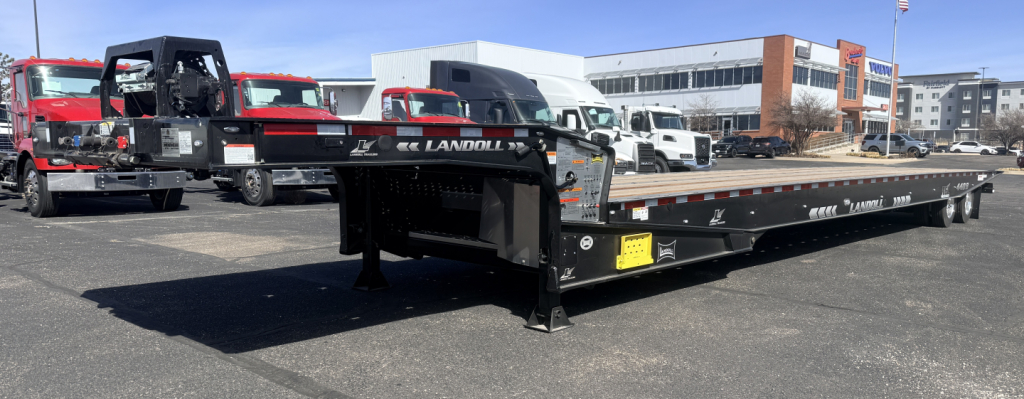
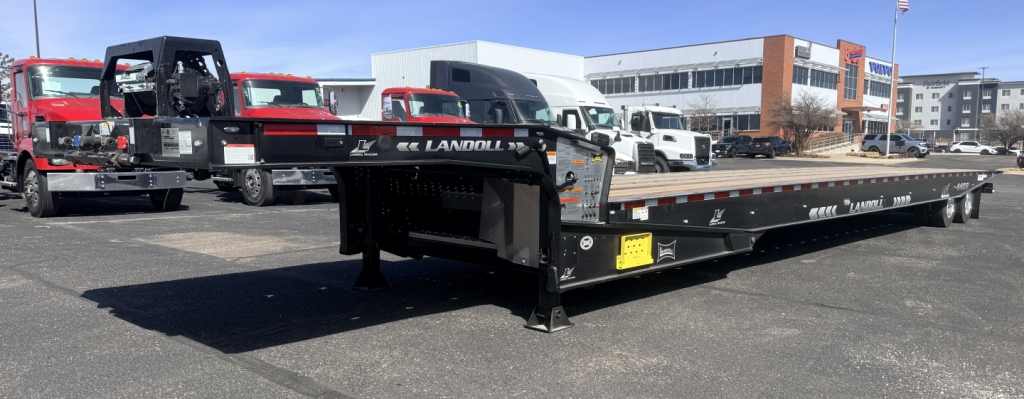
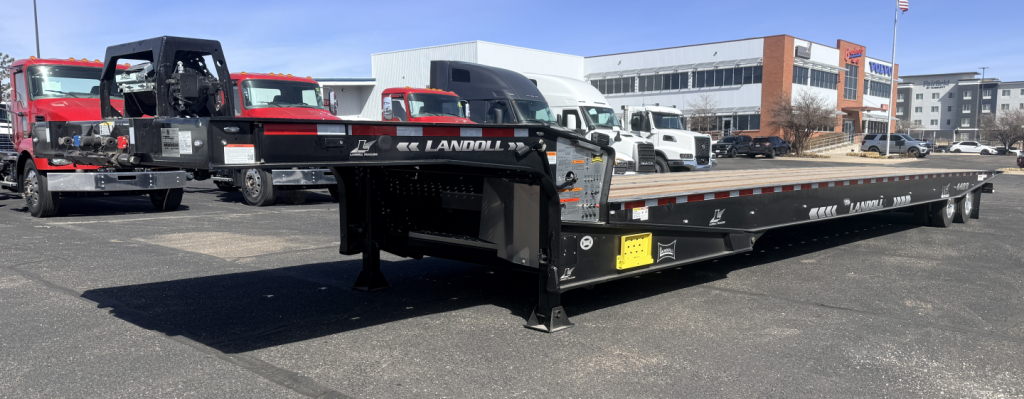
Shop new 2027 Landoll trailers, including lowboy, traveling axle, and slide axle models built for heavy equipment hauling and easy loading.
Learn more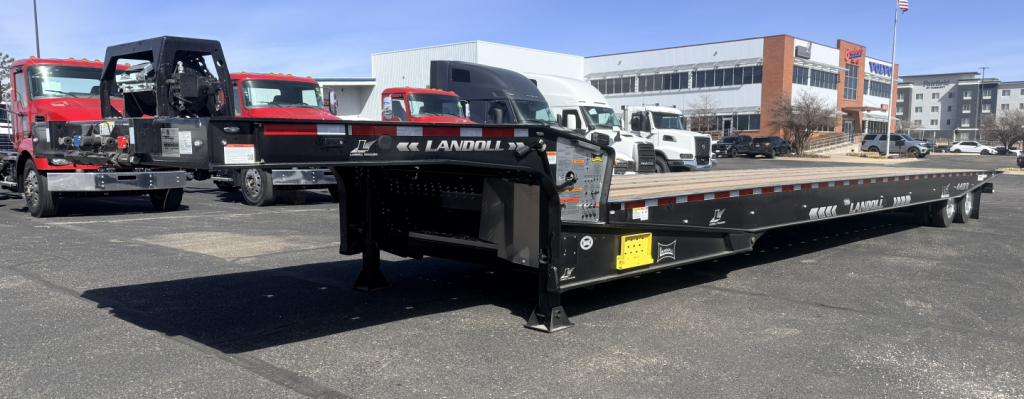
Showing 13 to 17 of 17 results
Have new 2027 landoll trailer to sell? List it here to reach thousands of buyers.
About New 2027 Landoll Trailers
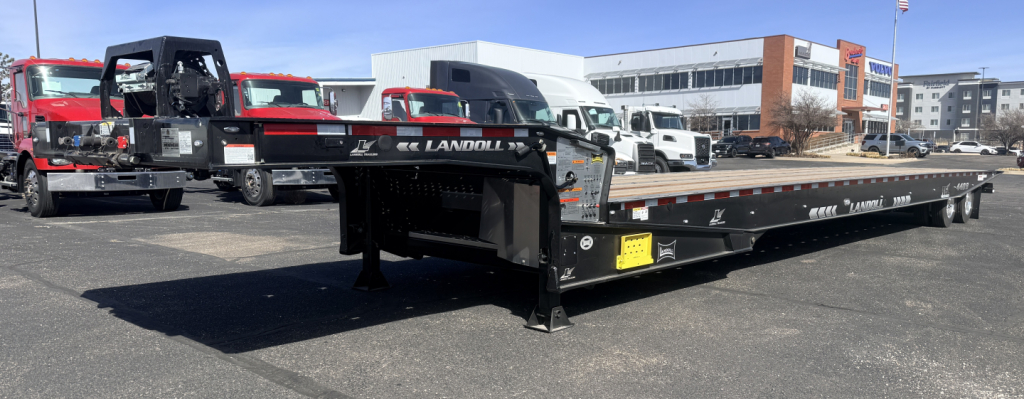
A lot of the buying decision comes down to axle design, deck rating, and load angle. Landoll models in this class are commonly found in 40 ton to 55 ton configurations, with deck ratings that matter just as much as gross capacity when you are hauling concentrated equipment weight. Buyers should pay close attention to lower deck length, loaded deck height, ground clearance under the gooseneck, and swing clearance. Kingpin settings, usually in the 18-inch to 21-inch range on these types of trailers, also affect tractor compatibility and bridge compliance. A lower load angle, often around 6.5 degrees on hydraulic traveling axle models, is a major advantage for paving equipment, scissor lifts, sweepers, and other machines with limited approach clearance.
Landoll trailers are also known for practical operator-focused features that improve daily use and reduce setup time. Common specs include hydraulic winches, wireless remote controls for tilt, axle travel, and winch functions, Apitong decking, chain slots, keyhole tie downs, stake pockets, and work lights for early morning or night loading. Many late-model heavy-haul configurations also include air ride suspension, air dump valves, tire inflation systems, onboard scales, centralized grease systems, and aluminum outer wheels. For buyers running in states with strict axle and bridge rules, axle spacing, suspension type, and tire size should be reviewed as closely as the stated ton rating.
If the trailer will be used across mixed freight and equipment types, it is worth comparing a Landoll traveling axle against a fixed lowboy or detachable gooseneck. A traveling axle or slide axle trailer usually gives up some low deck profile advantage compared with a true lowboy, but it can save significant time in the field by eliminating the need to detach the neck and by making loading simpler on uneven jobsites. Buyers looking at new 2027 Landoll trailers should focus on actual hauled equipment, weight distribution in 10 feet of deck, tail geometry, hydraulic system layout, and tie-down arrangement rather than tonnage alone. That is where the right trailer either works every day or becomes a limitation.
Frequently Asked Questions
What is the difference between a Landoll traveling axle trailer and a traditional lowboy?
A Landoll traveling axle trailer uses a hydraulic axle assembly that moves to change the deck angle for loading, while a traditional lowboy often relies on a detachable gooseneck or fixed ramp arrangement. The Landoll design is valued for quick loading and unloading of self-propelled equipment, especially on jobsites where speed and simplicity matter. A traditional lowboy may offer a lower overall deck height for very tall loads, but a traveling axle trailer is often more efficient for frequent equipment moves.
What capacity should I look for in a new Landoll trailer?
Capacity should be matched to the actual equipment being hauled, not just the headline ton rating. Buyers should review gross capacity, deck rating in 10 feet, axle ratings, and how the machine's weight is distributed across the trailer. A trailer rated at 40 tons or 55 tons may still have limits based on concentrated load points, boom placement, attachment weight, and regional axle laws. Deck strength and load placement are just as important as total trailer rating.
Why does load angle matter on a Landoll trailer?
Load angle is critical for machines with low ground clearance or long wheelbases. A lower load angle reduces the chance of dragging, high-centering, or damaging equipment during loading. This is especially important for pavers, rollers, scissor lifts, sweepers, and some compact equipment. Hydraulic Landoll trailers are popular because they can achieve relatively shallow loading angles without requiring extra ramp length or specialized site setup.
What features are commonly found on new Landoll heavy-haul trailers?
Common features include hydraulic winches, wireless remote controls, Apitong wood decking, chain slots, keyhole tie downs, stake pockets, work lights, landing gear, air ride suspension, dump valves, PSI tire inflation systems, and LED lighting. Higher-spec units may also include onboard scales, centralized grease systems, aluminum outer wheels, and upper deck tool boxes. These features matter because they affect loading speed, securement flexibility, maintenance intervals, and day-to-day operating convenience.
Are Landoll trailers a good fit for construction and rental fleets?
Landoll trailers are widely used in construction, paving, utility, and equipment rental fleets because they handle repeated loading cycles well and accommodate many machine types. They are especially useful when operators need to move equipment between multiple sites in a day and want a trailer that can load quickly without a detachable neck. Fleet buyers usually value them for versatility, durable deck construction, and the ability to haul everything from compact machines to heavier iron with the right specification.