
2020 Hyundai Trailers For Sale
Shop 2020 Hyundai trailers for sale, including dry van configurations with common specs, suspension options, doors, tandem setups, and lining details.
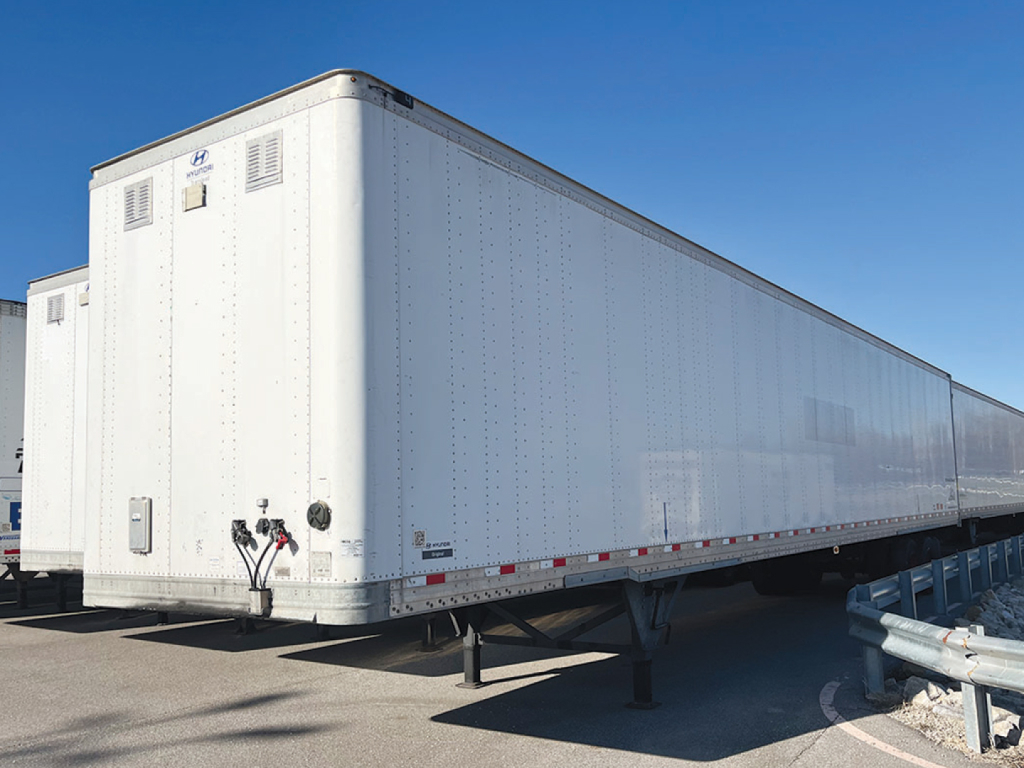

Selling a 2020 hyundai trailer? List your 2020 hyundai trailer for sale and reach thousands of commercial buyers.
2020 Hyundai Trailers
For most operations, the biggest buying decisions come down to cargo profile and lane type. A 2020 Hyundai van trailer with air ride suspension is typically a better fit for retail, palletized consumer goods, and freight that benefits from a smoother ride. Spring ride can still make sense for buyers focused on lower upfront cost and simpler maintenance. Roll-up doors are common in LTL, multi-stop, and dock-heavy work where repeated opening and closing matters. Swing doors are often preferred for maximum rear opening and simpler long-term repair costs. If your freight regularly rides low or shifts under hard braking, check for E-track, scuff liners, plywood lining condition, and floor wear around the threshold and rear sill.
Hyundai trailers from this era are also commonly spec'd with aerodynamic and maintenance-focused equipment that can affect total operating cost. Side skirts help on long highway lanes. A tire inflation system can reduce irregular wear and roadside downtime. Sliding tandems matter for bridge laws, dock positioning, and weight distribution, so inspect rail wear, pin engagement, and slider operation closely. On any used 2020 unit, buyers should also inspect roof bows, crossmembers, rear frame area, logistics posts, door hardware, suspension components, and signs of forklift damage inside the body. If the trailer has galvanized components or corrosion-resistant treatments, that can be a real advantage in northern climates and road salt exposure.
A 2020 Hyundai trailer is a practical choice for fleets and owner-operators looking for a late-model van trailer that still fits standard freight networks, dock equipment, and service channels. Also known simply as a dry van trailer or box trailer in everyday fleet use, this equipment class is designed for general freight, packaged goods, retail distribution, and contracted route work. The right unit depends less on brand name alone and more on how the trailer was spec'd and maintained. Floor condition, lining, rear door style, suspension, tandem configuration, and aero equipment will usually tell you more about long-term value than the badge on the nose.
Frequently Asked Questions about 2020 Hyundai Trailers
What are the most common specs on a 2020 Hyundai trailer?
Most 2020 Hyundai trailers in the general freight market are 53-foot dry vans with a 102-inch overall width, tandem axles, and 22.5-inch low-profile tires. Common features include wood floors, plywood lining, scuff plates, threshold plates, sliding tandems, and either air ride or spring suspension. Many units also include side skirts, front and rear vents, roll-up or swing rear doors, and fleet options such as tire inflation systems.
Is air ride or spring suspension better on a 2020 Hyundai van trailer?
Air ride is usually preferred for smoother handling, better cargo protection, and compatibility with higher-value or damage-sensitive freight. Spring suspension can still be a solid choice for operators prioritizing lower acquisition cost and simpler mechanical design. The better option depends on freight type, lane conditions, maintenance practices, and how important ride quality is to your customer base.
What should I inspect first on a used 2020 Hyundai trailer?
Start with the floor, rear frame, roof, doors, and tandem slider. Check for soft spots or heavy forklift wear in the wood floor, damage around the threshold plate and rear sill, roof leaks, cracked lining, and bent or worn door hardware. Then inspect suspension condition, brake wear, tire condition, wheel ends, crossmembers, and slider pins. A clean body spec means less if the structural and high-wear areas have been neglected.
Are 2020 Hyundai trailers good for fleet service and over-the-road freight?
Yes. Hyundai dry vans are widely used in fleet service because they are built around common freight dimensions, mainstream parts, and familiar trailer shop service requirements. A 2020 model-year unit can be a strong fit for over-the-road work, regional runs, retail freight, and drop-and-hook operations, especially when it has practical options like sliding tandems, tire inflation systems, and aerodynamic side skirts.
What rear door style is better on a 2020 Hyundai trailer, swing or roll-up?
Swing doors are often favored for full rear opening, easier access for wide loads, and lower long-term repair complexity. Roll-up doors are useful in frequent-stop applications where quick dock access matters and there is limited room behind the trailer. The right choice depends on dock setup, freight dimensions, and how often the trailer is opened during a route.