
2020 Hyundai Dry Van Trailers For Sale
Compare 2020 Hyundai dry van trailers by door clearance, wall construction, floor condition, and tandem setup for U.S. and Canadian freight operations.
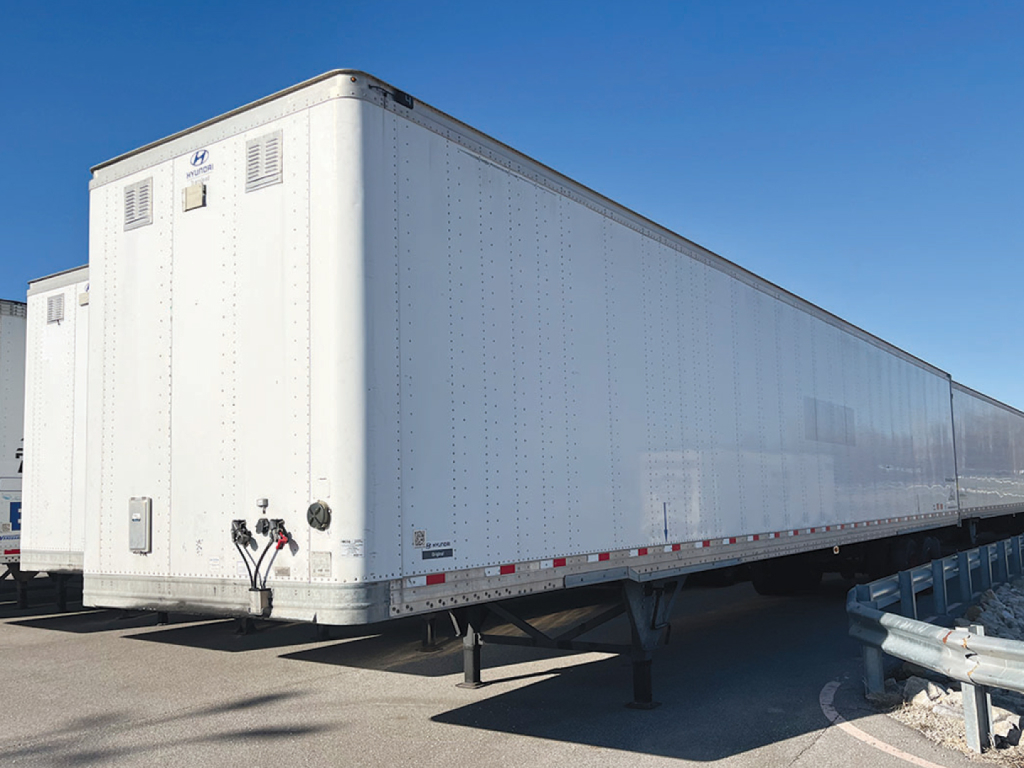
Selling a 2020 hyundai dry van trailer? List your 2020 hyundai dry van trailer for sale and reach thousands of commercial buyers.
2020 Hyundai Dry Van Trailers
Hyundai Translead aluminum sheet-and-post vans and plate-style vans require different wall inspections. On a plywood-lined body, examine the lining, posts, scuff protection, and cargo-control attachments for forklift strikes and pulled fasteners. On a plate-style body, inspect panel joints and repairs for separation, distortion, or water entry. A plate-wall body is not automatically a higher-payload trailer; actual empty weight and installed equipment determine the difference. Match E-track placement, interior width, and rear threshold condition to the freight and loading equipment.
For a used 2020 box trailer, inspect the floor from both above and below before judging condition from the exterior. Soft wood, dark staining, crushed boards, and damaged crossmembers can indicate repeated water exposure or concentrated forklift loading. Examine roof seams, front corners, landing gear mounts, the upper coupler, and rear frame for leaks, cracks, or collision repairs. Check tandem slider pins for full engagement, then inspect suspension bushings, spring components or air bags, brake wear, and wheel-end seals. Read tire date codes as well as tread depth. Request maintenance records and check the ABS system for stored faults.
Across the United States and Canada, route requirements should drive axle placement and overall dimensions. Trailer GVWR does not establish legal payload, and tandem settings must satisfy the applicable axle, bridge, and kingpin-distance rules. Northern service warrants close inspection for salt corrosion around crossmembers, brake hardware, wiring connections, and slider rails. Tire inflation equipment needs a leak check, especially after freeze-thaw exposure. Verify actual overall height against loading facilities and planned routes rather than assuming every dry van has the same roofline.
An unused 2020 trailer should be evaluated as stored equipment, not as a current factory order. Door arrangement, suspension, floor specification, and roof height are already fixed, so document any required modifications before purchase. Confirm the warranty start date, remaining coverage, and exclusions in writing. Storage can age tires, seals, and electrical connections without road mileage. On a qualifying new heavy trailer’s first U.S. retail sale, account for the 12% federal excise tax and verify the transaction’s tax treatment.
Frequently Asked Questions about 2020 Hyundai Dry Van Trailers
How do I know whether a 2020 Hyundai dry van floor can handle my forklift?
The trailer’s documented floor rating must cover the loaded forklift’s concentrated axle loading, not just the total freight weight. For a 2020 Hyundai dry van, obtain the floor specification and compare it with the forklift manufacturer’s loaded axle weights. Crossmember spacing, board condition, and previous repairs also matter. A sound-looking floor is not proof of adequate forklift capacity.
Does an ABS warning light mean a Hyundai dry van has no brakes?
An illuminated ABS warning lamp usually indicates an antilock-system fault, not a complete loss of the trailer’s service brakes. A 2020 Hyundai dry van still needs a separate air-brake inspection because the lamp does not establish mechanical brake condition. Have a technician retrieve fault codes and inspect sensors, wiring, and power supply before putting the trailer into service.
How does moving the tandems affect weight on a 2020 Hyundai dry van?
Moving the trailer tandems forward generally transfers weight from the tractor drives to the trailer tandems; moving them rearward generally does the reverse. Sliding the axles does not increase a 2020 Hyundai dry van’s GVWR or rated axle capacity. Scale the loaded combination after adjustment, confirm every locking pin is fully engaged, and keep the setting within the route’s axle-spacing and kingpin-distance limits.
Can I import a 2020 Hyundai dry van from the United States into Canada?
Canadian admissibility and compliance documentation must be confirmed before importing a 2020 Hyundai dry van from the United States. Check the trailer’s VIN and certification label against Transport Canada and Registrar of Imported Vehicles requirements before purchase. A U.S. title alone does not establish eligibility. Provincial registration and safety-inspection requirements are separate from the federal import process.