
2024 Fontaine Trailers For Sale
Shop 2024 Fontaine trailers including flatbeds, extendables, lowboys, and heavy-haul models built for payload, durability, and fleet uptime.
Selling a 2024 fontaine trailer? List your 2024 fontaine trailer for sale and reach thousands of commercial buyers.
2024 Fontaine Trailers
For standard freight, a 2024 Fontaine flatbed may be configured as an all-aluminum trailer to save tare weight or as a steel trailer for more abuse resistance in severe-duty service. Aluminum models are attractive for maximizing legal payload on general commodity lanes, while steel and combo builds tend to appeal to operators hauling denser freight, coils, bundled steel, or cargo that puts more point loading into the deck. On extendable flatbeds, buyers should pay close attention to closed length, maximum extended length, extension lock spacing, crossmember spacing, side rail construction, and kingpin setting. Features like Apitong flooring, winch tracks, sliding winches, stake pockets, and sliding tandem axles matter because they directly affect securement flexibility and bridge-law compliance.
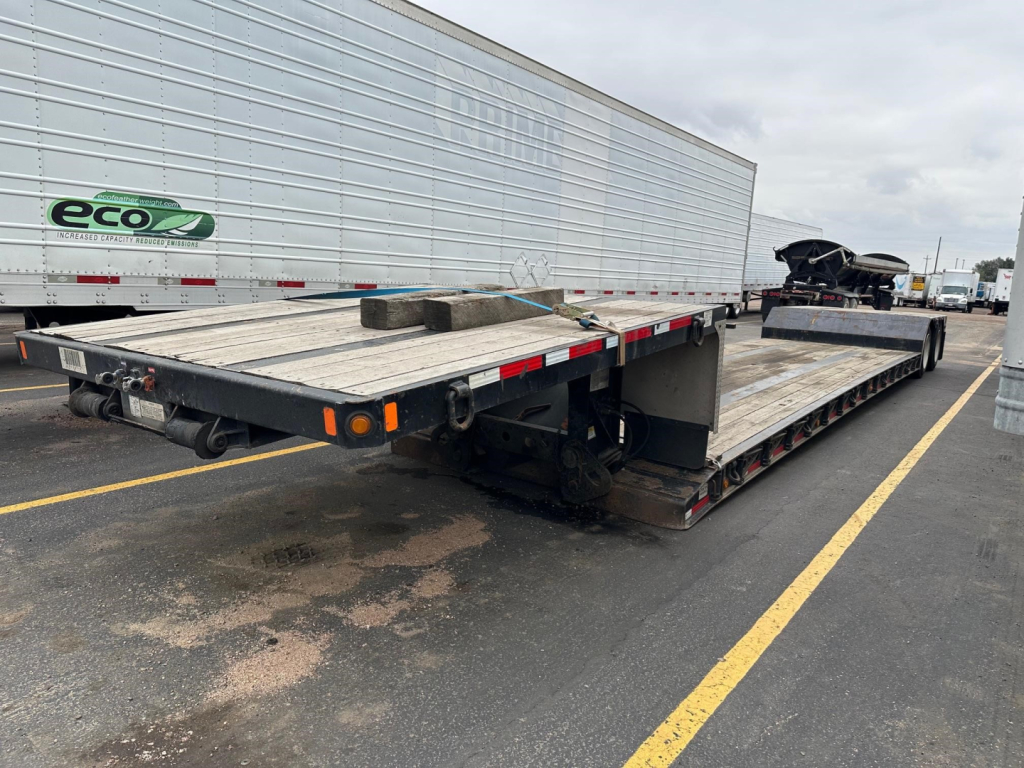
If the application leans toward construction iron, crawler components, or other taller freight, Fontaine lowboy and double-drop style trailers are often evaluated on loaded deck height, ground clearance, neck style, outriggers, and axle capacity. Hydraulic detachable goosenecks, non-ground-bearing necks, ride height adjustment, and flip axle compatibility are key details for fleets that load self-propelled equipment or routinely chase permit freight. A low main deck height can improve loadability and routing options, but buyers still need to check rear deck dimensions, deck length distribution, and suspension setup to make sure the trailer matches the machine fleet it will carry. Tire size, wheel material, and suspension brand also matter for maintenance planning across mixed fleets.
A smart 2024 Fontaine trailer purchase starts with the freight profile, not just the headline length. Verify concentrated load rating, distributed load rating, deck construction, axle spread options, and whether the trailer is built for general freight, oversize loads, or dedicated machinery work. Fontaine trailers are commonly selected by owner-operators and fleets that want straightforward parts support and proven resale strength in the open-deck market. When comparing listings, focus on frame material, deck type, suspension, sliding or fixed axle arrangement, and the exact securement package. Those details will tell you far more about real-world usefulness than the model name alone.
Frequently Asked Questions about 2024 Fontaine Trailers
What types of trailers are most common from Fontaine in the 2024 model year?
The most common 2024 Fontaine trailers on the market are flatbeds, extendable flatbeds, lowboys, and other heavy-haul open-deck configurations. Flatbeds are used for general commodity freight and building materials, while extendables serve long freight such as pipe, steel, and structural components. Lowboys and double-drop style trailers are designed for taller or heavier equipment that requires lower deck height and more specialized loading capability.
How do I choose between an aluminum Fontaine flatbed and a steel Fontaine flatbed?
An aluminum Fontaine flatbed is usually the better fit when payload is the priority, because the lighter trailer weight can leave more legal carrying capacity for the load. A steel flatbed generally gives up some weight savings but can offer better durability in severe-duty applications, especially where forklifts, concentrated loads, or rough loading conditions are common. The decision should be based on the density of the freight, expected deck abuse, repair preferences, and how important tare weight is on the lanes you run.
What should I look for on a 2024 Fontaine extendable trailer?
The key points on a 2024 Fontaine extendable trailer are closed deck length, maximum extension, extension lock intervals, frame construction, axle configuration, and deck material. Buyers should also inspect crossmember spacing, kingpin setting, side rail design, stake pocket layout, and the securement package, including winch tracks and sliding winches. Those specs determine how well the trailer handles long loads, how easily it can be secured, and whether it will stay compliant with bridge and axle requirements.
What matters most when buying a Fontaine lowboy or heavy-haul trailer?
Deck height, neck type, axle rating, outriggers, and overall load geometry matter most on a Fontaine lowboy or heavy-haul trailer. A hydraulic detachable gooseneck can simplify loading equipment, while ride height adjustment and flip axle compatibility can improve versatility for varying machine weights and permit conditions. Buyers should also confirm ground clearance, loaded fifth wheel height, rear deck dimensions, and deck length distribution so the trailer matches the machines and routes it will actually see.
Are 2024 Fontaine trailers a good fit for fleets and owner-operators?
2024 Fontaine trailers are often a strong fit for both fleets and owner-operators because the brand is well established in open-deck and heavy-haul service. Buyers typically value Fontaine for broad application coverage, familiar specs, and practical designs that are easier to maintain and remarket. The best fit depends less on the badge and more on whether the individual trailer has the right deck, suspension, axle setup, and securement equipment for the freight being hauled.