
New 2027 Flatbed Trailers For Sale in Nebraska
New 2027 flatbed trailers for sale in Nebraska: compare deck construction, concentrated-load ratings, axle layouts, and new-trailer warranty terms.
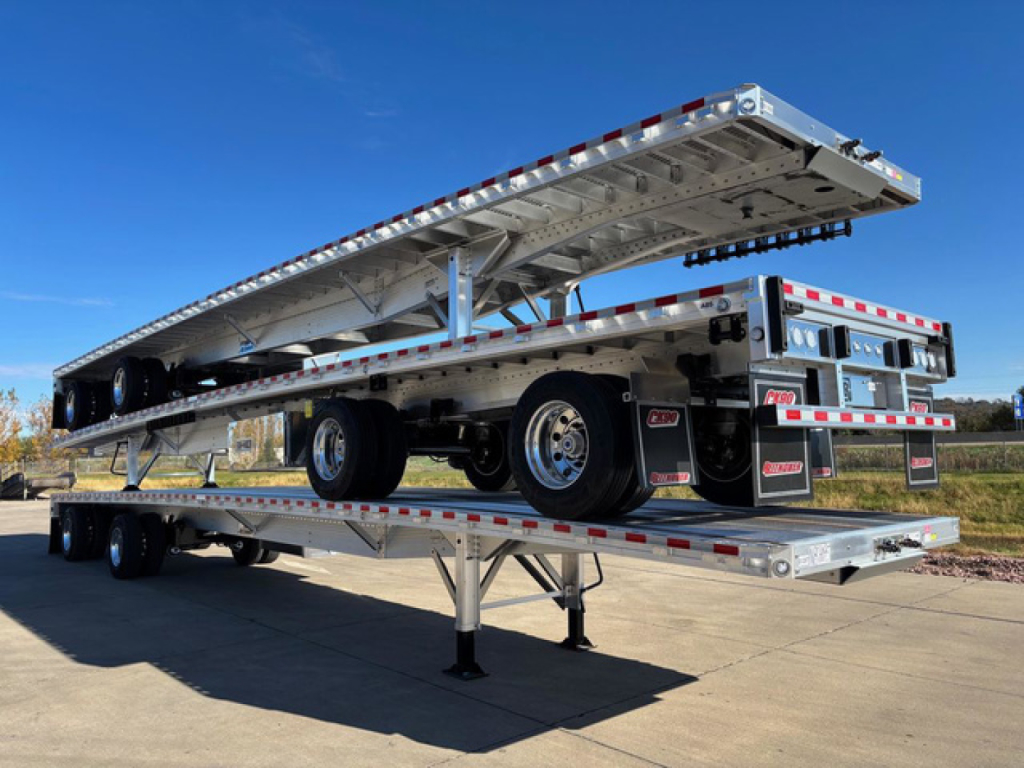

Selling a new 2027 flatbed trailer? List your new 2027 flatbed trailer for sale and reach thousands of commercial buyers.
New 2027 Flatbed Trailers in Nebraska
For a new 2027 order, confirm the final factory build sheet, including crossmember spacing, floor material, winch locations, and suspension controls. A model-year label alone does not establish a frame redesign or increased capacity. Get written warranty terms for the structure, axles, brakes, and air suspension, including where claims can be handled. Budget for the 12% federal excise tax on qualifying new heavy trailers, and confirm its treatment in the purchase paperwork. Before acceptance, document alignment, tire condition, brake operation, slider locking if equipped, and ABS function; new equipment still requires a thorough predelivery inspection.
Nebraska's winter road treatments make corrosion protection worth specifying even on a new trailer; inspect coating coverage, electrical connector sealing, and isolation where dissimilar metals meet. For rural field approaches and construction entrances, check ground clearance, landing gear clearance, and rear overhang against actual delivery conditions. Confirm usable payload with the tractor's actual weight and the route's axle and bridge limits.
Frequently Asked Questions about New 2027 Flatbed Trailers in Nebraska
Is a flatbed combination legal in Nebraska as long as it weighs less than 80,000 pounds?
No. A Nebraska flatbed combination can weigh less than 80,000 pounds and still violate an axle or bridge limit. Standard federal Interstate limits include 20,000 pounds on a single axle, 34,000 pounds on a tandem, and 80,000 pounds gross, subject to the bridge formula and applicable exceptions. Axle spacing and load placement matter, and Nebraska route restrictions or permit conditions must also be checked.
Should I order a sliding tandem or spread-axle flatbed for Nebraska work?
A sliding tandem is often the better choice for frequent tight turns and changing load placement. A spread-axle flatbed can provide more axle-loading flexibility where spacing and bridge rules permit, but the spread does not automatically increase legal combination weight. Wide spreads can also scrub tires during tight turns. Compare the configuration against rural delivery entrances, return freight, and planned out-of-state routes.
Can a standard flatbed trailer haul farm tractors without special loading equipment?
A standard flatbed trailer needs a rated loading method for wheeled farm equipment; deck length alone does not make the trailer suitable. Confirm ramp capacity, ramp attachment, loading angle, tractor ground clearance, and the trailer manufacturer's loading instructions. Concentrated wheel loads during loading can differ substantially from the final transport load. A loading dock, properly rated ramps, or another trailer configuration may be necessary.
Do factory-installed winches make a new flatbed ready to haul steel coils?
No. Factory-installed winches alone do not establish that a flatbed trailer is equipped for steel coils. Coils weighing 5,000 pounds or more, individually or grouped together, fall under commodity-specific federal securement requirements. Coil orientation determines the required securement arrangement. Confirm suitable coil supports, blocking, rated tiedowns, and anchor points, along with the manufacturer's concentrated-load rating for the intended coil placement.