
2025 Behnke Flatbed Trailers For Sale
Shop 2025 Behnke flatbed trailers with heavy-duty GVWRs, tilt and ramp options, durable axles, and equipment-ready deck layouts.
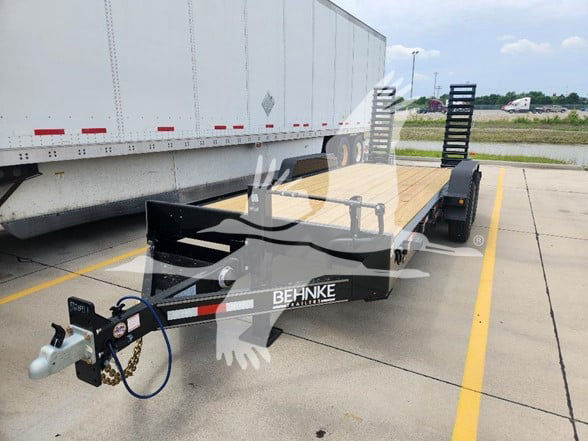
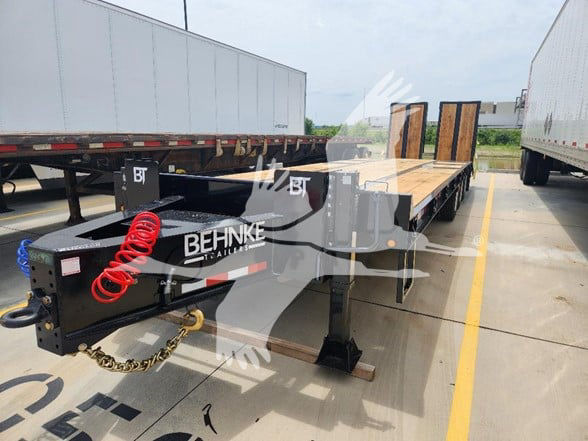
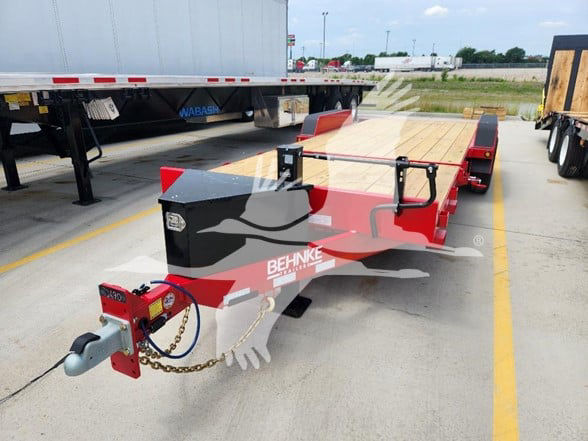
Selling a 2025 behnke flatbed trailer? List your 2025 behnke flatbed trailer for sale and reach thousands of commercial buyers.
2025 Behnke Flatbed Trailers
A key buying decision in this class is capacity versus deck design. Sample 2025 Behnke flatbed trailers show common GVWR ranges from around 20,000 pounds up to 50,000 pounds, with axle packages that may include tandem 8,000 lb., tandem 10,000 lb., or triple 20,000 lb. spring ride setups depending on intended use. Buyers should pay attention to bed length, beavertail length, width between fenders, and axle type because those details directly affect what can be loaded and how easily. Dexter axles, oil bath hubs, E-Z Lube systems, electric brakes, breakaway kits, and heavy-duty jacks are all specs that influence maintenance intervals, uptime, and towing confidence.
Deck access and securement are where a flatbed trailer either works for your operation or slows it down. Behnke trailers in this class commonly include stake pockets, multiple D-rings, pallet fork holders, spring-assisted ramps, and toolboxes. A tilt model can be the right choice for lower-profile machines that benefit from reduced loading angle and faster no-ramp loading. A beavertail and ramp trailer may be better for mixed fleets, wheeled equipment, or operators who need a more traditional loading setup. On heavier pintle-style units, features such as adjustable pintle couplers, landing gear, and dual-speed supports are important for matching truck height, managing tongue weight, and handling repeated loading cycles.
For buyers comparing listings, the smartest approach is to match the trailer to the heaviest and longest machine you haul most often, then verify deck space for attachments, bucket overhang, or pallet placement. Tire size, suspension type, ramp width, and fender design also matter more than they seem on paper, especially for equipment with tight track width or low ground clearance. Behnke flatbed trailers are known in this segment for straightforward, heavy-duty construction and work-focused options, making them a strong fit for contractors, rental fleets, municipalities, and owner-operators who need a trailer that earns its keep under frequent loading and unloading.
Frequently Asked Questions about 2025 Behnke Flatbed Trailers
What is the typical GVWR range for a 2025 Behnke flatbed trailer?
In this category, 2025 Behnke flatbed trailers commonly range from about 20,000 lb. GVWR on medium equipment trailers up to 50,000 lb. GVWR on heavier super-duty models. The right rating depends on the loaded weight of the machine, attachments, fuel, chains, and any material carried on the deck. Buyers should also confirm axle ratings, coupler rating, tire capacity, and legal payload limits instead of relying on GVWR alone.
Is a tilt deck or a ramp-style flatbed better for equipment hauling?
A tilt deck is often better for fast loading of lower-profile machines because it reduces loading angle and eliminates separate ramp handling. A ramp-style flatbed with a beavertail is usually the better fit for mixed equipment fleets, repeated pallet loading, or machines that benefit from a more conventional approach. The best choice depends on ground clearance, wheelbase, track length, attachment overhang, and how often different operators will use the trailer.
What axle and suspension specs should buyers focus on?
Axle capacity, brake configuration, hub style, and suspension type are the main items to review. In this category, buyers may see Dexter axles, Torflex setups, oil bath hubs, E-Z Lube hubs, electric brakes, and spring ride suspensions. These specs affect service intervals, ride quality, durability under heavy loads, and parts support. Matching the axle package to actual hauling conditions is more important than simply choosing the highest number.
What trailer dimensions matter most on a flatbed trailer?
Deck length, usable flat deck length, beavertail length, ramp length, and width between fenders are the dimensions that usually determine whether a trailer fits the job. For equipment hauling, buyers should compare the machine's overall length, track or tire width, attachment position, and loading angle requirements against the trailer's real usable space. A trailer can have enough rated capacity and still be a poor fit if the deck layout does not match the machine.
Are Behnke flatbed trailers suitable for commercial equipment fleets?
Yes. Behnke flatbed trailers in this segment are generally designed for commercial-duty hauling with heavy frames, equipment-ready tie-down points, robust jacks, and loading systems built for repeated use. They are a practical choice for contractors, rental companies, agriculture operations, and municipalities that need dependable trailer performance with straightforward serviceability and common-spec components.