
Behnke Flatbed Trailers For Sale
Shop Behnke flatbed trailers built for equipment hauling, with heavy GVWR ratings, ramp options, wood floors, and durable steel construction.
Selling a behnke flatbed trailer? List your behnke flatbed trailer for sale and reach thousands of commercial buyers.
Behnke Flatbed Trailers
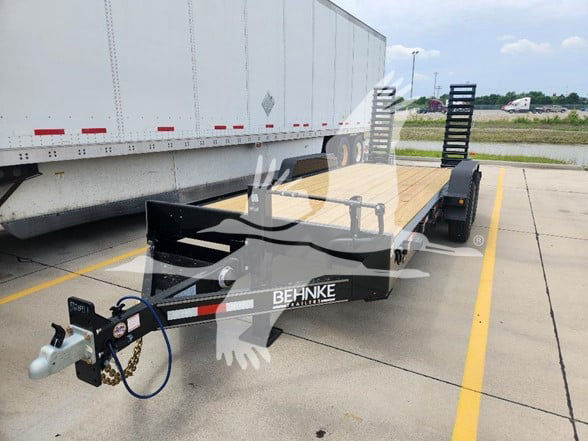
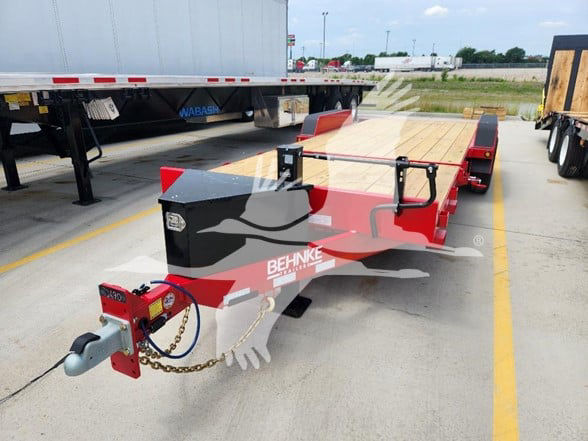
A lot of the value in a Behnke flatbed trailer comes from the deck design. Common layouts include straight deck equipment trailers with beavertails and flip-up ramps, along with tilt deck models that reduce loading time for skid steers, compact excavators, lifts, and other wheeled or tracked machines. Wood floors are common because they are easy to service and offer good traction under equipment. Steel construction, stake pockets, D-rings, pallet fork holders, formed fenders, and heavy spring-loaded jacks are all details buyers should pay attention to because they directly affect daily usability. If your loads vary, ramp width, beavertail length, and the number and placement of tie-down points matter just as much as rated capacity.
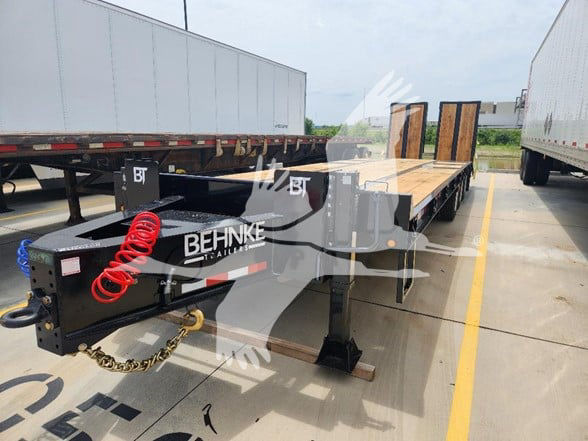
Running gear is another key decision point. Behnke flatbeds are often equipped with Dexter axles in tandem or triple axle setups, with electric brakes, oil bath hubs, E-Z Lube spindles, or torsion and spring ride suspensions depending on the application. Lighter equipment trailers may use 8,000 to 10,000 lb. axles, while heavier models move into 20,000 lb. axle classes and commercial tires such as 17.5-inch or 22.5-inch rubber. Buyers should match suspension type to route conditions and load profile. Spring ride is familiar and durable for rough jobsite use, while torsion axles can improve ride quality and deck stability for certain machines. On larger trailers, landing gear style, hitch type, and brake setup become especially important for compatibility with the tow vehicle and the weight being moved.
The best Behnke flatbed trailer for sale usually comes down to how you load and what you haul. A beavertail and ramp trailer is a practical fit for mixed fleets and frequent machine changes. A tilt deck can be faster and safer for low-clearance equipment because it removes the breakover point created by ramps. A heavier pintle-style unit with triple axles makes more sense when moving larger iron and operating in a commercial hauling environment. Look closely at bed length versus usable deck space, width between fenders, jack capacity, and tie-down layout. Those are the details that determine whether a trailer works well every day or just looks good on paper.
Frequently Asked Questions about Behnke Flatbed Trailers
What are Behnke flatbed trailers typically used for?
Behnke flatbed trailers are commonly used for hauling construction equipment, agricultural machines, utility vehicles, pallets of material, and other dense or irregular loads. Many models are set up specifically for equipment transport, with features such as beavertails, flip-up ramps, tilt sections, stake pockets, and D-rings that make loading and securement easier in field conditions.
What is the difference between a Behnke flatbed trailer with ramps and a tilt deck model?
A ramp-equipped flatbed uses a fixed deck or beavertail with rear loading ramps, which works well for a wide range of equipment and gives you a simple, proven layout. A tilt deck trailer uses a tilting platform or tilt section to load equipment without separate ramps, which can reduce setup time and improve loading for low-ground-clearance machines. The better choice depends on the equipment's wheelbase, ground clearance, and how often the trailer is loaded during the day.
How do I choose the right GVWR for a Behnke flatbed trailer?
Start with the actual operating weight of the equipment or cargo, then add attachments, fuel, tools, and any material that will ride on the trailer. The trailer's GVWR must cover the combined load plus the trailer's own weight, and the tow vehicle must also be rated to handle that capacity. Buyers often make the mistake of selecting a trailer too close to the machine's bare weight, which leaves little margin for attachments or future equipment changes.
Are Behnke flatbed trailers available in heavier-duty commercial configurations?
Yes. In addition to common 20,000 lb. class equipment trailers, Behnke also builds heavier-duty flatbed trailers with features such as triple axles, pintle hitches, spring ride suspensions, landing gear, and higher-capacity running gear. These trailers are intended for larger machines and more demanding commercial hauling applications where durability, hitch strength, and braking capacity are critical.
What specs matter most when comparing Behnke flatbed trailers for sale?
The most important specs are GVWR, axle rating, deck length, usable deck space, width between fenders, ramp or tilt design, and tie-down layout. Buyers should also check tire size, brake type, jack capacity, suspension design, and hitch style because those details affect towing behavior, serviceability, and compatibility with the truck doing the work. A trailer with the right dimensions and loading setup is usually more productive than one that only has a higher weight rating.