
Used Wabash Dry Van Trailers For Sale in Texas
Used Wabash dry van trailers for sale in Texas: compare DuraPlate panel condition, floor strength, suspension, and heat-related wear before buying.
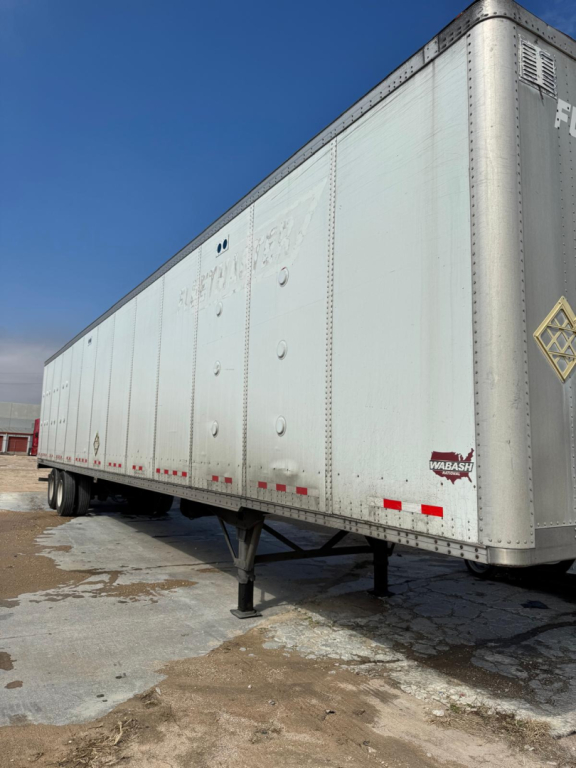
Selling a used wabash dry van trailer? List your used wabash dry van trailer for sale and reach thousands of commercial buyers.
Used Wabash Dry Van Trailers in Texas
A common highway configuration is 53 feet long, 102 inches wide, and 13 feet 6 inches high, but exterior dimensions do not establish usable cargo space. Measure rear-door clearance, interior height, and width between scuff liners against the actual freight. Swing doors suit dock freight; roll-up doors trade some opening space for frequent-stop convenience. Air ride can suit cargo-sensitive freight, while spring suspension has fewer air-system components to maintain. Check sliding-tandem travel, locking pins, landing gear, and fifth-wheel height compatibility, then inspect the kingpin, upper coupler, crossmembers, and rear impact guard for damage or unapproved repairs.
Dallas-Fort Worth distribution, Houston-area industrial freight, and Laredo cross-border traffic put different demands on a van running I-35, I-45, or I-10. Match tire condition and suspension to the duty cycle, not just the pickup location. Texas heat accelerates tire aging and sealant deterioration; inspect for water staining and cracked roof sealant. Gulf Coast service warrants extra attention to corrosion and possible flood exposure, while maintenance records should establish whether the trailer previously ran in salted northern states.
Maintenance history matters more than a fresh exterior on an older Wabash. Review annual inspection reports, brake and wheel-end work, roof repairs, and any floor replacement records. Walk the floor for soft spots, inspect underneath for split boards and corroded crossmembers, and check patched areas from both sides. Test ABS warning-lamp operation and inspect air lines, chambers, slack adjusters where fitted, and tire date codes. A newer model year does not erase damage from heavy dock cycles or a neglected air suspension.
Frequently Asked Questions about Used Wabash Dry Van Trailers in Texas
How much weight can a used Wabash dry van legally haul in Texas?
Legal payload starts with the allowable combination weight minus the actual empty weight of the tractor and Wabash dry van. Standard Interstate limits are generally 80,000 pounds gross, 34,000 pounds on a tandem, and 20,000 pounds on a single axle. Bridge-formula limits, equipment ratings, tire capacity, and posted restrictions can reduce those figures. Scale the loaded combination because unused gross capacity does not excuse an overloaded axle group.
How do I know a Wabash dry van floor can handle my forklift?
The floor's rated forklift axle load, not the trailer GVWR, determines whether a Wabash dry van is suitable for your loading equipment. Obtain the floor specification from the build record and compare it with the forklift's loaded axle weight, including the cargo being carried. Wheel spacing and concentrated loads also matter. Soft boards, loose fasteners, or damaged crossmembers require evaluation even when the original floor rating meets the application.
Can damaged Wabash DuraPlate sidewall panels be repaired?
Yes, damaged Wabash DuraPlate sidewalls can be repaired, but the repair must match the panel system and extent of structural damage. A surface patch does not establish that panel joints, rails, or adjacent structure remain sound. Request repair documentation and have questionable work checked against Wabash procedures. Torn steel skins, distorted joints, and damage extending into the top or bottom rail deserve closer evaluation than cosmetic dents.
Does a used Wabash dry van need an annual DOT inspection in Texas?
A Wabash dry van used in interstate commercial service must pass a periodic inspection at least once every 12 months under 49 CFR 396.17. The trailer requires its own inspection; the tractor's inspection does not cover it. Verify that the inspection documentation identifies the correct trailer and review any subsequent repairs. A current inspection does not replace a purchase inspection or the carrier's ongoing maintenance obligations.