
Used Utility Dry Van Trailers For Sale in Texas
Used Utility dry van trailers for sale in Texas: compare 4000D-X floor ratings, slider condition, roof integrity, and brake specs before buying.
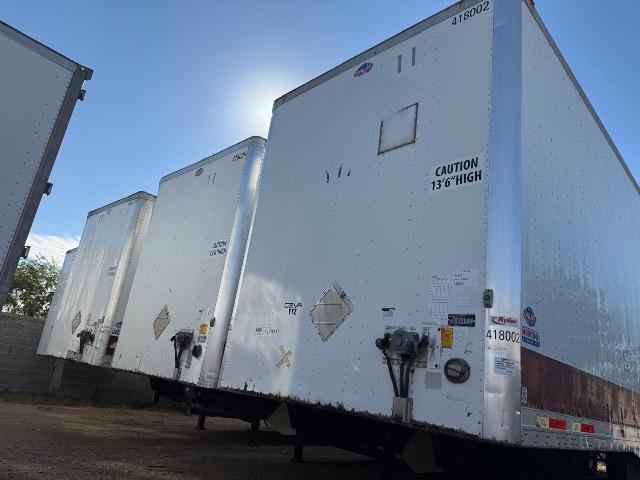
Selling a used utility dry van trailer? List your used utility dry van trailer for sale and reach thousands of commercial buyers.
Used Utility Dry Van Trailers in Texas
Texas heat makes tire age, roof seams, and door seals worth close attention, while Gulf Coast service warrants checks for corrosion around crossmembers, landing gear, and the rear frame. Inspect wood floors from above and below for soft spots, broken boards, and forklift damage. Test slider pins, air suspension, brakes, lights, and ABS operation, then examine the kingpin and upper coupler for wear or cracking. Across model years, verify brake type and equipment from build records rather than assuming specifications; maintenance records should document structural repairs and recurring tire or brake problems.
Frequently Asked Questions about Used Utility Dry Van Trailers in Texas
How much weight can a used Utility dry van haul legally in Texas?
A standard five-axle tractor-trailer on Texas Interstate highways is generally limited to 80,000 pounds gross, with 34,000 pounds on a tandem and 20,000 pounds on a single axle, subject to bridge-formula limits. A used Utility dry van's legal payload is the allowable combination weight minus the actual tractor, trailer, fuel, driver, and equipment weight. Higher trailer ratings do not override road limits; verify axle spacing, tire ratings, route restrictions, and any applicable permits.
How do I check a used Utility dry van's floor capacity for forklift loading?
The manufacturer's documented forklift floor rating is the starting point for approving forklift loading in a used Utility dry van. Obtain the build specification or request confirmation using the trailer VIN, then compare the rating with the loaded forklift's front-axle load and wheel configuration. Trailer GVWR is not a floor rating. Damaged boards, loose fasteners, or weakened crossmembers can make a previously adequate floor unsafe, so inspect the entire loading path.
Are disc brakes worth choosing over drum brakes on a used Utility dry van?
Condition and parts support matter more than brake type alone on a used Utility dry van. Air disc brakes resist fade and avoid the automatic slack adjusters used with S-cam drums, but calipers, slides, and rotors still require inspection. Drum brakes have widely familiar service procedures and parts. Compare remaining friction material, corrosion, uneven wear, and documented repairs, then confirm that your maintenance shop supports the installed brake system.
Does a used Utility dry van need its own annual inspection in Texas?
A used Utility dry van operated in interstate commerce must have its own qualifying periodic inspection at least every 12 months under federal rules. The tractor's inspection does not cover the semitrailer. Check that the inspection documentation identifies the trailer and meets 49 CFR 396.17 requirements, then verify any Texas inspection and registration requirements for the intended operation. A current inspection is not a substitute for a pre-purchase structural and mechanical inspection.