
Utility Dry Van Trailers For Sale in Illinois
Compare Utility dry van trailers for sale in Illinois by floor rating, door clearance, salt corrosion, and tandem condition for demanding dock service.

Selling a utility dry van trailer? List your utility dry van trailer for sale and reach thousands of commercial buyers.
Utility Dry Van Trailers in Illinois
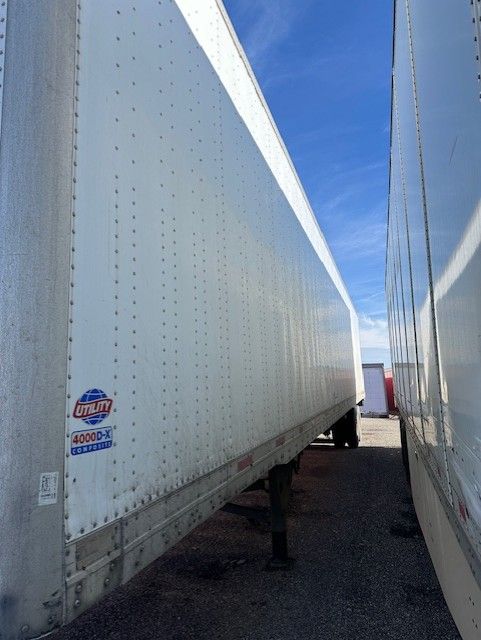
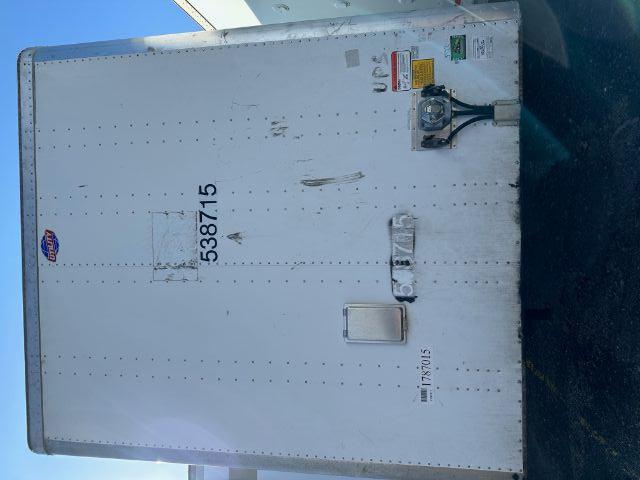
Utility's 4000D-X family is built for general dry freight, with aluminum exterior panels and interior lining choices that should be verified by the build sheet. A 53-foot, 102-inch-wide configuration is common, but exterior dimensions do not establish usable interior width or rear opening clearance. Compare lining condition, logistics posts, scuff protection, threshold reinforcement, and roof material. Swing doors suit full-width dock loading; roll-up doors trade some opening clearance for access without swinging door panels. Confirm the floor's concentrated load rating against the loaded forklifts used at pickup and delivery.
Road salt can attack steel components even when a Utility van's aluminum sides look clean. On used trailers, inspect crossmembers, suspension hangers, the upper coupler, landing gear mounts, tandem rails, and rear impact guard for scaling, cracks, or questionable repairs. Check roof seams and front corners for leakage, then inspect the wood floor from above and below for soft spots and forklift damage. Operate every tandem locking pin, check door seals and hinges, and look for uneven tire wear. Maintenance records, brake measurements, wheel-end service history, and ABS fault checks tell more than a fresh paint job.
Model year alone does not establish a Utility trailer's brake type, tire arrangement, or cargo equipment. Older vans warrant closer examination of floor repairs, roof patches, wiring, air lines, and suspension bushings; newer vans still need checks for collision damage and hard dock service. Air ride, disc brakes, automatic tire inflation, and aerodynamic skirts should be verified individually rather than assumed from the year badge.
For a new Utility dry van, specify floor strength, lining, suspension, brakes, tires, and corrosion protection before ordering, and obtain written warranty terms for both the trailer and supplier-installed components. The 12% federal excise tax applies to qualifying new heavy trailers. Illinois buyers should also confirm designated truck routes, trailer access rules, bridge-formula compliance, and local delivery restrictions. Sliding tandems can balance axle loads, but cannot make an overloaded combination legal or cure a restricted route.
Frequently Asked Questions about Utility Dry Van Trailers in Illinois
What is the legal weight limit for a Utility dry van combination in Illinois?
On Illinois Interstate highways, standard federal limits are 80,000 pounds gross combination weight, 20,000 pounds on a single axle, and 34,000 pounds on a tandem, subject to the bridge formula. A Utility dry van's axle spacing, equipment ratings, and tractor weight can reduce usable payload below those limits. State and local roads may have different restrictions, so verify the complete delivery route rather than relying only on Interstate limits.
How many pallets fit in a 53-foot Utility dry van?
A 53-foot Utility dry van commonly accommodates 26 standard 48-by-40-inch pallets in a straight, two-across arrangement. That assumes ordinary pallet dimensions, suitable interior clearance, and no cargo overhang. Bulging packaging, load bars, bulkheads, or customer spacing requirements can reduce the count. Pallet capacity also does not establish legal payload, so weigh dense freight and check axle distribution before loading every position.
Should I choose dual tires or wide-base singles on a Utility dry van?
Dual tires are usually the more forgiving choice for roadside service, while wide-base singles can reduce trailer tare weight. On a Utility dry van, compare the complete wheel-and-tire package, not tire count alone. Wide-base conversions require compatible wheels, hubs, offsets, and axle ratings. Illinois regional operations should also consider replacement tire support along regular routes and the consequences of losing one wide-base tire.
Does an older Utility dry van need ABS?
Air-braked trailers manufactured on or after March 1, 1998, generally must have ABS under U.S. federal manufacturing standards. On a used Utility dry van, confirm the manufacture date on the certification label, inspect the ABS warning lamp during its startup check, and scan the controller if a fault remains. Federal manufacturing rules do not automatically require an ABS retrofit on trailers manufactured before that date.
Can I haul packaged food in a Utility dry van?
Yes, shelf-stable packaged food can move in a Utility dry van when the shipper accepts non-refrigerated transportation. Verify sanitation requirements, previous cargo, odors, pest evidence, and cleaning records before assigning food loads. Illinois summer heat and winter freezing can damage products that are technically shelf-stable but have shipping temperature limits. Obtain the product's transportation requirements rather than treating sealed packaging as protection against temperature exposure.