
Used Strick Dry Van Trailers For Sale
Compare used Strick dry van trailers for sale by floor condition, door clearance, slider operation, and payload suitability for U.S. and Canadian routes.
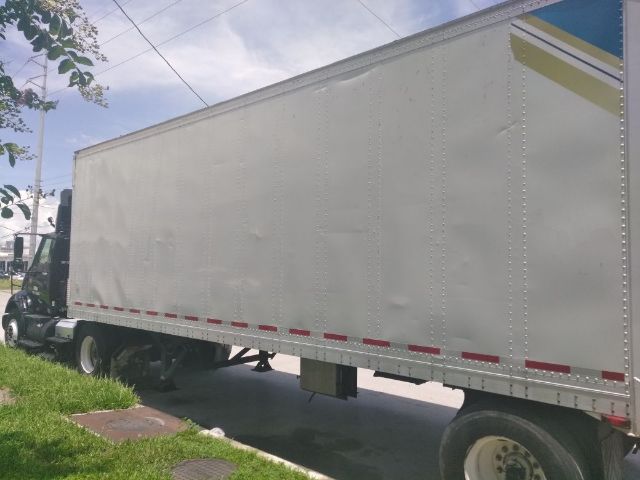
Selling a used strick dry van trailer? List your used strick dry van trailer for sale and reach thousands of commercial buyers.
Used Strick Dry Van Trailers
On a used Strick box trailer, inspect the wood floor from above and the crossmembers from underneath, especially near the rear threshold and landing gear. Soft boards, separated seams, bowed crossmembers, and patched lower rails warrant closer examination of load support. Check roof seams, rivets, front corners, and door seals for water entry. Operate the landing gear and tandem slider, confirm every locking pin engages, and inspect suspension bushings, air springs, brake components, and wheel ends. Request inspection reports, repair invoices, and any ABS diagnostic records to distinguish routine wear from recurring faults.
Age and operating region matter more than fresh paint. Older vans need scrutiny for accumulated floor, roof, and structural repairs, while newer examples still require verification of brake and suspension condition. Across the United States and Canada, road salt can attack steel crossmembers, slider assemblies, and rear frames beneath an aluminum body. Verify actual empty weight and axle ratings before calculating payload, then check state or provincial axle-spacing, weight, and kingpin-to-rear-axle requirements for the intended routes.
Frequently Asked Questions about Used Strick Dry Van Trailers
How do I know if a used Strick dry van floor can handle my forklift?
The trailer’s documented concentrated-load rating must accommodate the loaded forklift’s axle loads and tire contact pattern. A Strick dry van’s overall payload rating does not establish forklift capacity. Obtain the original floor specification or manufacturer confirmation, then account for damaged boards, replacement sections, and weakened crossmembers. The forklift’s own weight plus its carried load matters, particularly where small tires concentrate force on the floor.
What model year Strick trailers have ABS?
U.S.-market air-braked Strick trailers manufactured on or after March 1, 1998, were required to be built with ABS. Earlier trailers were not covered by that federal manufacturing requirement, so check the identification plate’s build date rather than relying solely on the advertised model year. On an ABS-equipped dry van, verify the warning lamp’s startup check and diagnose active faults; functioning conventional brakes do not prove that ABS works.
Should I buy a used Strick dry van with a liftgate for store deliveries?
A liftgate-equipped Strick dry van is a practical choice for deliveries without loading docks, provided the gate handles the combined cargo and handling-equipment weight. Check platform dimensions, rated capacity, battery condition, charging connections, hydraulic leaks, and mounting structure. Liftgate weight reduces available payload and changes rear axle loading. Confirm that the gate’s folded position and rear-door arrangement remain compatible with any dock deliveries on the same route.
Is a tire inflation system useful on a used Strick dry van?
A functioning automatic tire inflation system helps maintain tire pressure on a used Strick dry van, especially during frequent drop-and-hook operation. Inspect supply lines, hub fittings, wheel hoses, and the pressure setting rather than assuming installed equipment works. Inflation systems do not correct tire damage, irregular wear, or alignment problems. Confirm replacement-part support and inspect wheel-end seals before counting the system as an ownership benefit.