
Strick Dry Van Trailers For Sale
Compare Strick dry van trailers for sale by wall construction, floor rating, slider condition, and US or Canadian operating requirements before buying.
Selling a strick dry van trailer? List your strick dry van trailer for sale and reach thousands of commercial buyers.
Strick Dry Van Trailers
For a new Strick van, put floor rating, logistics-post layout, scuff-liner height, door style, and suspension in the written specification. Swing doors maximize access but need opening room outside the dock; roll-up doors suit frequent delivery stops while reducing opening clearance. Confirm warranty terms for the body and separately supplied components. Qualifying new heavy trailers purchased in the United States are subject to the 12% federal excise tax.
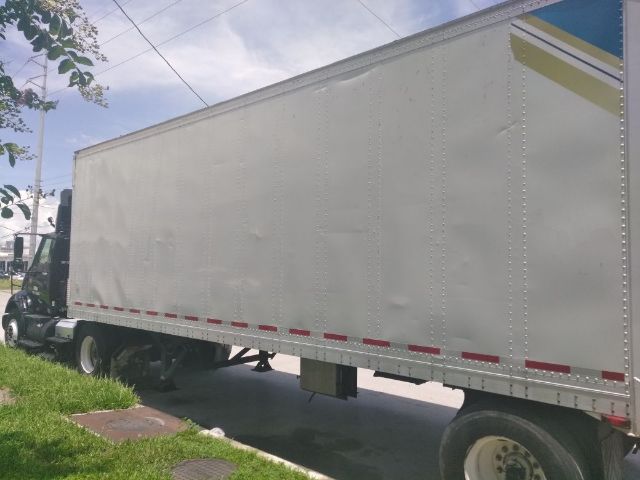
On used Strick dry freight trailers, inspect the wood floor from above and the crossmembers from underneath before judging the sidewalls. Soft flooring, patched forklift paths, cracked crossmembers, and corrosion around the lower rails can reveal expensive structural work. Check roof seams, front corners, and door seals for water entry, then inspect the kingpin area, landing-gear mounts, and rear frame for distortion or repairs. Operate the tandem slider through its range and confirm every locking pin engages. Maintenance records should document brake work, wheel-end service, suspension repairs, and roof sealing; older vans need particular attention to accumulated repairs and deteriorated wiring.
US and Canadian routes require separate checks of axle weights, trailer dimensions, and permitted slider positions. Moving the tandem changes weight distribution and turning behavior, but does not increase axle ratings. Road salt in northern states and Canadian provinces makes crossmember ends, suspension hangers, brake plumbing, and electrical connections priority inspection points. For dock-intensive work, inspect rear-door alignment, threshold damage, and dock bumpers because repeated impacts can compromise an otherwise sound box trailer.
Frequently Asked Questions about Strick Dry Van Trailers
How do I choose the floor rating for a Strick dry van?
The Strick dry van's documented floor rating must accommodate the loaded forklift's concentrated axle load. Trailer GVWR alone does not establish forklift-loading capacity. Give the manufacturer the forklift weight, maximum cargo weight, tire arrangement, and loading frequency. On a used trailer, verify the original rating and whether floor or crossmember repairs preserved that capacity.
Is air ride better than spring suspension on a Strick dry van?
Air ride is the stronger choice for a Strick dry van carrying freight sensitive to shock and vibration. Spring suspension can suit durable freight and operations prioritizing simpler suspension maintenance. Air ride adds airbags, a height-control valve, and air plumbing to inspect, while both designs still require sound bushings, properly aligned axles, and adequate cargo securement.
What year did Strick dry van trailers start requiring ABS?
Air-braked Strick dry van trailers manufactured on or after March 1, 1998, are subject to the US federal ABS requirement. Use the manufacture date on the certification label rather than relying solely on the advertised model year. Inspect the ABS wiring, wheel-speed sensors, and warning lamp, and diagnose faults even when the trailer's foundation brakes appear to function normally.
What should I check on a Strick dry van with a liftgate?
A Strick dry van's liftgate capacity must cover the freight plus any pallet jack and operator permitted on the platform. Check platform dimensions, load-center restrictions, mounting structure, hydraulic leaks, and battery condition. Verify how the liftgate batteries recharge during the delivery route. Liftgate weight reduces available payload and can change axle loading, especially on shorter single-axle trailers.
Can a 53-foot Strick dry van run in both the United States and Canada?
A 53-foot Strick dry van can serve US and Canadian routes, but legal axle loading and dimensional limits must be checked for each jurisdiction. A tandem position acceptable on one route may violate an axle-spacing or kingpin-to-axle restriction elsewhere. Confirm provincial requirements, state restrictions, tractor-trailer combination dimensions, and tire and axle ratings before assigning the trailer to cross-border work.