
2011 Dry Van Trailers For Sale in Illinois
Compare 2011 dry van trailers for sale in Illinois by salt damage, floor strength, door clearance, and axle setup for dock freight and highway hauling.
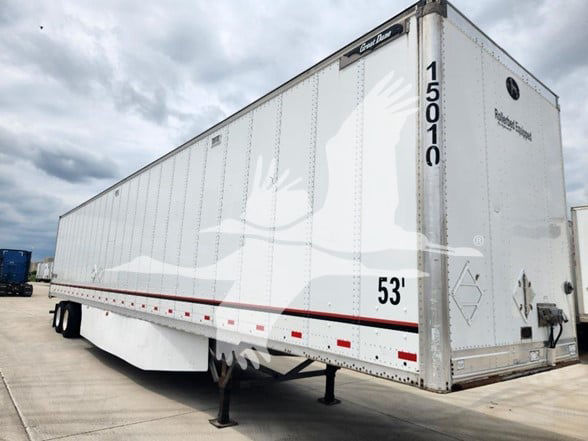

Selling a 2011 dry van trailer? List your 2011 dry van trailer for sale and reach thousands of commercial buyers.
2011 Dry Van Trailers in Illinois
Most highway dry freight work calls for a 53-foot, 102-inch-wide box trailer, but usable interior width, door opening, and floor rating determine whether the freight actually fits. Compare aluminum sheet-and-post construction with composite-panel designs such as Wabash DuraPlate; inspect panel joints and repairs rather than choosing on make alone. Great Dane and other manufacturers built varied floor, roof, door, and suspension configurations in this model year. Probe wood flooring around the rear threshold, verify floor capacity against loaded forklift axle weights, and check roof seams and front corners for leaks. Roller-bed floors need particular attention to freight compatibility.
Chicago-area and Joliet distribution favors dock-compatible vans, while central and southern Illinois manufacturing and agricultural freight can require different loading arrangements. Match doors, logistics track, tandem travel, and suspension to the actual route, including I-55, I-57, and I-80. For used equipment, budget for deferred maintenance. For any 2011 trailer represented as new, confirm storage-related repairs, final equipment specifications, written warranty coverage, and whether the 12% federal excise tax on qualifying new trailers applies.
Frequently Asked Questions about 2011 Dry Van Trailers in Illinois
Should I choose air ride or spring suspension on a 2011 dry van trailer?
Air ride is the better starting specification for damage-sensitive freight, while spring suspension suits many general-freight and dedicated dock operations. On a 2011 dry van trailer, inspect air springs, height-control valves, shocks, and suspension bushings before assuming air ride delivers a sound ride. Spring suspensions need checks for broken leaves, worn equalizers, loose U-bolts, and damaged hangers. Customer requirements may determine the choice before maintenance preferences do.
Is a roller-bed dry van trailer suitable for regular pallet freight?
A roller-bed dry van trailer is suitable for pallet freight only when its roller system, floor structure, and load securement match the operation. Verify whether rollers retract or require covers, and obtain the floor system's forklift loading limits. Rollers designed for specialized loading can interfere with pallet placement or concentrate wheel loads. On a 2011 trailer, inspect roller bearings, tracks, locks, and surrounding floor supports for damage.
What are the weight limits for a dry van trailer operating in Illinois?
A tractor and dry van trailer generally face limits of 80,000 pounds gross, 34,000 pounds on a tandem, and 20,000 pounds on a single axle on Illinois Interstate routes. Federal bridge-formula limits, equipment ratings, and posted restrictions can reduce the legal load. Moving the trailer tandem changes axle distribution but does not increase the combination's gross allowance. Confirm the complete route, especially local roads and restricted bridges.
Are swing doors or roll-up doors better for Illinois warehouse deliveries?
Swing doors usually provide a larger clear opening, while roll-up doors allow opening without swinging door panels outside the trailer. For a 2011 dry van trailer, measure the actual opening against freight height and width rather than relying on exterior dimensions. Confirm warehouse clearance and door-opening procedures. Inspect roll-up tracks, cables, springs, and header space, or swing-door hinges, locking rods, seals, and holdbacks.
What paperwork should I verify before buying a 2011 dry van trailer in Illinois?
Verify the title, matching VIN, lien status, and maintenance documentation before buying a 2011 dry van trailer in Illinois. A trailer used in federally regulated interstate service must also have passed a periodic inspection within the preceding 12 months. Request the inspection report, not just a photograph of the decal, and review structural repair invoices. Confirm that the manufacturer's identification plate remains legible and agrees with the ownership documents.