
1997 Dry Van Trailers For Sale in New York
Compare 1997 dry van trailers for sale in New York by salt corrosion, floor strength, door clearance and axle condition before choosing a freight trailer.
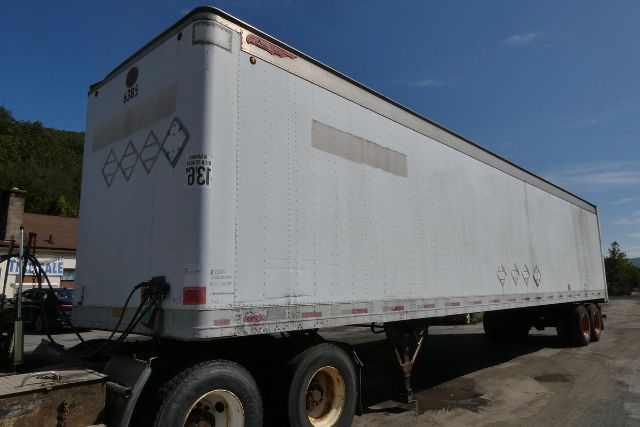
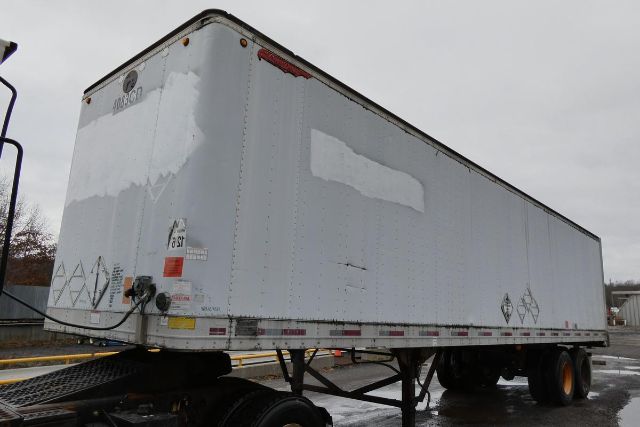
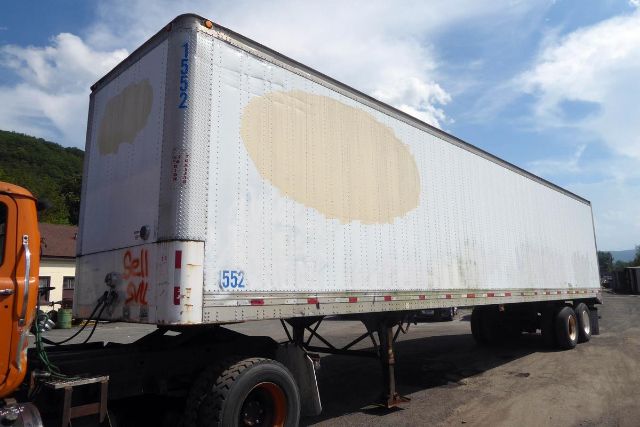
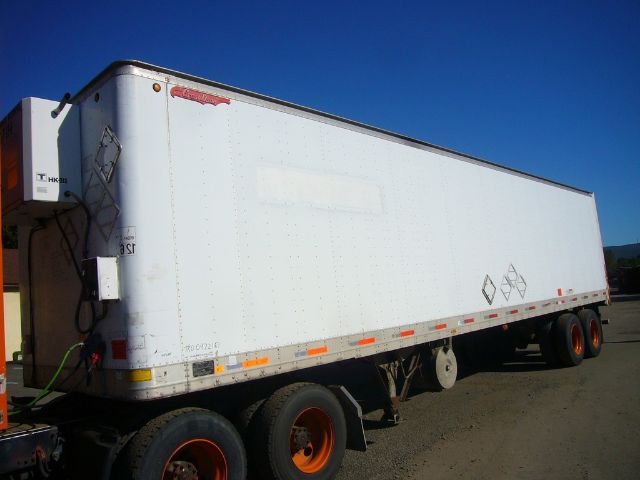

Selling a 1997 dry van trailer? List your 1997 dry van trailer for sale and reach thousands of commercial buyers.
1997 Dry Van Trailers in New York
Match length, width and door clearance to the actual freight and docks. Older dry freight trailers include shorter regional configurations as well as full-length highway vans, with 96-inch or 102-inch exterior widths. Measure usable interior dimensions rather than assuming the outside dimensions describe pallet space. Roll-up doors suit frequent deliveries but reduce clear opening height and add tracks, rollers and springs to maintain; swing doors generally provide a larger opening. Confirm the floor's forklift loading rating, crossmember spacing and E-track attachment integrity. A trailer's GVWR does not establish the legal payload of the tractor-trailer combination.
New York's I-90 corridor supports manufacturing and distribution around Buffalo, Rochester, Syracuse and Albany, while downstate delivery work brings tighter access and route restrictions. Check legal routes before assigning a long van to New York City, and account for posted bridge heights and parkways that prohibit commercial vehicles. Test sliding tandems through their full travel because salt can seize locking pins and rails. Air-ride suspensions need sound bags and height-control valves; spring suspensions need close checks of hangers, bushings and broken leaves.
Maintenance records should document brake work, wheel-end service, tire age, roof repairs and water intrusion. A 1997 trailer predates the federal ABS requirement for air-braked trailers manufactured on or after March 1, 1998, so verify installed equipment rather than assuming ABS is present. For any trailer represented as new or unused, inspect age-related deterioration, confirm warranty coverage in writing and determine whether the 12% federal excise tax on qualifying first retail sales applies.
Frequently Asked Questions about 1997 Dry Van Trailers in New York
How do I know whether a 1997 dry van trailer has working ABS?
Identify the ABS control module, wheel-speed sensors and warning lamp before treating a 1997 dry van trailer as ABS-equipped. Have a technician power the system, verify its warning-lamp sequence and check stored faults using the appropriate diagnostic procedure. A missing or disconnected lamp does not prove that ABS was never installed, and ordinary brake operation does not confirm that ABS works.
Can an older dry van floor handle a loaded forklift?
The floor's rated forklift axle load, not the trailer's GVWR, determines whether a loaded forklift is suitable. For a 1997 dry van trailer, verify the original floor rating and account for repairs, rotten boards and weakened crossmembers. Forklift weight, carried load and wheel configuration affect concentrated loading. Do not accept a sound-looking floor as proof of adequate capacity.
Can I run a 53-foot 1997 dry van trailer anywhere in New York?
No, 53-foot dry van trailers face route restrictions in New York City and cannot be assumed legal on local delivery streets. Verify the authorized route, delivery access and applicable kingpin-to-rear-axle limits before dispatch. Trailer model year does not override dimensional restrictions, and navigation software is not a substitute for state and city truck-route rules.
Will a heated 1997 dry van keep freight from freezing in New York?
A heated 1997 dry van can protect freeze-sensitive freight only when the heater, insulation and door seals maintain the required temperature. Test cold starting, sustained heating, thermostat operation and fuel-system condition before assigning winter loads. Verify the shipper's temperature requirements and use temperature monitoring; a heated box trailer does not provide refrigeration for freight that also needs cooling.
Can I use a 1997 dry van trailer for stationary storage in New York?
Yes, a structurally sound 1997 dry van trailer can serve as stationary storage, subject to local zoning, placement and fire-access requirements. Inspect roof leaks, floor capacity and door security before loading goods. Place the trailer on stable ground with properly supported landing gear, and assess snow accumulation because a deteriorated roof may not safely carry heavy winter loads.