
1997 Dry Van Trailers For Sale
Compare 1997 dry van trailers for sale by floor strength, frame corrosion, door clearance and brake condition to match freight or storage requirements.
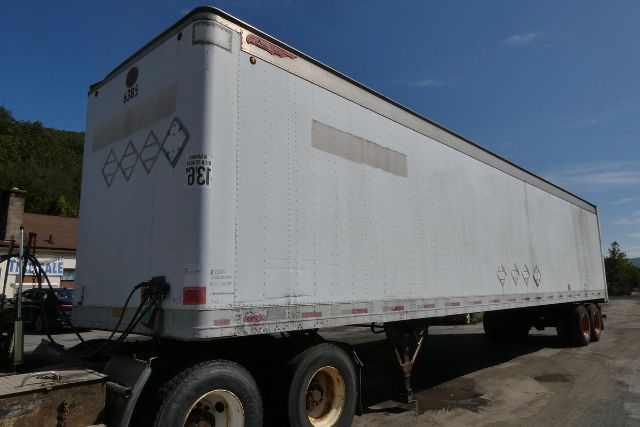
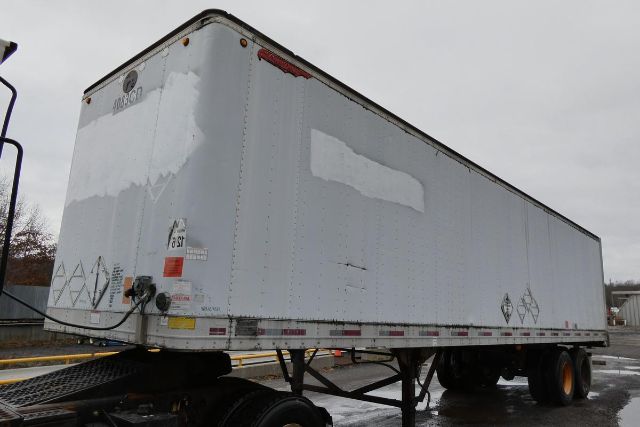
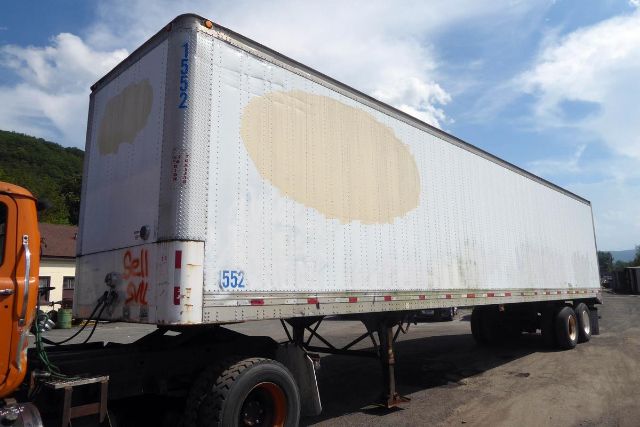
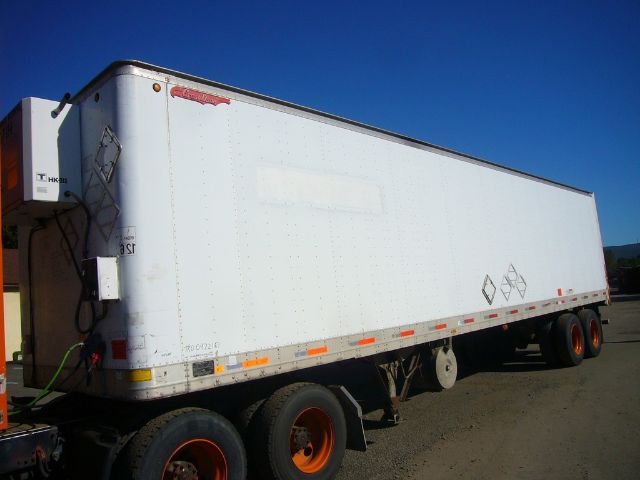

Selling a 1997 dry van trailer? List your 1997 dry van trailer for sale and reach thousands of commercial buyers.
1997 Dry Van Trailers
Length and door clearance should match the freight and receiving docks. Common configurations include 40-, 45-, 48- and 53-foot lengths, with 96- or 102-inch exterior widths. Measure usable interior width, door opening and floor-to-roof height because exterior dimensions do not establish loading clearance. Roll-up doors suit frequent dock deliveries but reduce overhead clearance and add tracks, rollers and counterbalance hardware to maintain. Swing doors usually provide a larger opening. A heated box needs separate heater and insulation checks; supplemental heat does not make a trailer refrigerated.
Water intrusion is a major inspection priority on a 1997 trailer. Look for stained roof bows, patched roof seams, swollen floorboards and corrosion where dissimilar metals meet. Inspect crossmembers, lower rails, the kingpin plate, landing-gear mounts and rear frame for section loss, cracked welds or questionable repairs. Operate the landing gear and tandem slider, then confirm every locking pin seats fully. Check air springs or leaf springs, suspension bushings, brake chambers, drums, wheel seals and tire date codes. Request repair invoices and inspection records; a conventional unpowered dry van has no engine ECM history, and fresh paint does not establish structural soundness.
Operating territory changes what deserves extra attention. Road salt in the northern United States and Canada attacks steel running gear and crossmembers, while repeated freezing can worsen damage around existing leaks. Southern sun and heat age roof materials, seals and tires. Verify axle spacing, tandem position and allowable weights for each state or province; the trailer's GVWR is not permission to exceed road limits.
Used units need a documented roadworthiness assessment before freight service. For any 1997 trailer represented as unused, verify its manufacturing date, title history, storage conditions and written warranty rather than treating age-related deterioration as impossible. Specify required repairs and load-securement hardware in the purchase agreement. Tires, seals and air lines can deteriorate without mileage, and rebuilding does not automatically change the model year. In the United States, confirm whether the 12% federal excise tax applies if the transaction qualifies as a taxable first retail sale of a new heavy trailer.
Frequently Asked Questions about 1997 Dry Van Trailers
Does a 1997 dry van trailer need ABS?
A dry van trailer manufactured in 1997 was built before the US federal ABS requirement for air-braked trailers manufactured on or after March 1, 1998. Confirm the manufacturing date on the certification label rather than relying only on the advertised model year. If ABS is installed, inspect its wiring, wheel-speed sensors and warning lamp; an older trailer still needs fully functioning service brakes.
How do I know whether a 1997 dry van floor can handle my forklift?
The trailer's floor rating and the forklift's loaded axle weight determine suitability, not the trailer's GVWR alone. Obtain the original floor specification or a qualified structural assessment for a 1997 dry van trailer. Replacement boards do not restore capacity if crossmembers or their connections are weakened. Include the forklift, operator and carried load when evaluating concentrated loading.
Can I use a 1997 dry van trailer for storage instead of hauling?
A structurally sound, weather-tight 1997 dry van trailer can serve as stationary storage, but parking support and local land-use rules still matter. Use stable ground, wheel chocks and suitable support beneath the landing gear. Confirm zoning, fire access and permitted contents. Any later highway move requires a separate roadworthiness assessment, even if the trailer remained parked for years.
Can I still get replacement parts for a 1997 dry van trailer?
Standard running-gear parts are usually easier to source than model-specific doors, corner assemblies or body panels for a 1997 dry van trailer. Identify the axle, suspension, brake and landing-gear manufacturers before ordering. Match dimensions and component numbers rather than trailer make alone. A qualified trailer repair shop should verify structural replacement materials and attachment details when original body parts cannot be matched.
Does a 1997 dry van trailer need an annual inspection?
A commercial dry van trailer used in US interstate service must pass a periodic inspection at least once every 12 months under 49 CFR 396.17. Model year does not provide an exemption, and an inspection record does not replace a current condition check. Canadian inspection requirements are provincial, so confirm the applicable certificate, interval and recognition rules before cross-border operation.