
Ledwell Drop Deck Trailers For Sale in New York
Shop Ledwell drop deck trailers for heavy equipment hauling. Compare deck lengths, hydraulic ramps, axle setups, GVWR, and load concentration.
Learn more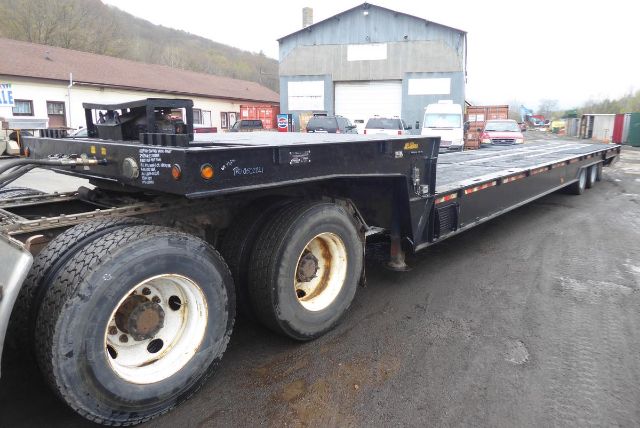
Have ledwell drop deck trailer to sell? List it here to reach thousands of buyers.
About Ledwell Drop Deck Trailers in New York
For most buyers, the key decision starts with deck layout and loading method. Common Ledwell drop deck trailers can include a raised front deck, a lower main deck, and some form of hydraulic rear deck, fold-under tail, or ramp arrangement for self-loading equipment. That matters if the trailer will regularly handle skid steers, tractors, compact excavators, forklifts, or attachments that need controlled loading angles. Pay close attention to usable upper deck length, main deck length, loaded deck height, and concentrated load rating. A trailer with a strong 10-foot load concentration can be a better fit for tracked or wheeled machines than one with similar overall dimensions but less structural capacity where the weight actually sits.
Running gear and chassis specs deserve a close look on this category. Buyers commonly compare fixed tandem axle layouts, suspension type, tire size, wheel bolt pattern, frame construction, and overall GVWR. Steel construction is common and preferred in severe-duty work, especially where the trailer sees frequent equipment loading and point-load stress. Wood-over-steel floors are also common because they balance traction, serviceability, and cost of repair. In New York, trailer buyers should think carefully about bridge laws, route restrictions, winter corrosion exposure, and how trailer width, axle spacing, and empty weight affect legal payload and day-to-day usability.
Condition matters more on a used Ledwell drop deck than on many general freight trailers because hydraulic systems, deck hinges, ramps, cylinder seals, and rear transition points all take wear. Inspect the main frame, neck area, suspension hangers, tail structure, and crossmember condition for repairs or cracking. Check that hydraulic functions are smooth and hold pressure, and verify tire and brake condition across all axle positions. A good Ledwell drop deck trailer is valuable because it saves loading time, keeps more loads under height, and handles equipment that would be awkward or unsafe on a flat deck.
Frequently Asked Questions
What is the advantage of a Ledwell drop deck trailer compared with a standard flatbed?
A Ledwell drop deck trailer gives you a lower main deck height than a standard flatbed, which helps keep taller loads legal and more stable in transit. That lower deck is especially useful for equipment hauling because it reduces overall loaded height and often improves loading angle. Many buyers choose a drop deck when they need more versatility than a flatbed can offer but do not need the added complexity or lower ride height of a detachable lowboy.
What specs matter most when comparing Ledwell drop deck trailers?
The most important specs are deck length by section, loaded deck height, axle configuration, suspension type, GVWR, concentrated load capacity, and ramp or hydraulic deck design. Equipment haulers should also check main deck width, floor construction, tire size, and trailer empty weight. Those details determine what machines the trailer can legally and safely carry, how easy it is to load, and how much payload you can keep after accounting for the trailer's own weight.
Are hydraulic ramps and rear decks worth it on a drop deck trailer?
Hydraulic ramps and hydraulic rear deck sections are valuable if the trailer will be used for self-loading equipment on a regular basis. They can improve safety, reduce loading time, and provide a more controlled transition for machines with low ground clearance or short wheelbases. The tradeoff is added maintenance, because cylinders, hoses, pivot points, and controls need periodic inspection and repair. For frequent equipment loading, the convenience usually outweighs the extra upkeep.
What should I inspect on a used Ledwell drop deck trailer?
Focus on structural condition first, then hydraulic and running gear condition. Inspect the frame rails, crossmembers, neck, suspension mounts, rear deck, tail section, and hinge points for cracks, weld repairs, corrosion, or signs of overloading. Test all hydraulic functions and look for leaking cylinders, weak pressure hold, or uneven movement. Tire age, brake wear, bushing condition, and floor integrity also matter because these trailers often work in severe service where deferred maintenance can become expensive quickly.
Is a drop deck trailer a good fit for equipment hauling in New York?
A drop deck trailer is often a strong fit for New York equipment hauling because the lower deck helps manage legal height while still offering more flexibility than a specialized lowboy. It works well for regional movement of compact to mid-size machinery, farm equipment, and industrial cargo. Buyers in New York should also account for corrosion from winter road treatment, route and bridge restrictions, and the effect of trailer empty weight on legal payload, especially if the trailer will be used across mixed urban and upstate routes.