
Fontaine Double Drop Deck Trailers For Sale
Shop Fontaine double drop deck trailers built for heavy haul, low deck heights, detachable neck options, and versatile equipment transport.
No exact matches found for your search
Showing Double Drop Deck Trailers instead.
Have fontaine double drop deck trailer to sell? List it here to reach thousands of buyers.
Fontaine Double Drop Deck Trailers
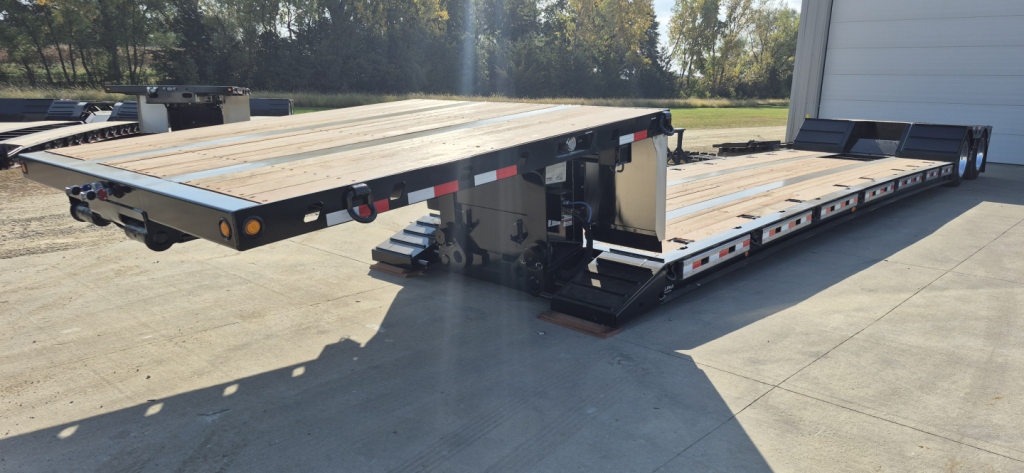
On Fontaine models in this category, buyers will commonly see 40 ton to 55 ton class configurations, including mechanical detachable gooseneck and hydraulic detachable neck designs. Loaded deck heights around 18 to 20 inches are common, along with clear deck lengths near 29 feet and extendable designs that can open to roughly 50 feet on certain Magnitude and Renegade models. Tandem axle and tridem axle layouts are both relevant depending on the weight target, bridge law requirements, and the states you run most often. Air ride suspension, fixed axle groups, aluminum or steel wheels, wood floors, and multiple pairs of outriggers are all common spec points that directly affect payload flexibility and service life.
The right spec usually comes down to how you load and where you haul. A mechanical neck can be a solid fit for fleets that want a simpler detachable setup with fewer hydraulic components to maintain. A hydraulic neck can speed loading cycles and make life easier with frequent equipment loading, especially when operators are dealing with varying jobsite conditions. Swing clearance, front ramp design, deck profile, and rear deck length all matter if you are moving excavators, pavers, compactors, or tall self-propelled equipment. Buyers should also pay close attention to axle spread, flip axle compatibility, wet-line requirements, and whether the trailer is prepped for a pony motor, since those details affect permitting, legal payload, and expansion options later.
Fontaine has a strong presence in specialized hauling because these trailers are typically engineered around practical fleet concerns like corrosion resistance, low tare weight, and modular upfit capability. When comparing listings, focus less on the stated ton rating alone and more on the actual GAWR, GVWR, deck dimensions, ground clearance, loaded deck height, and attachment points for flip boxes or close-coupled flip axles. Those are the details that determine how useful the trailer will be in day-to-day heavy haul work. A well-matched Fontaine double drop deck trailer can cover a broad range of machine transport while keeping loading efficient and permit compliance more manageable.
Frequently Asked Questions about Fontaine Double Drop Deck Trailers
What is a Fontaine double drop deck trailer best used for?
A Fontaine double drop deck trailer is best used for hauling tall, heavy equipment that needs a lower deck height than a standard flatbed or step deck can provide. Common applications include construction equipment, agricultural machines, industrial components, and other freight that benefits from the low center well between the neck and rear axles. The lower deck helps operators stay within legal height limits while carrying larger machines more securely.
What is the difference between a mechanical detachable neck and a hydraulic detachable neck on a Fontaine double drop?
A mechanical detachable neck uses a simpler connection and detachment process, often appealing to buyers who want fewer hydraulic components and a straightforward maintenance profile. A hydraulic detachable neck generally offers faster, easier loading and unloading, especially for fleets that load equipment frequently or in uneven jobsite conditions. The best choice depends on loading frequency, driver familiarity, tractor wet-line setup, and the type of equipment being transported.
How important is deck height on a Fontaine double drop deck trailer?
Deck height is one of the most important specs in this category because it directly affects legal loaded height and load stability. Many Fontaine double drop models are built with loaded deck heights around 18 to 20 inches, which can make the difference between hauling a machine legally or needing extra permits and route restrictions. Buyers should compare loaded deck height along with ground clearance, since both matter in real operating conditions.
Should I choose a tandem axle or tridem axle Fontaine double drop?
A tandem axle trailer can be a practical choice for lighter heavy haul applications and buyers who want to keep tare weight and tire-related operating costs lower. A tridem axle configuration is better suited to higher payload targets and can help with axle weight distribution, depending on the load and jurisdiction. The right decision should be based on expected machine weights, bridge law compliance, permitting patterns, and whether additional flip axles or spreader configurations may be used.
What specs should I compare first when shopping for a Fontaine double drop deck trailer?
Start with actual deck length, loaded deck height, capacity rating, axle configuration, and neck type. After that, review outriggers, swing clearance, floor type, suspension, axle spread, and compatibility with flip axles or flip boxes. Buyers who focus only on ton rating can miss the details that determine real-world usability, legal payload, and how well the trailer matches their equipment mix.