
Dynaweld Double Drop Deck Trailers For Sale
Shop Dynaweld double drop deck trailers with buyer-focused details on deck height, axle setups, capacity, frame construction, and heavy-haul use.
Learn more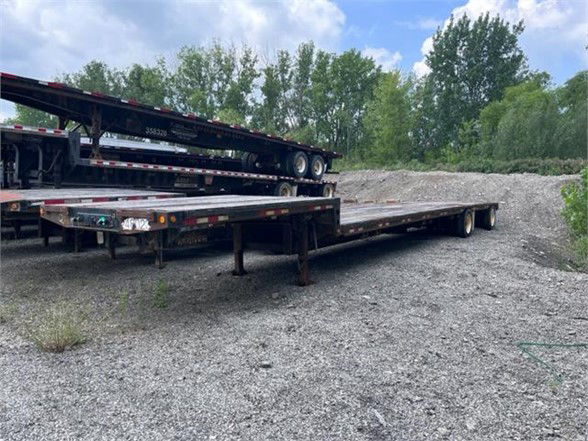
Have dynaweld double drop deck trailer to sell? List it here to reach thousands of buyers.
About Dynaweld Double Drop Deck Trailers
The most important buying points are well height, well length, overall trailer length, axle configuration, and frame construction. Dynaweld units are commonly found in steel construction, which appeals to buyers who want durability and straightforward repairability in severe service. A typical setup may include a 102-inch wide trailer, air ride suspension, and tandem or spread axle arrangements, depending on how the trailer was ordered. Buyers hauling taller equipment should pay close attention to loaded deck height, neck design, ground clearance, and transition angles at the front and rear deck. Those details matter when loading forklifts, compact construction equipment, or machinery with low approach angles.
A Dynaweld double drop deck can be a practical fit for regional heavy-equipment moves, building materials, and oversize freight that needs lower center-of-gravity loading without moving into a much heavier trailer category. If the trailer has a wide-spread axle setup, that can help with weight distribution and bridge compliance in certain operations, but it also affects tire scrub and maneuverability in tight yards. Air ride is another common feature buyers value because it helps protect delicate or high-value cargo and can improve ride quality over rough pavement. On used trailers, inspect the main beams, crossmembers, neck area, suspension components, landing gear structure, and deck condition closely, especially on steel trailers that may have seen rental, construction, or industrial duty.
The right Dynaweld double drop deck depends on the freight mix more than the badge on the nose. A buyer moving compact but tall equipment may prioritize a deeper well and lower loaded height, while a buyer hauling denser freight may focus first on axle spacing, tire condition, and structural integrity. It also pays to verify kingpin setting, fifth wheel compatibility, deck concentrated load rating, and any state-specific dimension concerns before putting a trailer to work. For fleets and owner-operators that need a durable platform for taller legal-height freight, this category remains one of the most useful specialty trailer types on the road.
Frequently Asked Questions
What is the main advantage of a Dynaweld double drop deck trailer compared with a standard flatbed or step deck?
A double drop deck trailer gives you a lower well section between the front and rear decks, which reduces loaded height for taller freight. That makes it useful for machinery, tanks, and fabricated components that may be too tall for a flatbed or even a standard step deck. In many applications, the lower well helps keep freight legal height without moving to a heavier lowboy-style trailer.
What specs matter most when buying a used Dynaweld double drop deck trailer?
The key specs are well height, well length, overall length, axle configuration, suspension type, and frame construction. Buyers should also confirm trailer width, kingpin setting, rear deck height, and concentrated load capacity if the freight includes point-loaded equipment. On a used unit, the condition of the neck, main beams, crossmembers, suspension, and deck surface often matters more than appearance.
Is a steel Dynaweld double drop deck trailer a good choice for heavy-duty work?
A steel trailer is often preferred for tough service because it is durable and generally straightforward to repair. That makes it attractive for construction, industrial, and rental-type applications where the trailer may see repeated loading, chains, dunnage, and harsh environments. The tradeoff is that steel can add empty weight and needs close inspection for corrosion, deck wear, and fatigue around stress points.
How does a spread axle setup affect a double drop deck trailer?
A spread axle configuration can improve weight distribution and may help with bridge law compliance depending on the route and load. It can be a good fit for certain heavy or taller loads that benefit from better balance across the trailer. The downside is reduced maneuverability in confined spaces and increased tire scrub during sharp turns, so the right setup depends on the operating environment.
What types of freight are commonly hauled on a double drop deck trailer?
Common freight includes taller construction equipment, forklifts, industrial machinery, steel fabrications, tanks, and other cargo that benefits from the lower deck in the well. These trailers are chosen when the load is too tall for a flatbed or step deck but does not require the full capacity or loading style of a dedicated lowboy. Buyers should match the trailer to the actual freight dimensions, weight distribution, and loading method used in their operation.