
Transcraft Crush Car Carrier Trailers For Sale
Browse Transcraft crush car carrier trailers built for hauling crushed vehicles, scrap, and salvage with clam-style bodies and durable trailer construction.
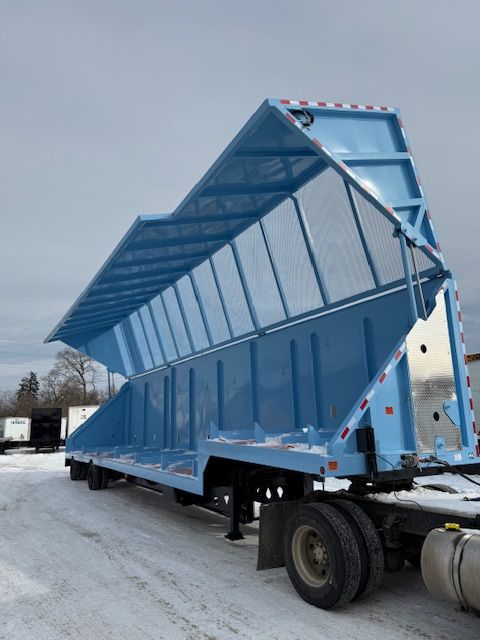
Selling a transcraft crush car carrier trailer? List your transcraft crush car carrier trailer for sale and reach thousands of commercial buyers.
Transcraft Crush Car Carrier Trailers
The gate setup is one of the first details to inspect closely. Many crush car carriers use a folding rear gate, and hydraulic operation is common because it reduces manual handling and speeds up loading and unloading cycles. A 12-volt hydraulic pump with dual cylinders is a practical setup on this type of trailer, but buyers should still check cylinder condition, hose routing, hinge wear, latch alignment, and whether the gate seals up square when closed. Because these trailers routinely deal with jagged loads, structural condition is critical. Look carefully at the frame rails, crossmembers, floor plating, sidewall reinforcement, hinge points, and rear impact area for repairs, cracking, or distortion from heavy scrap service.
Running gear condition can make or break the value of a used crush car carrier. Brake life, tire condition, suspension wear, wheel-end maintenance, lighting, and ABS function all deserve close attention, especially on trailers that spend time on uneven yard surfaces before heading onto the highway. Buyers should also verify kingpin wear, landing gear condition, and overall compliance items if the trailer is expected to be road-ready immediately. LED lighting is a plus in this segment because wiring takes abuse, and upgraded lights tend to hold up better in dirty, high-vibration service. If a seller notes the trailer is FHWA ready, it is still smart to confirm brake measurements, tire dates, reflective tape, and any state-specific inspection requirements.
Transcraft has long been a recognized name in trailer manufacturing, and that matters in a niche category where durability, repairability, and parts familiarity influence total cost of ownership. For buyers comparing listings, the right trailer is usually the one with the best structure and gate operation, not simply the newest model year. A well-maintained crush car carrier can be a productive tool for auto recyclers, salvage operators, scrap haulers, and demolition contractors who need maximum volume and fast cycle times. Focus on body integrity, legal roadability, and how the trailer has been used, because scrap service is hard on equipment and condition tells the real story.
Frequently Asked Questions about Transcraft Crush Car Carrier Trailers
What is a crush car carrier trailer used for?
A crush car carrier trailer is designed to haul crushed vehicles, auto salvage, and other bulky scrap materials. Its high-capacity clam-style body helps contain irregular loads that would not fit efficiently on a standard flatbed or conventional open trailer. These trailers are common in auto recycling, scrap processing, salvage transport, and demolition-related hauling where load volume and containment are more important than palletized freight flexibility.
What should I inspect first on a used Transcraft crush car carrier trailer?
Start with the structure and the gate system. Check the frame, crossmembers, floor, sidewalls, hinge areas, and rear section for cracks, patches, bent steel, or signs of repeated overloading. Then inspect the folding gate, hydraulic pump, cylinders, hoses, latches, and wiring because gate failure can create downtime and safety problems. After that, move to brakes, tires, suspension, lights, kingpin condition, and wheel ends to judge true road-ready status.
Are hydraulic folding gates better on a crush car carrier trailer?
For many operations, yes. A hydraulic folding gate speeds up loading and unloading, reduces physical effort, and helps keep the trailer cycling efficiently through scrapyards and processors. The advantage depends on condition and maintenance, though. A neglected hydraulic system can become a recurring repair item, so buyers should inspect pump operation, cylinder response, hose condition, battery connections if applicable, and gate alignment before putting much value on that feature.
What trailer length is common for a crush car carrier?
A 48-foot trailer is a common size in this category because it provides strong load volume while remaining practical for yard access and highway use. Exact dimensions can vary by manufacturer and body design, but buyers usually balance cubic capacity, axle placement, and operating routes when choosing length. The best size depends on the type of crushed material being hauled and the legal weight and length rules in the states where the trailer will run.
Why does trailer condition matter more than model year in this category?
Crush car carriers work in severe service. Sharp scrap, off-road yard conditions, repeated heavy loading, and frequent gate cycles put more stress on the trailer than many standard freight applications. Because of that, an older trailer with solid steel, good brakes, usable tires, and a properly functioning gate can be a better buy than a newer trailer with structural fatigue or neglected running gear. Service history and visible wear usually tell more than age alone.