
1983 Trailers For Sale
Browse 1983 trailers for sale, including dry van and utility configurations. Compare dimensions, axle setups, suspension, floors, and GVWR.
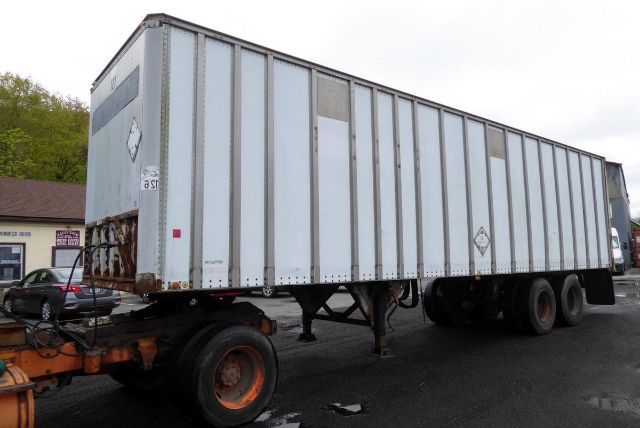
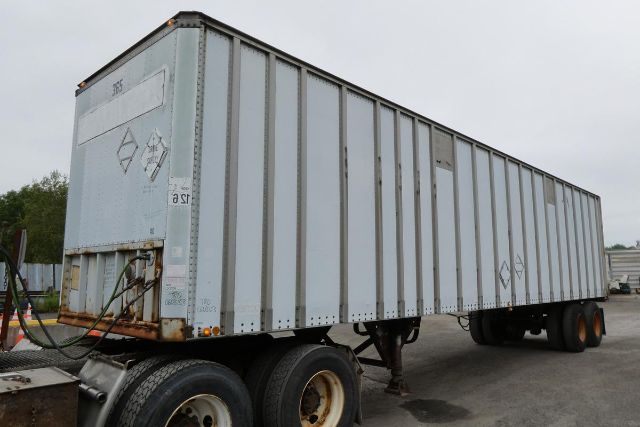
Selling a 1983 trailer? List your 1983 trailer for sale and reach thousands of commercial buyers.
1983 Trailers
For older van trailers, the highest-value inspection points are the frame rails, crossmembers, suspension hangers, roof bows, rear sill, and the floor around forklift traffic areas. Wood floors can still perform well, but rot, delamination, and patched sections matter if the trailer will carry concentrated pallet loads. Roll-up doors are practical for dock work, but cable, track, and panel wear can turn into immediate repair costs. On aluminum trailers, corrosion around dissimilar metals and stress cracking near mounting points deserve a close look. If the trailer has a sliding tandem, confirm the slider locks engage cleanly and the rails are not excessively worn.
Specs on 1983 trailers often reflect an earlier design standard, so buyers should verify current legal and operational fit. A 96-inch-wide dry van with outside height around 12 feet 6 inches to 12 feet 8 inches may still suit regional freight, warehouse overflow, or private fleet use, but bridge law, dock compatibility, and route restrictions should be checked. Spring ride suspension is simple and durable, though it generally rides rougher than air ride for sensitive cargo. Fixed tandems can be fine for dedicated lanes or stationary storage use, while sliding tandems offer more flexibility for weight distribution and state bridge compliance.
The best use case for a 1983 trailer is usually application-specific rather than broad over-the-road service. Buyers often target these units for static storage, seasonal commodity hauling, local shuttle work, or low-mileage industrial use where acquisition cost matters more than late-model features. A careful review of brakes, lights, wheel ends, tire age, kingpin area, and VIN or title status is essential. If the trailer will be licensed and run regularly, factor in the cost of bringing an older unit up to safe operating condition. A lower purchase price can still make sense when the body is straight, the floor is usable, and the understructure is solid enough to support the intended load.
Frequently Asked Questions about 1983 Trailers
What should I inspect first on a 1983 trailer?
Start with the structure and undercarriage. Check frame rails, crossmembers, suspension mounts, landing gear supports, roof, rear sill, and kingpin area for corrosion, cracking, or poor repairs. On dry vans, inspect the wood floor for soft spots and forklift damage, and test the rear door for track and cable issues. After that, evaluate brakes, tires, wheel seals, lights, and air system condition to understand what it will take to put the trailer into service.
Are 1983 dry van trailers still useful for commercial work?
They can be, but usually in limited-duty applications. Many older dry vans remain useful for local delivery, warehouse overflow, farm and industrial storage, or short regional runs where the trailer is not expected to match newer equipment standards. Their value depends on structural condition, legal compliance, and how much reconditioning is needed. For heavy daily highway use, buyers should compare repair costs against a newer trailer before deciding.
Is spring ride a drawback on an older trailer?
Spring ride is not automatically a drawback. It is a simple, durable suspension design that can be easier to maintain than more complex systems, which is one reason it appears on many older trailers. The tradeoff is ride quality. Spring ride generally transfers more road shock than air ride, so it may be less suitable for delicate freight. For storage, scrap, basic palletized goods, or short-haul work, it can still be a practical setup if the suspension components are in good condition.
What axle setup is better on an older trailer, fixed tandem or sliding tandem?
That depends on the job. A fixed tandem is simpler and can work well for yard use, storage, or dedicated lane work where weight distribution does not change much. A sliding tandem adds flexibility for balancing axle weights and meeting bridge requirements in different states. On an older trailer, the condition of the slider rails, locking pins, and air release system matters as much as the configuration itself. A worn slider can become a repair issue quickly.
How do I judge value on a 1983 trailer?
Value comes down to usable condition, not model year by itself. A straight trailer with a solid floor, functioning brakes, decent tires, clean title, and limited rust in critical structural areas can still be a cost-effective buy. A cheaper unit with bad floors, suspension rust, door damage, or major brake work needed may cost more after repairs than a better trailer with a higher asking price. Buyers should price the trailer as a package that includes expected repair and compliance costs.