
Step Van Trucks For Sale in Florida
Step van trucks for sale in Florida. Compare gas, diesel and electric walk-in vans, GVWR, body lengths, liftgates and specs for last-mile routes.
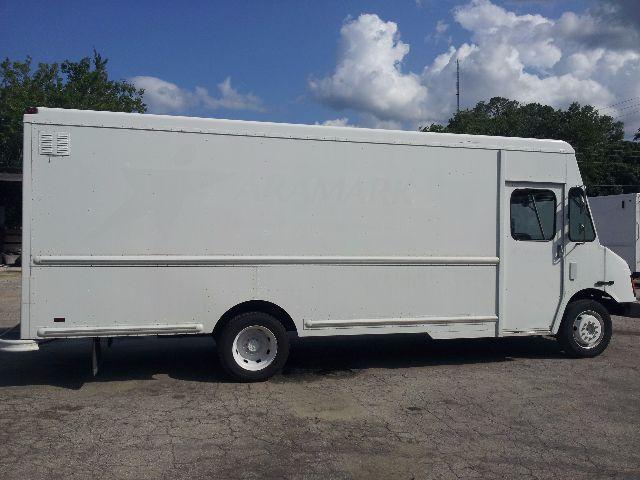
Selling a step van truck? List your step van truck for sale and reach thousands of commercial buyers.
Step Van Trucks in Florida
Body and chassis combinations define payload and productivity. Typical GVWR spans 12,000 to 26,000 pounds, with payloads roughly 4,000 to 10,000 pounds depending on wheelbase, body length and equipment. Common lengths run 14 to 22 feet with interior stand-up heights near 78 to 85 inches. Look for roll-up rear doors for high-frequency parcel stops, swing doors when you need a tighter seal, and curbside sliding doors for safe curb deliveries. Liftgates speed pallet handling on linen and beverage routes, while lightweight ramps save tare on parcel. Most units ride on 19.5 inch rubber, with 22.5 inch wheels on heavier MT55 class builds. Brands you will see include Utilimaster and Morgan Olson bodies on Freightliner Custom Chassis MT45 and MT55, Ford F59 stripped chassis, and older Workhorse or Chevy P-series.
Florida climate favors corrosion-resistant specs. Aluminum bodies, stainless fasteners, sealed wiring and undercoating handle coastal exposure better, especially around Jacksonville and the Keys. High-capacity cab air conditioning, insulation and heat-reflective roof coatings matter in summer. If cargo temp control is critical, look for insulated walls and auxiliary cargo AC or a reefer package. Verify backup cameras, bright LED interior lighting for pre-dawn storms, and adequate wiper and defrost performance. For urban work in Miami Beach or downtown Orlando, shorter wheelbases improve turning and access, but they reduce available body length and payload, so balance maneuverability with cube needs. Florida has no statewide safety inspection, but salt air and humidity still demand regular brake, electrical and body maintenance.
Driver ergonomics and upfits drive route efficiency. Adjustable shelving, e-track, bulkhead doors, jump seats and scanner power docks save minutes at every stop. Telematics, reverse sensors and dash cams reduce risk and help coach idling and harsh events. Choose hydraulic brakes for simplicity in lighter GVWRs, or air brakes on heavier MT55 builds that see frequent stops with near max payload. If you are evaluating used units, review engine hours in addition to miles, DPF service history on diesels, liftgate cycle counts, and tire date codes. For non-CDL operation in Florida, stay at 26,000 pounds GVWR or below and avoid placarded hazmat; above 26,000 GVWR a CDL is required.
Frequently Asked Questions about Step Van Trucks in Florida
What GVWR and payload should I target for a Florida last-mile route, and will I need a CDL?
Most step vans used for parcel and service work in Florida run 16,000 to 22,000 pounds GVWR with payloads from about 4,000 to 8,000 pounds depending on body length, shelves and liftgate weight. A CDL is required at 26,001 pounds GVWR and above, or with placarded hazardous materials. Many fleets spec 19,500 to 22,000 GVWR to balance payload with non-CDL operation for broader driver availability.
Gas, diesel or electric for stop-and-go Florida operations?
Gas engines offer lower acquisition cost and avoid diesel aftertreatment concerns in dense stop-start traffic, which fits parcel and service routes across Miami, Orlando and Tampa. Diesels carry higher torque and better fuel economy at heavy payloads or longer suburban routes, but monitor DPF health and regen frequency. Electric step vans work well for predictable urban loops within daily range, especially with depot charging and utility incentives, and they cut heat and vibration that wear drivers down in summer.
Which body features matter most for productivity and Florida climate?
Look for aluminum bodies with stainless hardware to resist coastal corrosion, high-capacity cab AC, LED lighting and sealed harnesses. Choose roll-up rear doors for rapid multi-stop delivery, swing doors for a tighter seal, and curbside sliding doors for safe curb access. Insulated walls or cargo AC help with groceries, medical and bakery. Match wheelbase to your streets and dock geometry, and add a liftgate for palletized loads or a lightweight ramp to preserve payload on parcel routes.
What should I inspect on a used step van beyond basic mileage?
Check engine hours, not just miles, since step vans idle extensively. Review DPF and EGR service records on diesels, transmission service intervals on high-heat Florida routes, liftgate operation and leak-down, roof seams and rivets for corrosion, door tracks and rollers, and electrical connectors for green corrosion. Inspect tires for age and irregular wear, confirm brake life and look for moisture-related issues under mats and in the cargo ceiling panels.
Can a step van be converted for food service or mobile workshop use in Florida?
Yes. Step vans are often upfitted with commercial kitchens, generators and serving windows, or built out as mobile telecom and HVAC workshops. Plan for electrical load, ventilation and fire suppression, plus additional insulation and roof coatings for heat. Stainless or aluminum liftgates and sealed flooring help with sanitation near the coast, and a shore-power inlet simplifies overnight cooling and battery charging.