
New Trailers For Sale in Florida
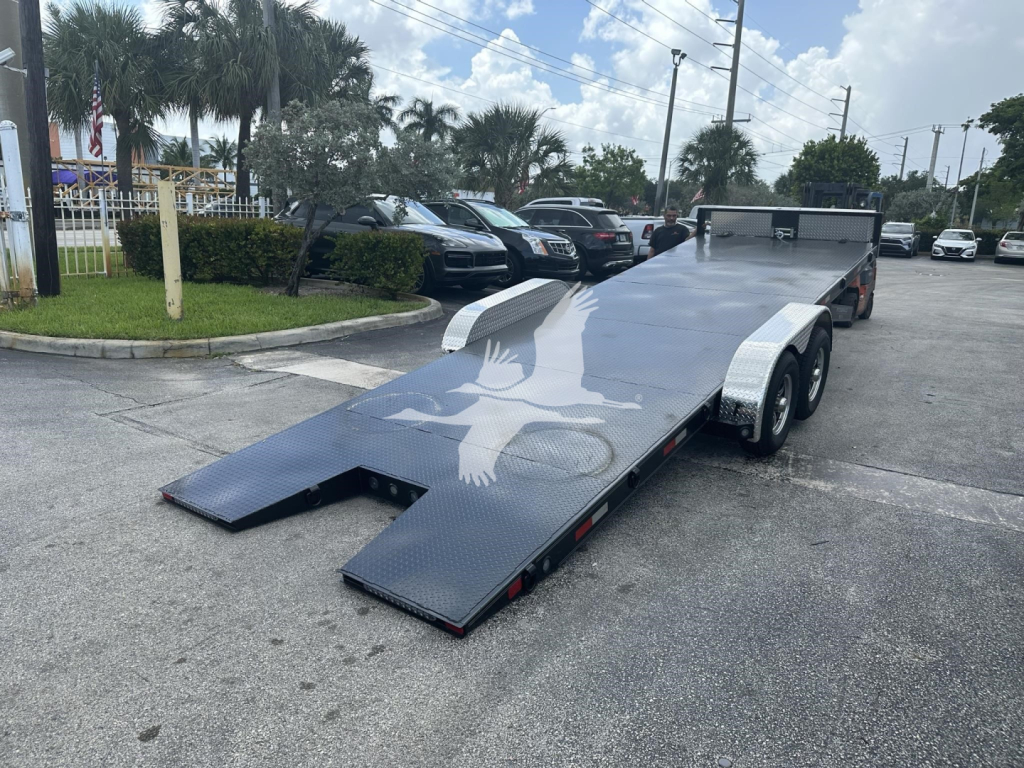
Browse new trailers for sale in Florida, including dry vans, reefers, flatbeds, dumps, lowboys, tankers, and specialty hauling equipment.
Selling a new trailer? List your new trailer for sale and reach thousands of commercial buyers.
New Trailers in Florida
Dry vans, reefers, flatbeds, step decks, dump trailers, lowboys, and tank trailers each solve a different job, and the right spec depends on payload, route profile, and loading method. A van or reefer buyer may focus on interior height, logistics posts, scuff liners, swing versus roll-up doors, and tire inflation systems. Flatbed and drop-deck buyers usually look harder at deck length, concentrated load rating, coil package options, winch track placement, and axle spread for bridge compliance. Dump and end-dump applications bring body shape, liner choice, hoist design, and gate configuration to the front of the decision.
Running gear and maintenance design have a direct effect on uptime. Air ride remains common for freight protection and dock-friendly loading height, while mechanical suspensions still appeal in severe-duty work. Anti-lock brakes are standard, but many buyers also look for disc brakes, automatic slack adjusters, lift axles, and telematics-ready harnesses. Wheel-end package, hub type, tire size, lighting layout, and ease of service around brakes, suspension, and wiring are worth checking closely because they affect inspection time and operating cost over the life of the trailer.
Florida buyers also tend to pay close attention to trailer dimensions and legal operating limits, especially for construction hauling, heavy equipment moves, and port-related freight. Overall length, axle spacing, kingpin setting, fifth wheel compatibility, and dock approach angle can all matter depending on lane and customer base. A new trailer gives buyers the advantage of current safety equipment, fresh components, and factory spec choices that better match the work, which is why the best purchase usually comes down to application fit rather than simply choosing the lowest upfront price.
Frequently Asked Questions about New Trailers in Florida
What types of new trailers are most common in Florida?
The most common new trailers in Florida include dry vans, refrigerated trailers, flatbeds, step decks, dump trailers, lowboys, chassis-style equipment for port work, and various tank and specialty trailers. The right category depends on the freight. Dry vans suit general palletized freight, reefers handle produce and temperature-sensitive goods, flatbeds and step decks cover building materials and machinery, and dumps are common in construction, demolition, and aggregate work.
What specs matter most when buying a new trailer?
The most important specs are the trailer type, axle count, GVWR, suspension, brake package, body construction, and deck or interior dimensions. Buyers should also check kingpin setting, landing gear capacity, tire and wheel package, lighting, and options such as scuff liners, lift axles, winch tracks, bulkheads, or tire inflation systems. The correct spec package should match payload, loading method, route restrictions, and maintenance expectations, not just the advertised purchase price.
Are aluminum or steel trailers better for Florida service?
Neither material is automatically better for every application. Aluminum helps reduce empty weight and offers strong corrosion resistance, which is valuable in Florida's humid and coastal conditions. Steel often brings lower initial cost and can be preferred in severe-duty applications where impact resistance and repair familiarity matter. Many buyers end up with a mixed construction trailer that balances tare weight, durability, and long-term maintenance.
How do I choose the right axle and suspension setup?
Axle and suspension choice should be based on payload, road conditions, bridge laws, and loading dock requirements. Tandem axles remain common for broad freight use, while spreads and tri-axles can help with weight distribution and legal compliance in certain applications. Air ride suspension is widely chosen for ride quality and cargo protection, while mechanical suspension can make sense for harsher jobsite conditions and simpler maintenance routines.
Why does kingpin setting matter on a new trailer?
Kingpin setting affects weight distribution between the tractor steer axle, drive axles, and the trailer group. It also influences turning clearance and compatibility with the tractor's fifth wheel position. A trailer with the wrong kingpin setting for the tractor and lane can create scaling problems, poor axle balance, or clearance issues, so buyers should treat it as a core spec rather than a minor detail.