
New Landoll Other Trailers For Sale
New Landoll other trailers for heavy equipment hauling, including traveling axle and hydraulic tilt designs with low load angles.
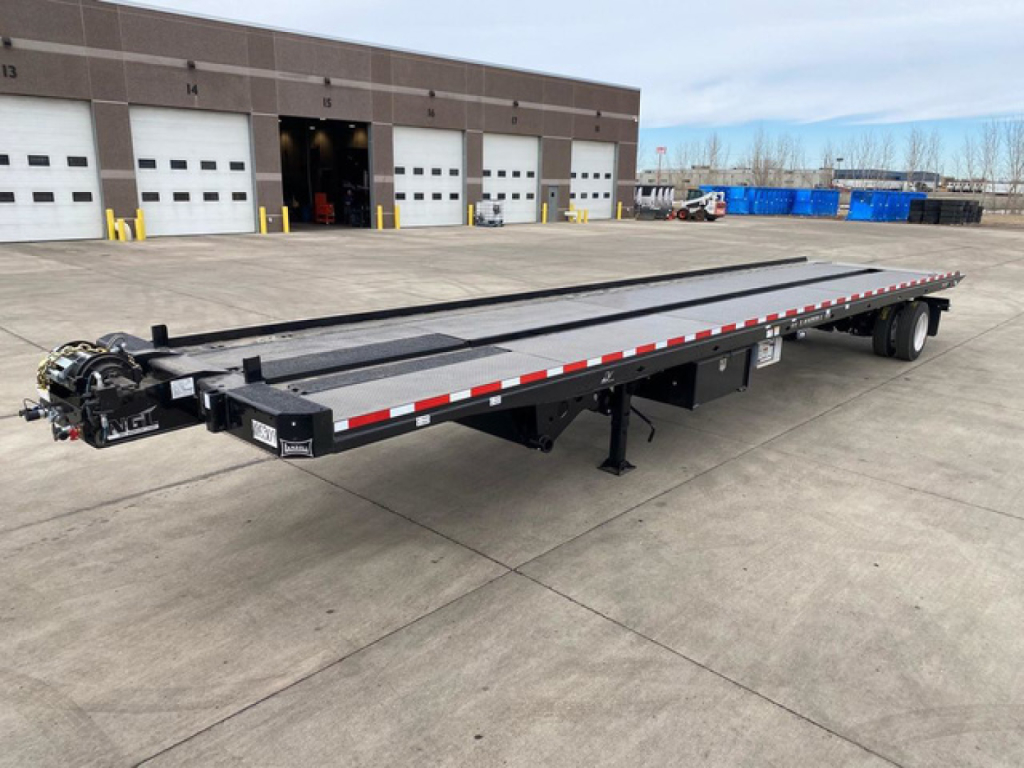
Selling a new landoll other trailer? List your new landoll other trailer for sale and reach thousands of commercial buyers.
New Landoll Other Trailers
One of the first specs to evaluate is how the trailer loads. A model like the Landoll 930 series is known for its traveling axle design, which lowers the deck and creates a shallow loading angle that helps reduce undercarriage contact on low-clearance equipment. Capacity, lower deck length, tail length, kingpin setting, and loaded deck height all affect what machines the trailer can realistically handle. Buyers should also pay close attention to swing clearance, upper deck ramp configuration, and ground clearance, especially if the trailer will be paired with different road tractors or used in uneven terrain. A longer lower deck can improve machine placement and weight distribution, while the right tail angle can make a major difference when loading pavers, scissor lifts, or rubber-tired equipment.
Trailer construction and securement details deserve just as much attention as the headline capacity rating. Common features on new Landoll heavy-haul style trailers include apitong decking, traction plates at the approach and tail, chain slots, winches, toolboxes, LED lighting, and dual work lights for low-light loading. Air ride suspension, manual dump valves, PSI tire inflation systems, and 17.5-inch tire packages are also common depending on the build. For buyers running frequent short-load cycles, remote-control tilt and travel functions can save time and improve positioning accuracy during loading. If the trailer will see mixed fleets or multiple drivers, look for practical details like side steps, clear lighting layout, and durable powder coat finishes that hold up in demanding service.
Matching the trailer to the freight matters more than buying on gross capacity alone. A 70,000 lb capacity trailer may be ideal for many equipment-hauling applications, but axle rating, bridge compliance, deck length, and tractor setup still determine how well the combination performs in the real world. Buyers should confirm axle spacing, suspension type, tire spec, and overall dimensions against the machines they move most often. New Landoll trailers are often chosen by contractors, rental fleets, and specialized haulers that need a low-angle loading solution with faster cycle times than a ramp trailer and less complexity than some detachables. When the freight mix includes machines that need easy loading and solid deck control, this category is a strong fit.
Frequently Asked Questions about New Landoll Other Trailers
What is a Landoll trailer commonly used for?
A Landoll trailer is commonly used to haul self-propelled construction and industrial equipment that benefits from a low loading angle and full-deck loading access. Typical cargo includes skid steers, compact track loaders, rollers, pavers, small dozers, scissor lifts, tractors, and similar machines. Many operators choose a Landoll when they need easier loading than a conventional tag trailer can provide, but do not need the full detachable gooseneck setup of a larger lowboy.
What makes a traveling axle Landoll trailer different from other equipment trailers?
A traveling axle Landoll trailer uses a hydraulic system that shifts the axle group to lower the deck for loading and then returns the trailer to transport position. This creates a shallow load angle that helps low-clearance equipment climb onto the deck with less risk of scraping. It also gives the operator more control during loading compared with fixed deck trailers that rely only on ramps or steep tail sections.
Which specs matter most when buying a new Landoll other trailer?
The most important specs are rated capacity, lower deck length, loaded deck height, tail length, load angle, kingpin setting, axle configuration, and suspension type. Buyers should also review decking material, chain slot layout, winch capacity, tire size, tire inflation system, and remote-control functions if fast loading cycles are important. These details directly affect what equipment the trailer can carry, how easily it loads, and how well it fits the tractor and operating territory.
Is a Landoll trailer a good choice for low-clearance equipment?
Yes. One of the main reasons buyers choose a Landoll trailer is its ability to load low-clearance equipment with less breakover risk than many traditional equipment trailers. The combination of low deck height, shallow approach angle, and hydraulic tilt or traveling axle operation makes it especially useful for paving equipment, lifts, and machines with limited ground clearance.
What should buyers check for tractor compatibility on a new Landoll trailer?
Buyers should verify kingpin setting, swing clearance, fifth wheel height, overall loaded height, and how the axle spread works with state bridge laws. Tractor wheelbase and rear frame setup can affect turning clearance and weight distribution, especially on longer trailers. It is also important to confirm that the tractor's hydraulic and air systems match the trailer's operating requirements if the trailer uses hydraulic tilt, traveling axle functions, or air ride suspension controls.