
2013 Forklifts For Sale in New York
Compare 2013 forklifts for sale in New York by load capacity, mast clearance, battery condition, and tire choice for warehouses or winter-exposed yards.
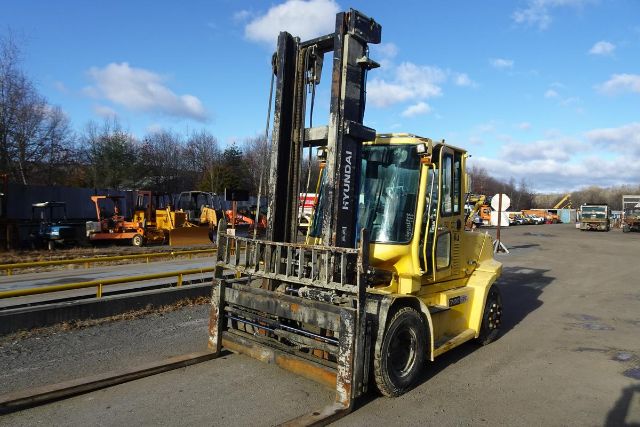
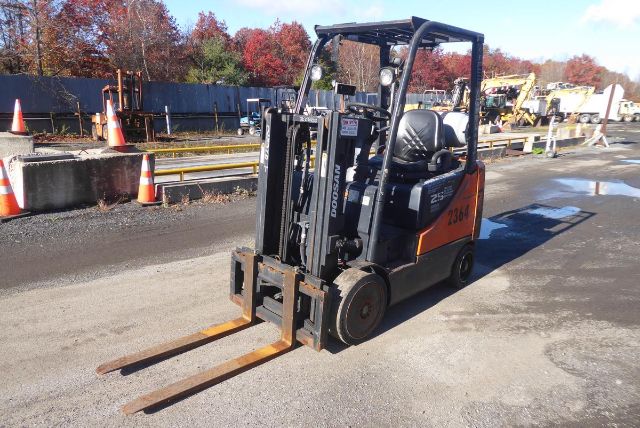
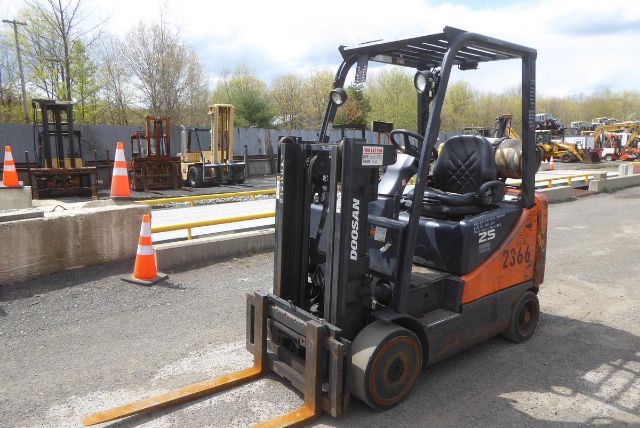
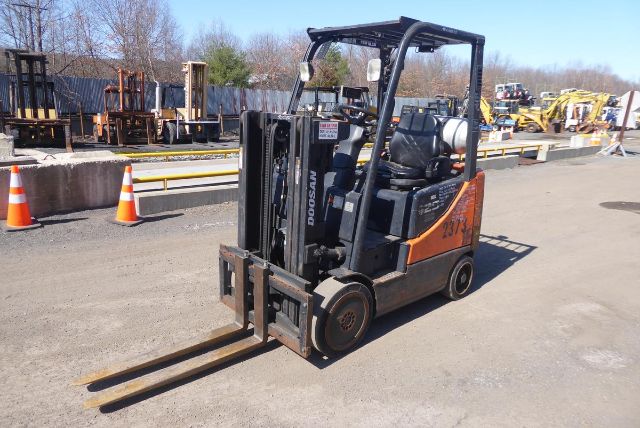
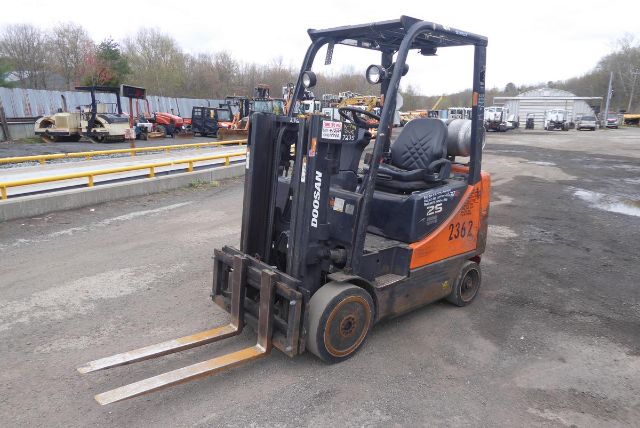
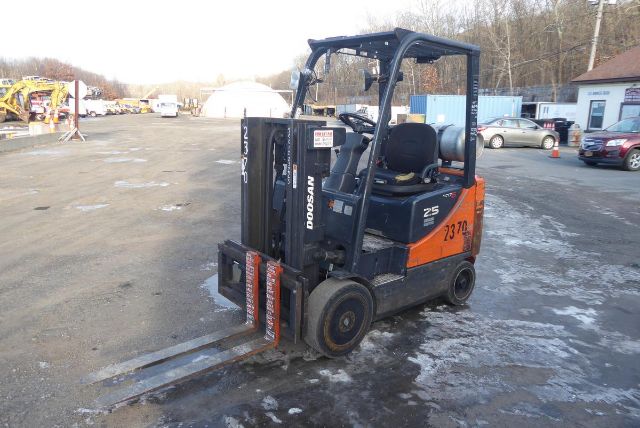
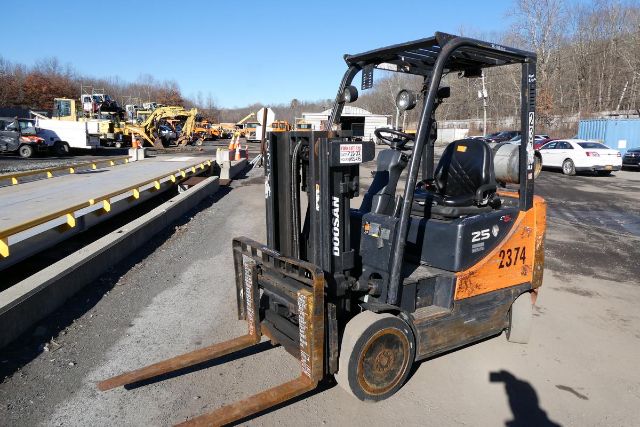
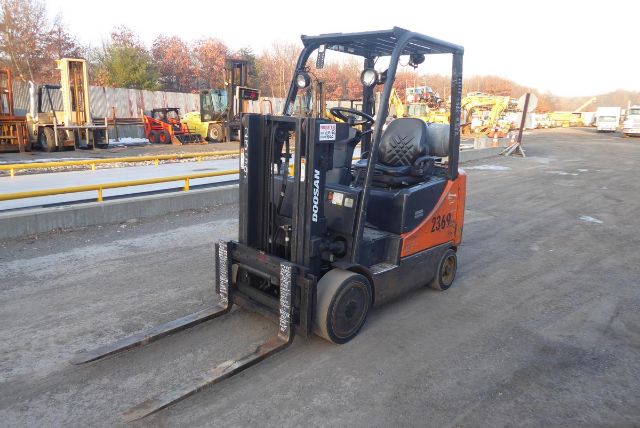
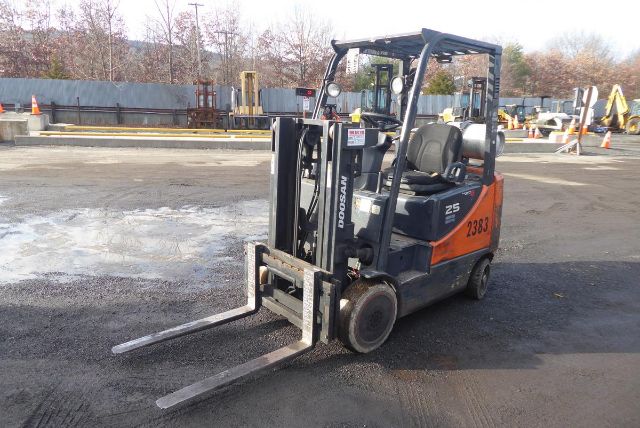
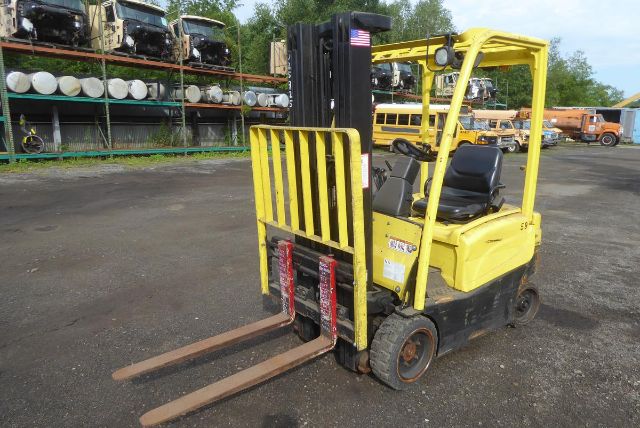
Selling a 2013 forklift? List your 2013 forklift for sale and reach thousands of commercial buyers.
2013 Forklifts in New York
A 2013 forklift has more than a decade of service or storage behind it, making maintenance records and verified hours essential. Load-test hydraulics and inspect mast chains, fork heels, steering, brakes, and transmission engagement. On electrics, test battery capacity and charger compatibility; on combustion models, check cold starting and available engine fault history. New York winter exposure warrants inspecting mast channels, connectors, and cab structures for corrosion. Units represented as new still need storage-history checks, aged-component inspection, and written confirmation of warranty eligibility.
Frequently Asked Questions about 2013 Forklifts in New York
How much fork wear is acceptable on a used 2013 forklift?
Forks with 10% thickness loss at the blade or heel should be removed from service. That amount of wear can reduce fork capacity by roughly 20%, even when the forklift still lifts normally. Measure against the manufacturer's original dimensions, and inspect for cracks, bent blades, damaged hooks, and unequal tip heights. Fork repairs require manufacturer-approved procedures, not improvised welding.
Do I need a forklift license to operate a forklift in New York?
New York workplace forklift operators need employer-authorized training and evaluation, not a standard driver's license as proof of forklift qualification. OSHA requires formal instruction, practical training, and a workplace performance evaluation for covered employers. Operator performance must be evaluated at least once every three years, with refresher training after specified events such as unsafe operation or an accident. A purchased training card alone does not satisfy every requirement.
Does a 2013 diesel forklift have a DPF?
No, the 2013 model year alone does not establish whether a diesel forklift has a DPF. Nonroad diesel emissions requirements phased in by engine power class, and compliant designs used different combinations of engine controls and aftertreatment. Read the engine's emissions label and confirm the original system with the manufacturer using the engine family and serial number. Highway-truck emissions timelines do not establish a lift truck's requirements.
Can I put any 36-volt battery in a 2013 electric forklift?
No, a replacement forklift battery must match more than the truck's nominal voltage. Confirm compartment dimensions, connector type and polarity, required battery weight, and compatibility with the charger. The battery contributes to counterbalance, so an underweight replacement can compromise rated capacity. Check the forklift data plate and manufacturer's specifications before substituting batteries, and verify that the charging area has suitable electrical service and ventilation.
Will a 5,000-pound forklift lift a 5,000-pound load with long forks?
A nominal 5,000-pound forklift is not automatically rated to lift a 5,000-pound load with an extended load center. Many counterbalanced forklifts carry their advertised rating at a 24-inch load center, corresponding to a centered, evenly distributed 48-inch-deep load. A longer load moves its center of gravity farther forward. Use the configuration-specific capacity plate or manufacturer-approved capacity information for the load dimensions, attachment, and lift height.