
2011 Forklifts For Sale in New York
Compare 2011 forklifts for sale in New York by tires, lift capacity, winter wear, and battery or engine health to match warehouse and outdoor yard work.
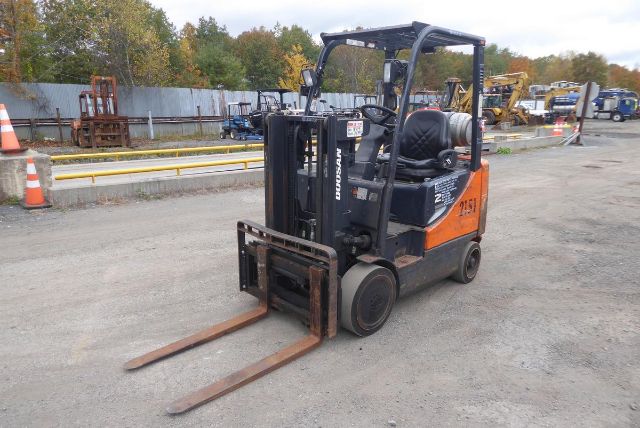
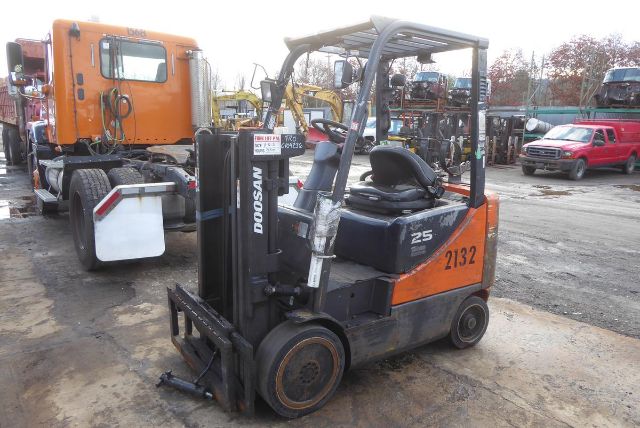
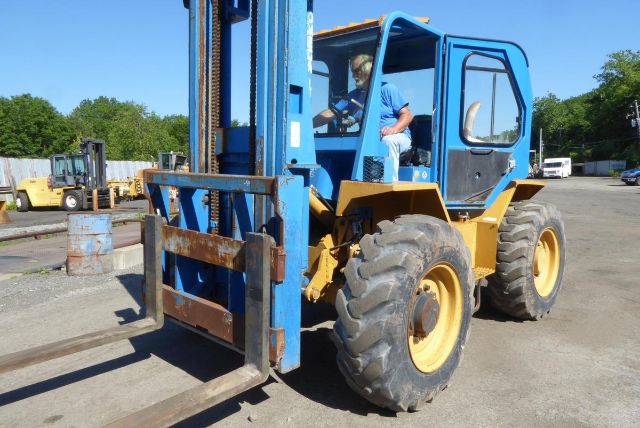
Selling a 2011 forklift? List your 2011 forklift for sale and reach thousands of commercial buyers.
2011 Forklifts in New York
Electric, LPG, and diesel configurations all fall within this model year, but power choice should follow the work environment. Electric lift trucks avoid tailpipe emissions inside food, distribution, and manufacturing facilities. LPG units need adequate ventilation and exhaust checks; diesel forklifts are better suited to outdoor work. Check local service support for the installed engine, transmission, or electric drive system rather than choosing by badge alone.
A used 2011 forklift is old enough that calendar age matters alongside operating hours. Inspect mast rails, chain wear, fork heels, carriage play, steering joints, brakes, and hydraulic leaks, then test lifting and travel with a suitable load. On combustion trucks, review cooling-system repairs and investigate coolant contamination, smoke, hard starting, and transmission hesitation. On electric trucks, obtain battery age, capacity-test results, and charger specifications. Verify engine emissions certification from the engine label rather than applying highway-truck DPF or DEF assumptions to every 2011 machine. Maintenance records and controller or ECM hours, where available, help verify the meter.
New York winter exposure makes corrosion checks essential on outdoor forklifts, especially around the frame, hydraulic lines, electrical connectors, and cab floor. Snow and ice reduce traction even with pneumatic tires; inspect cold-start equipment and cab heat for yard work. Distribution facilities along I-90 and I-87 and outdoor building-material yards require different tire, mast, and power choices. For any 2011 machine represented as new or unused, verify storage history, commissioning requirements, and written warranty terms. Low hours do not protect hoses, seals, tires, or a long-stored traction battery from age-related deterioration.
Frequently Asked Questions about 2011 Forklifts in New York
Can a 5,000-pound forklift lift a long load weighing 5,000 pounds?
A forklift rated for 5,000 pounds at a 24-inch load center cannot be assumed to lift 5,000 pounds at a longer load center. A centered, uniformly loaded 72-inch-deep pallet places its load center approximately 36 inches from the fork face. Obtain the manufacturer's capacity information for that load center, lift height, and attachment configuration. Longer forks alone do not increase a forklift's rated capacity.
What mast should I choose for a forklift that loads enclosed trailers?
A three-stage mast with adequate free lift is often the better choice for loading enclosed trailers or stacking beneath low ceilings. Free lift allows the forks to rise before the mast extends upward. Verify lowered mast height, load-backrest clearance, and free-lift height against the actual trailer opening. The forklift's turning space and the dock plate's load rating must also accommodate the truck and its load.
How do I check the battery on a used 2011 electric forklift?
A used electric forklift needs a battery capacity test under load, not just a voltage reading after charging. Record the battery's manufacturing date, inspect the tray for corrosion, and check flooded lead-acid cells for electrolyte problems and damaged connectors. Confirm that the charger matches battery voltage, capacity, and chemistry, plus the building's electrical supply. Replacement battery weight must remain within the forklift manufacturer's specified range.
Do forklift operators in New York need a license?
New York employers must train and evaluate forklift operators under OSHA's powered industrial truck rule, 29 CFR 1910.178; a driver's license does not replace that qualification. Training must cover the forklift type and workplace hazards, and operator performance must be evaluated at least once every three years. Unsafe operation, an accident or near miss, or changed equipment or workplace conditions can require refresher training and evaluation.
What weight should I use when arranging transport for a forklift?
Use the forklift's actual operating weight, not its rated lifting capacity, when arranging transport. Operating weight includes the installed battery or counterweight and attached equipment; confirm the manufacturer's figures and account for anything added afterward. Give the carrier the overall dimensions, lowered mast height, ground clearance, and running condition. Ramp suitability, deck capacity, securement points, and loading equipment matter as much as trailer payload.