
Box Trucks For Sale in Quebec
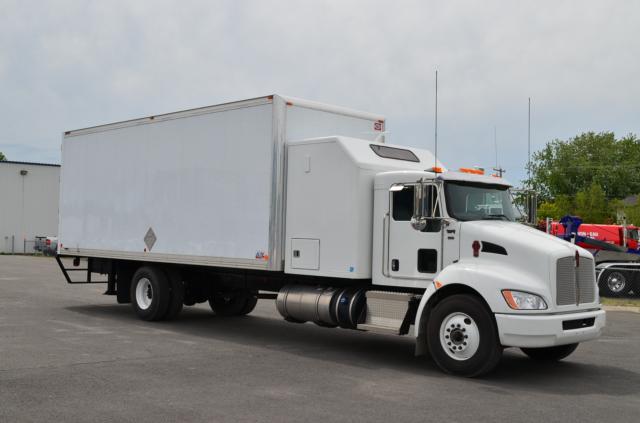
Have box truck to sell? List it here to reach thousands of buyers.
Box Trucks in Quebec
Chassis selection drives total cost and payload. Most box trucks here fall in Class 4 to Class 7 with GVWR from about 14,500 to 33,000 lb. Gas engines are common in Class 4-5 for lower upfront cost and simpler emissions. Modern diesels, like a midrange 6 to 7 liter with an Allison automatic, deliver torque and longevity in Class 6-7. Electric straight trucks are gaining traction for city routes, especially with Quebec energy costs and potential provincial incentives, but range drops in cold weather without preconditioning and heated battery management. Wheelbase and cab style are route specific: cabovers with 19.5 inch rubber excel in tight urban turns, while conventional cabs on 22.5s ride better and handle highway miles. Hydraulic brakes dominate up to Class 6, with air brakes common on heavier specs. Match rear axle ratios to stop-start delivery versus mixed highway duty.
The body is the work area. Common lengths run 12 to 26 ft with 96 in or 102 in widths. Interior protection and cargo control save money over time, so seek laminated hardwood floors, full scuff plates, E-track or logistics posts at two heights, and LED lighting. Roll-up rear doors speed dock work and parcel routes, while swing doors seal better for winter and foodservice. A curbside door improves productivity on dense downtown routes. Liftgates are a key differentiator: tuck-under gates keep the dock clear and suit varied pallets, while railgates give a larger, level platform for appliances and heavy furniture. Typical capacities range from 2,000 to 3,300 lb, and cold climates benefit from dual batteries and smart chargers to support liftgate cycles.
Regulatory and operational details round out the spec. Quebec’s spring thaw restrictions can cut allowable axle loads on secondary roads, so verify axle spacing, tire size, and route plans, especially on 24 to 26 ft bodies. Refrigerated boxes should list insulation thickness, K-factor, and reefer model with electric standby for overnight loads. For cross-border work, ensure ELD compliance and underride guard condition. Many buyers ask for aero packages, side skirts, and nose cones to trim fuel use on regional lanes. For search and comparison, box trucks in Quebec are also called straight trucks, dry freight trucks, or cube vans, and typical models include medium-duty conventional and cabover platforms set up for parcel, moving, furniture, foodservice, and light construction deliveries.
Frequently Asked Questions about Box Trucks in Quebec
What GVWR class should I target for city delivery in Quebec?
For dense urban routes with frequent stops and lighter pallets, Class 4-5 trucks in the 14,500 to 19,500 lb GVWR range balance payload and maneuverability, especially in a cabover with 19.5 inch wheels. If you consistently carry heavier freight, use a liftgate on every stop, or tow, step up to Class 6 around 25,999 lb GVWR. Heavier Class 7 specs fit 24 to 26 ft bodies with higher payload but need more room to turn and may introduce air brakes and higher licensing requirements.
Should I choose gas, diesel, or electric for Quebec conditions?
Gas excels for short urban routes with lower upfront costs and simpler emissions systems. Diesel is best for heavier loads, longer daily mileage, or 24 to 26 ft bodies thanks to torque, efficiency, and resale. Electric straight trucks work well on predictable city loops with depot charging and can qualify for provincial incentives, but plan for winter. Precondition the battery, use heated battery management, and factor reduced range in subzero temperatures when setting route lengths.
What box and door configuration fits parcel versus furniture delivery?
Parcel routes benefit from a 16 to 20 ft body at 96 in width with a roll-up rear door, curbside door, LED interior strips, and E-track at multiple heights. Furniture and appliances favor 20 to 26 ft at 102 in width for cube capacity, swing rear doors for a tighter seal, a railgate with a large aluminum platform, laminated hardwood floors, and full-height scuff liners to protect goods and walls during hand-truck moves.
How do spring thaw load restrictions affect my box truck spec?
During the thaw period, many secondary roads impose reduced axle limits. If your routes include these roads, consider a lighter chassis and body spec, spread axle loading with proper wheelbase selection, and run appropriate tire sizes and inflation to protect pavement and stay compliant. Planning routes on designated corridors and scheduling heavier deliveries outside the restriction window can prevent fines and downtime.
What cold-weather features are most valuable on a Quebec box truck?
Look for a winter package with a block heater, higher capacity batteries, heated mirrors, robust alternator output for liftgates and lighting, fuel heaters on diesel, and corrosion protection for frames and wiring. Aluminum roofs handle snow load, while swing rear doors seal tightly. If you use a liftgate heavily, add smart chargers and inspect hydraulic lines and cylinders regularly to avoid slow operation in subzero temperatures.