
Box Trucks For Sale in Maryland
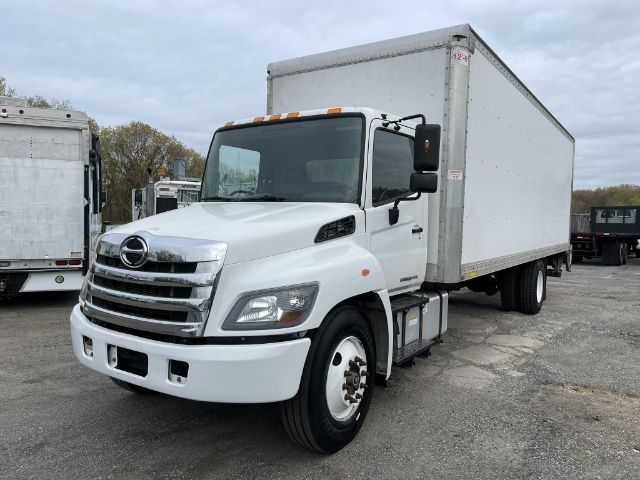
Shop box trucks for sale in Maryland. Compare non-CDL and CDL units, body lengths, liftgates, GVWR, door types, and diesel delivery specs.
Selling a box truck? List your box truck for sale and reach thousands of commercial buyers.
Box Trucks in Maryland
Body length, door configuration, and liftgate spec have a direct impact on daily productivity. Common box lengths run from 16 to 26 feet, with 24-foot and 26-foot bodies widely used for general freight and final-mile delivery. A wide roll-up rear door is standard on many dry van bodies, but buyers should also look at interior height, floor condition, E-track placement, and whether the body has scuff liners to protect the walls from pallets and carts. Liftgates are a major value point for freight that is not always handled at a dock, and capacity should match the load profile. A 2,500 lb liftgate may be enough for appliances, mixed pallet freight, and retail stops, while heavier applications may need more platform capacity.
Powertrain and chassis spec matter most when the truck is running a full route every day. Diesel engines from Hino, Isuzu, International, Freightliner, and Ford are common in this category, often paired with Allison automatic transmissions for ease of use in stop-and-go service. Air brakes are common on heavier box trucks, while suspension setup, axle ratings, and tire size all affect ride quality, durability, and legal payload. Buyers comparing used box trucks in Maryland should pay close attention to mileage, idle hours if available, service history, rust exposure, and the condition of the box itself. On a straight truck, the cargo body can be just as important as the engine because floor repairs, roof leaks, and rear frame corrosion can turn a low-priced unit into an expensive one.
Maryland buyers often need a box truck that can handle a mix of interstate travel, urban congestion, and short-hop delivery work. That puts extra importance on wheelbase, turning radius, visibility, and cab comfort. A regular cab is common, but seating, HVAC performance, and ingress-egress convenience still matter for multi-stop routes. If the truck will spend time on I-95, the Capital Beltway, or port-related lanes, look closely at rear axle ratio, cruising RPM, and loaded ride quality. The best box truck for sale is not just the one with the right body length. It is the one whose GVWR, body spec, drivetrain, and cargo handling equipment match the exact route and freight pattern the truck will see every week.
Frequently Asked Questions about Box Trucks in Maryland
What GVWR should I look for in a box truck?
GVWR should match your payload needs, driver requirements, and route type. Many buyers target a 25,950 to 25,999 GVWR box truck because it offers strong cargo capacity while staying under CDL thresholds in many situations. If your freight is lighter but bulky, a non-CDL Class 6 truck can be an efficient choice. If you regularly move dense palletized freight, heavier CDL-required straight trucks may be a better fit because payload, axle ratings, and brake capacity become more important than simply staying under the CDL limit.
What is the most common body length for a box truck?
Common box truck body lengths range from 16 to 26 feet, with 24-foot and 26-foot bodies being very common for delivery and moving applications. The right size depends on the freight, stop density, and where the truck operates. A 26-foot box maximizes cube for furniture, parcel, and route delivery, but a shorter body can be easier to maneuver in urban Maryland streets, older industrial areas, and tight loading zones. Buyers should evaluate interior dimensions, not just advertised body length, because usable cargo space can vary by body manufacturer and floor design.
Is a liftgate worth having on a box truck?
A liftgate is often essential if the truck delivers to locations without docks or forklifts. It speeds up unloading, reduces manual handling, and expands the type of stops the truck can service. The key is choosing the correct liftgate capacity and platform style for the freight. A lighter gate may be suitable for mixed route freight and appliance delivery, while palletized cargo or heavier rolling equipment may require a stronger setup. Buyers should also inspect liftgate pins, cylinders, wiring, controls, and platform condition on used trucks.
What should I inspect first on a used box truck?
Start with the body, frame, and maintenance history. On a used box truck, the cargo body condition has a major impact on value because water intrusion, damaged floors, worn roll-up doors, and sidewall deterioration can be costly to repair. After that, inspect the engine, transmission, brake system, tires, and suspension. Rust matters in Maryland, especially on frame rails, crossmembers, body mounts, liftgate assemblies, and undercarriage components. A truck with a solid service record, a dry box, and a clean frame is usually a better long-term buy than one that only looks good cosmetically.
What is the difference between a box truck and a straight truck?
In most commercial trucking use, a box truck is a type of straight truck. A straight truck has the cab and cargo body mounted on the same chassis, unlike a tractor and trailer combination. The term box truck usually refers specifically to a straight truck with an enclosed dry van body. Some buyers use the terms interchangeably, but straight truck can also include refrigerated bodies, stake bodies, dump bodies, and other body configurations built on a single chassis.