
Air Compressors For Sale in New York
Browse air compressor equipment built for mobile jobsite air supply, with key details on CFM, PSI, engine type, towing setup, and use cases.
Selling a air compressor? List your air compressor for sale and reach thousands of commercial buyers.
Air Compressors in New York
Powertrain and serviceability matter just as much as output. Many air compressors in this class use diesel engines from established industrial platforms such as John Deere, Kubota, Deutz, or Caterpillar, and buyers should pay close attention to engine hours, cold-start behavior, emissions tier requirements, and parts support in their operating region. In New York, emissions compliance, idling policies, and local jobsite regulations can influence which model years and engine packages make the most sense. On used units, service records, separator condition, fluid cleanliness, compressor end performance, and evidence that the machine consistently builds and holds pressure are more important than paint or cosmetics. A clean-running engine paired with a strong air end is usually the difference between a productive machine and an expensive repair cycle.
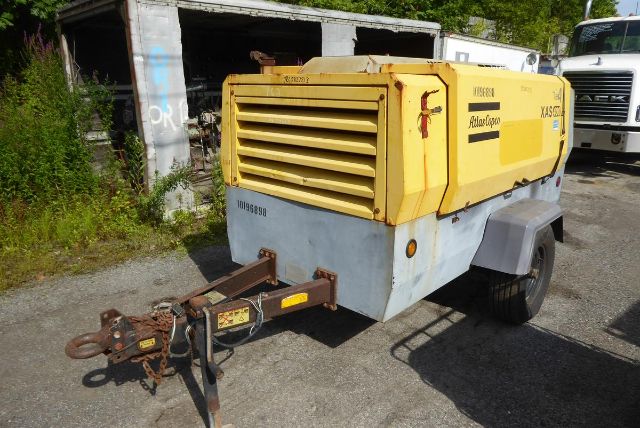
Towing and jobsite practicality are also key buying points. Most portable air compressors in this category ride on a trailer-style chassis with pintle or ball hitch arrangements, highway-rated tires, and compact dimensions that make them easy to move behind a service truck, dump truck, or pickup. Weight, axle rating, tire size, fuel capacity, and outlet configuration should all be checked against the intended workload. Buyers often look for multiple 3/4-inch air connections, larger discharge outlets for higher-flow applications, aftercoolers on specialty setups, and enclosure designs that allow quick access for maintenance. If the compressor will be moved daily between urban jobsites, compact footprint, visibility, and maneuverability can matter as much as raw output.
This equipment class is also referred to as a portable air compressor, tow-behind air compressor, or diesel mobile air compressor. The best fit depends on duty cycle and application. Road crews, utility contractors, demolition teams, pipeline support operations, and municipal departments all use air compressors differently, so matching the machine to the tool package is critical. Buying too small leads to pressure drop and downtime. Buying too large adds fuel burn, trailer weight, and unnecessary capital cost. The strongest category choices balance air delivery, engine reliability, transport practicality, and long-term service support.
Frequently Asked Questions about Air Compressors in New York
What size air compressor is best for mobile jobsite work?
The right size depends on total tool demand, not just the largest single tool. Air compressor sizing is usually based on required CFM at a target PSI, and buyers should add the airflow needs of any tools that may run at the same time. A unit around 185 CFM works for lighter utility and service work, while 375 to 400 CFM machines are common for running multiple pneumatic tools, breakers, and general construction equipment. Higher-demand applications such as sandblasting or drilling may require substantially more airflow and specialized configurations.
What should I inspect on a used diesel air compressor?
The most important checks are whether the engine starts cleanly, the compressor builds pressure properly, and the air end performs consistently under load. Buyers should also inspect hour meter readings, fluid condition, separator and filter maintenance, coolant system health, tire and axle condition, hitch components, and any signs of oil carryover in the air system. Service records are a major advantage because they help confirm whether the machine received regular maintenance instead of just running until a failure occurred.
Is CFM or PSI more important when comparing air compressors?
Both matter, but CFM usually drives the buying decision because it reflects how much air the machine can continuously deliver. PSI tells you the pressure available to the application, while CFM tells you whether the compressor can keep up with actual demand. Many jobsite tools operate within a familiar pressure range, but performance drops quickly when airflow is undersized. Buyers should choose a machine that meets the pressure requirement and still provides enough CFM for peak use.
Are tow-behind air compressors practical for truck fleets and contractors?
Yes. Tow-behind air compressors are widely used because they combine mobile air supply with straightforward transport behind service trucks, pickups, and other support vehicles. They are especially practical for crews that move between roadwork, utility, municipal, and construction jobsites. Buyers should confirm trailer weight, tire condition, axle capacity, hitch style, lighting, and local towing requirements before putting a unit into regular fleet service.
What industries commonly use portable air compressors?
Portable air compressors are used across construction, utility contracting, paving, demolition, mining support, pipeline work, municipal maintenance, and equipment service operations. Common uses include powering jackhammers, pavement breakers, blowers, impact tools, sandblasting systems, and other pneumatic equipment. The application matters because tool type, run time, and duty cycle directly affect the CFM, PSI, and portability features that make the most sense for the job.