
Mack Winch - Oil Field Trucks For Sale
Shop Mack winch oil field trucks with heavy-duty chassis, PTO-ready drivetrains, and specs built for rig moves, pulling, and field service.
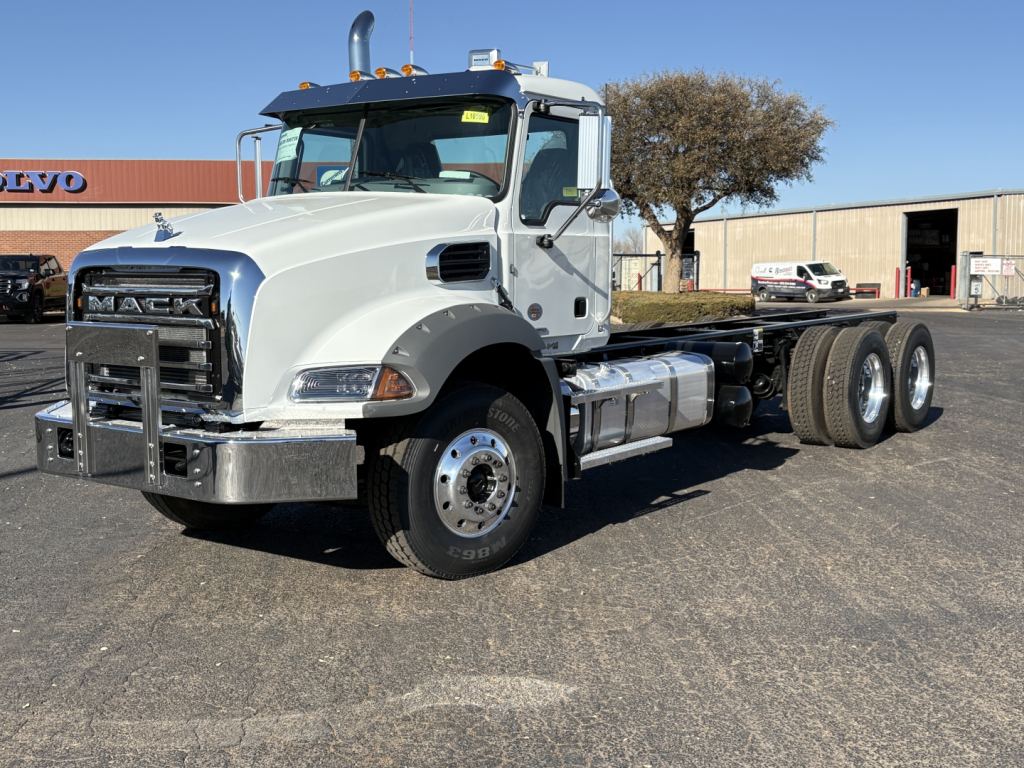

Selling a mack winch - oil field truck? List your mack winch - oil field truck for sale and reach thousands of commercial buyers.
Mack Winch - Oil Field Trucks
On Mack oil field winch trucks, the driveline matters as much as the body. Buyers will commonly compare Mack MP7 and MP8 diesel engines in the mid-300 to 450-plus horsepower range, along with Allison automatic and Fuller manual transmissions depending on how the truck will be used. Allison automatics with PTO provision are popular for repetitive stop-and-go work and operator ease, while manual transmissions still appeal in applications where gear control and driveline familiarity are priorities. Rear axle ratings around 21,000 pounds on single-axle trucks and 46,000 pounds on tandems are common, along with rear ratios such as 4.80 or 5.57 for low-speed pulling and launch performance. Wheelbase is another key decision because it affects body fitment, winch deck length, weight distribution, and turning radius on location.
Suspension and chassis specification separate a highway truck from a true oil field unit. Mack Camelback and mRIDE suspensions are both seen in this segment, with multi-leaf spring setups remaining common because they hold up well under concentrated loads and uneven terrain. Front axle capacity in the 10,000 to 20,000 pound range is typical depending on truck class, and many buyers still prefer drum brakes for ease of service in severe-duty environments. Day cab layouts are standard on many Mack winch trucks because they keep curb weight in check and simplify upfit packaging. When reviewing listings, it is worth confirming PTO compatibility, frame strength, axle spread, and how the chassis is configured for the intended winch body, gin pole, headache rack, tool storage, and hydraulic system.
A Mack winch truck is often chosen for its severe-duty reputation, straightforward vocational spec options, and chassis durability in construction and energy service work. Also known as an oil field winch truck or rig-up truck depending on the body and region, this equipment class is less about appearance and more about correct vocational matching. Buyers should compare engine output, transmission type, rear suspension, wheelbase, and axle ratings against the actual loads, terrain, and daily duty cycle the truck will see. A properly spec'd Mack winch oil field truck will be easier to upfit, more stable under load, and better suited to the slow-speed, high-stress work that defines oil field service.
Frequently Asked Questions about Mack Winch - Oil Field Trucks
What is the difference between a single-axle and tandem-axle Mack winch oil field truck?
The main differences are capacity, stability, and intended workload. A single-axle Mack winch truck is typically better for lighter service work, smaller equipment handling, and jobs where maneuverability matters more than gross capacity. A tandem-axle truck gives you higher GVWR, more rear axle capacity, better weight distribution, and a stronger platform for heavier winch bodies and tougher pulling applications. For oil field work involving larger loads, rougher roads, or more demanding recovery and rig support, tandem configurations are usually the better fit.
Are Allison automatic transmissions a good choice for oil field winch trucks?
Yes, especially for trucks that spend a lot of time in stop-and-go conditions, on job sites, or with multiple operators. Allison automatics are popular in vocational and oil field applications because they reduce driver fatigue, provide consistent low-speed operation, and are commonly ordered with PTO provision for hydraulic winch systems. A manual transmission can still make sense for buyers who prefer direct gear control or already run a fleet standardized around manuals, but many modern winch truck applications favor the ease and repeatability of an automatic.
What Mack engine ratings are common in winch oil field trucks?
Mack winch oil field trucks are commonly found with engines ranging from about 300 horsepower in medium-duty chassis up to 355, 455, or higher in heavy severe-duty models. The right horsepower depends on truck class, body weight, terrain, and the loads being moved. Medium-duty trucks used for service and lighter field support often rely on smaller diesel platforms, while Granite-class tandem trucks working in heavier pulling or equipment transport roles are more often spec'd with Mack MP7 or MP8 engines for stronger torque and better performance under load.
Why do rear axle ratio and suspension matter on an oil field winch truck?
Rear axle ratio has a direct effect on launch, low-speed control, and pulling performance, which are all critical in oil field work. Lower gearing such as 4.80 or 5.57 is commonly used to improve torque multiplication and off-road drivability. Suspension choice matters because these trucks operate on uneven surfaces and often carry concentrated vocational loads. Heavy-duty spring suspensions, Mack Camelback, and mRIDE setups are common because they are designed to handle rough service, body weight, and the repeated stress that comes with winch operations.
What should a buyer verify before choosing a Mack chassis for a winch body upfit?
The buyer should confirm PTO compatibility, frame rail specifications, wheelbase, axle ratings, cab-to-axle dimensions, suspension type, and brake configuration before committing to an upfit. It is also important to match the chassis to the planned winch body, hydraulic package, storage layout, and any additional equipment such as gin poles or recovery gear. A chassis that looks similar on paper can still create packaging or payload problems if the dimensions and ratings do not align with the intended body and field application.