
2014 Freightliner Vacuum Trucks For Sale
Shop 2014 Freightliner vacuum trucks. Compare 114SD and M2 setups, blower and jetter specs, debris capacity, water volume, and chassis details.
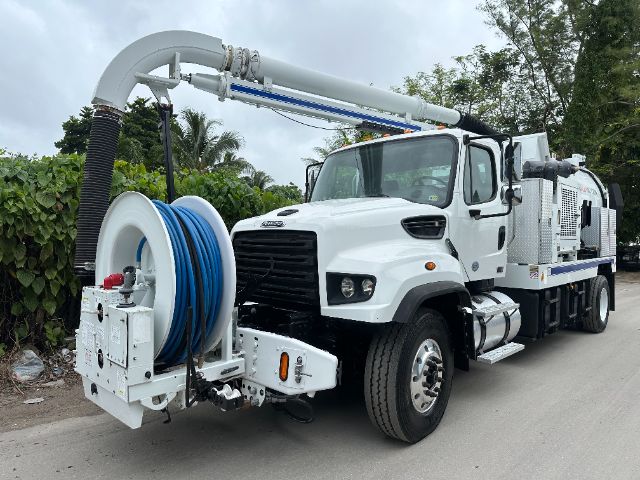
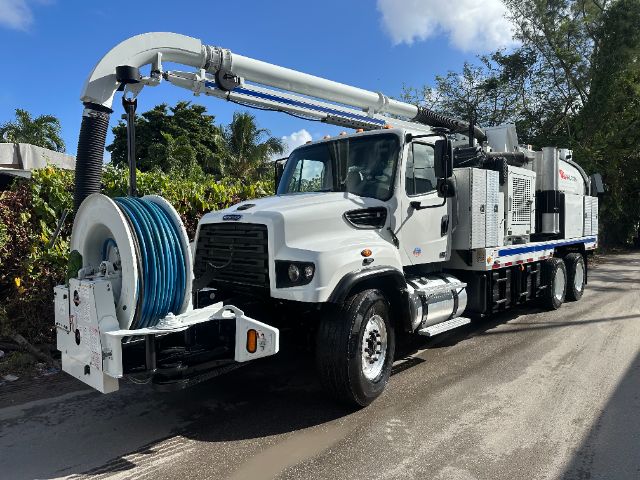
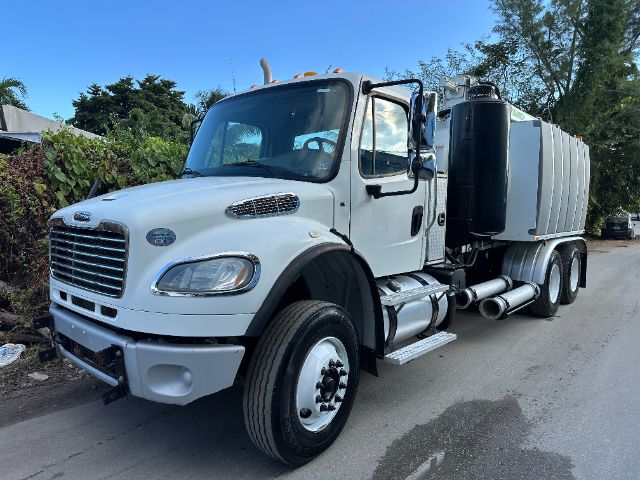
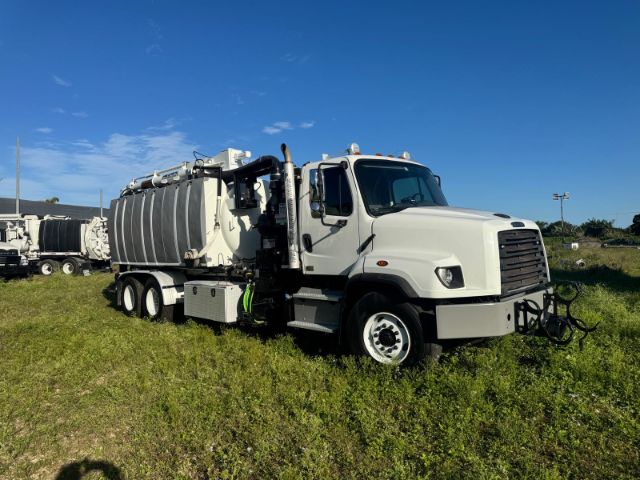
Selling a 2014 freightliner vacuum truck? List your 2014 freightliner vacuum truck for sale and reach thousands of commercial buyers.
2014 Freightliner Vacuum Trucks
On 2014 Freightliner vacuum trucks, the chassis side usually centers on a Cummins diesel, often an ISL 8.9L, paired with an automatic transmission and a severe-duty vocational frame. That combination works well for PTO-driven or pony-motor auxiliary equipment and supports the weight of a full debris body and freshwater load. Body and work-package specs vary widely. In this class, you will commonly see debris capacities from about 5 to 15 cubic yards, freshwater tanks from roughly 500 to 1,500 gallons, and jetting systems in the 40 to 80 GPM range at around 2,500 to 3,000 PSI. Vacuum systems may use fan or positive displacement blower setups, and that choice matters. Fan systems move high air volume and are often preferred for general municipal cleaning, while PD blowers can deliver stronger vacuum over longer hose runs and tougher material recovery jobs.
A buyer comparing 2014 Freightliner vacuum trucks should pay close attention to hours as much as miles. The vacuum package, water pump, blower, hose reels, hydraulic dump body, tailgate locks, and auxiliary engine can show wear independently of the chassis odometer. Ex-municipal trucks are common in this category, and they can be attractive because maintenance intervals are often documented, but idle time, PTO use, and operator habits still matter. It is smart to verify debris tank condition, signs of corrosion, door seal integrity, boom wear, pump output, blower performance, and whether the hydraulic system cycles correctly under load. Tire size, axle ratings, and GVWR also deserve a close look because payload and legal operating weight can change significantly once the water tank is full and the debris body is loaded.
Freightliner remains a popular platform in the vacuum truck market because parts support is broad and the SD chassis is well suited to municipal and contractor duty cycles. For a buyer focused on 2014 units, the decision usually comes down to matching debris capacity, water volume, and vacuum or jetting performance to the work route. A 5-yard to 10-yard combo truck can be a practical fit for city sewer departments and contractors working tighter streets, while a 15-yard setup makes more sense when disposal trips are costly and the truck is expected to stay productive for longer intervals between dumps. The best 2014 Freightliner vacuum truck is the one with a chassis rating and vacuum package that fit the job without carrying more system than the route can justify.
Frequently Asked Questions about 2014 Freightliner Vacuum Trucks
What should I look at first on a 2014 Freightliner vacuum truck: miles or hours?
Hours are usually just as important as miles, and in many cases more important. The chassis may have moderate road miles, but the real wear can be in the vacuum blower, water pump, PTO or pony motor, hose reels, hydraulics, and debris body components. A 2014 vacuum truck with low mileage but high equipment hours may need more immediate service than a higher-mile truck with documented maintenance and strong vacuum performance. Review both chassis service history and vacuum package records before judging value.
What is the difference between a vacuum truck and a vacuum jetter combo truck?
A straight vacuum truck is designed primarily to recover liquids, sludge, slurry, and debris through suction. A vacuum jetter combo truck adds a high-pressure water system that can break up blockages and clean sewer lines before or during material recovery. For municipal sewer cleaning and storm line work, a combo truck is usually the more versatile choice. For simple cleanup, tank service, potholing support, or material recovery where line jetting is not required, a straight vacuum truck may be the simpler and lighter option.
Are 2014 Freightliner 114SD vacuum trucks good for municipal work?
Yes. The 114SD is a common vocational chassis for municipal vacuum and jetter service because it offers strong frame capacity, good engine options, and compatibility with heavy auxiliary equipment. It is well suited for catch basin cleaning, sewer maintenance, culvert flushing, and general public works duty. Buyers should still confirm axle ratings, turning radius, body size, and water capacity against the specific route, especially if the truck will operate in dense urban streets or weight-restricted areas.
Which vacuum system is better on a 2014 Freightliner vacuum truck: fan or positive displacement blower?
It depends on the work. A fan system is often favored for high airflow and fast recovery in general municipal cleaning, leaf and basin work, and shorter hose runs. A positive displacement blower usually provides stronger vacuum over longer distances and can be better for heavier material, deeper pulls, and applications where suction consistency matters more than sheer air volume. The better setup is the one that matches your hose length, debris type, and daily production requirements.
What debris body and water tank sizes are common on 2014 Freightliner vacuum trucks?
In this category, buyers commonly see debris bodies from about 5 to 15 cubic yards and freshwater capacity from roughly 500 to 1,500 gallons. Smaller tanks and bodies are easier to maneuver and can make sense for urban routes or lighter work. Larger bodies reduce dump trips and improve productivity on long rural routes or high-volume municipal cleaning schedules, but they also add weight and may affect legal payload and access in tighter job sites.