
Hino Tow Trucks For Sale in Florida
Browse Hino tow trucks for sale in Florida, including rollback and carrier models with medium-duty specs for repossession, recovery, and transport.
Learn more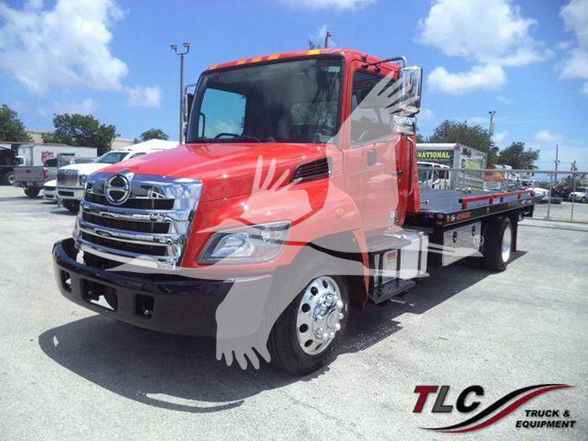
Have hino tow truck to sell? List it here to reach thousands of buyers.
About Hino Tow Trucks in Florida
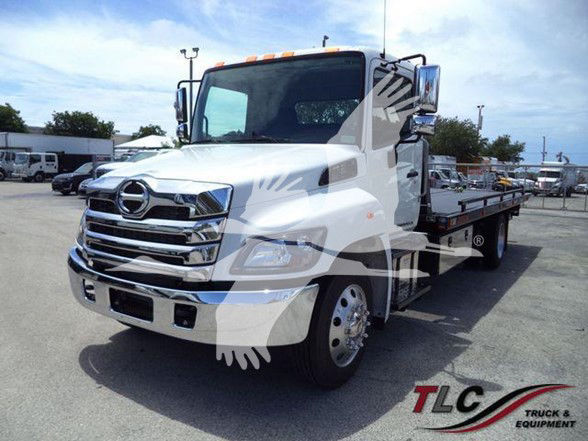
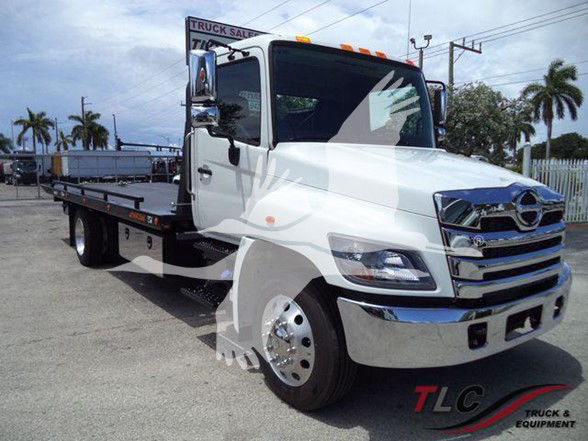
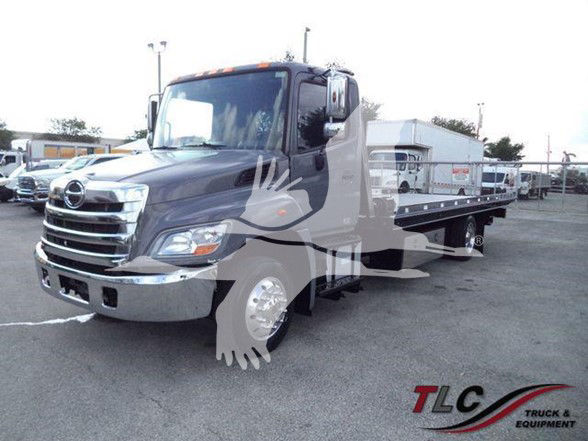
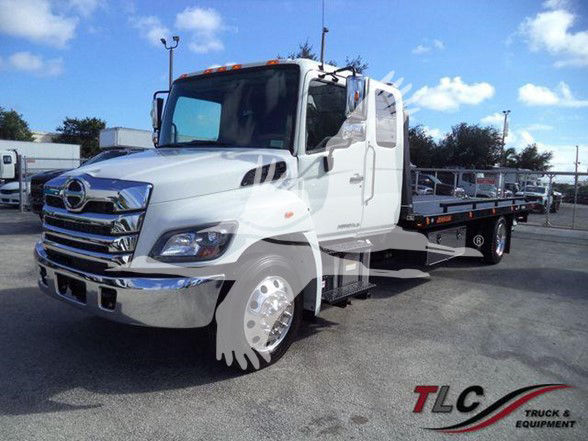
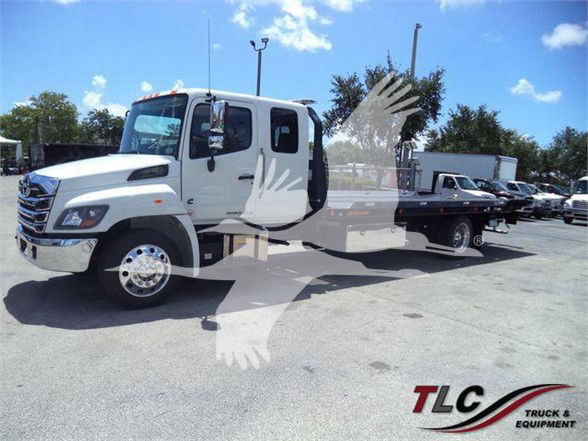
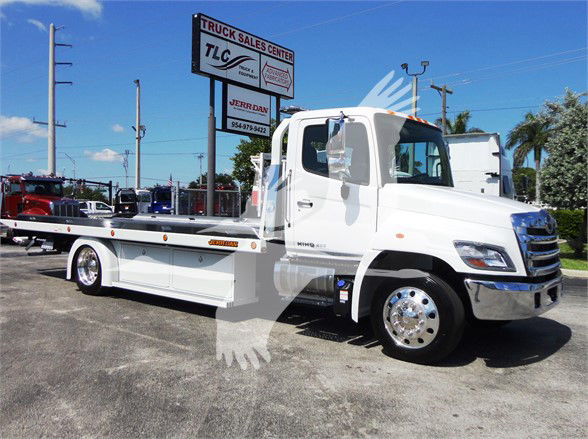
A lot of the buying decision comes down to chassis rating and deck setup. Common Hino tow truck configurations include the 25,500 to 26,000 GVWR range on models such as the 258ALP, 268A, and L6. Buyers will frequently see 21 foot to 22 foot beds, usually 102 inches wide, with low center of gravity or low-profile carrier designs that help reduce loading angle. Typical equipment includes an 8,000 lb winch, a 3,500 lb wheel lift, removable rails, toolbox packages, work lights, and L-arms or strap kits. That combination is well suited for passenger cars, pickups, crossovers, and many light-duty commercial units.
Powertrain details are worth checking closely because Hino tow trucks can appear with either Hino diesel engines on older units or Cummins diesel power on newer models, commonly paired with an Allison automatic. For towing work, that Allison combination is popular because it is easy to train drivers on and performs well in stop-and-go service. Air ride suspension, air brakes, 22.5 low-profile tires, and aluminum wheels are also common on better-equipped trucks. If the truck will spend long days on local calls, cab layout matters too. Extended cab versions give crews more room for straps, dollies, and daily gear, while standard cabs can be lighter and simpler.
Body brand and carrier geometry matter just as much as the badge on the hood. Jerr-Dan and Century are both common on Hino tow truck builds, and buyers should look at bed capacity, deck angle, stationary versus removable pylon design, winch specification, and storage layout. In a Florida market, corrosion resistance, lighting visibility, and reliable A/C are not small details. A clean rollback with the right wheel lift, proper tie-down equipment, and a deck height that loads low-clearance vehicles efficiently will usually do more for day-to-day revenue than extra chrome or appearance upgrades.
Frequently Asked Questions
What are Hino tow trucks most commonly used for?
Hino tow trucks are most commonly used as rollback carriers for passenger vehicle transport, light recovery, repossessions, dealer transfers, auction hauling, and roadside assistance. They are especially well suited for operators handling cars, SUVs, pickups, and small commercial vehicles rather than heavy-duty recovery. Most Hino tow truck listings in this segment are carrier or flatbed-style units, not rotators or large integrated wreckers.
What bed size is typical on a Hino rollback tow truck?
A typical Hino rollback tow truck in the medium-duty class will have a 21 foot or 22 foot carrier bed, often 102 inches wide. Many units use a low-profile or low center of gravity deck to improve loading angles for lower vehicles. That bed size works well for standard passenger vehicles and many light trucks while keeping the truck maneuverable in city work and tight recovery locations.
Is a Hino 26,000 GVWR tow truck enough for everyday towing work?
For many local towing businesses, a Hino chassis rated around 25,500 to 26,000 GVWR is a practical setup for everyday light-duty work. It gives enough chassis capacity for a rollback body, winch, wheel lift, tools, and the types of vehicles most commonly transported on routine service calls. Buyers still need to verify axle ratings, actual payload, body weight, and local operating requirements, but this GVWR range is a common target for car carrier service.
What should I look for on a used Hino tow truck?
On a used Hino tow truck, inspect both the chassis and the carrier body as separate systems. Engine and transmission history matter, but so do deck condition, cylinder performance, winch operation, wheel lift wear, frame integrity, hydraulic leaks, lighting, controls, and tie-down equipment. Check the bed floor for damage from repeated loading, inspect the subframe and mounting points, and confirm that the GVWR and body capacity still match the work you plan to do.
Are Hino tow trucks better as standard cab or extended cab models?
The better choice depends on how the truck will be used. A standard cab Hino tow truck can be simpler, lighter, and easier to package, which appeals to operators focused on basic local service. An extended cab adds interior room for chains, straps, tools, paperwork, and crew storage, which can improve day-to-day usability on busy routes. For owner-operators and small fleets doing frequent service calls, the extra cab space is often a real advantage.