
Hino Tow Trucks For Sale
Shop Hino tow trucks for sale, including rollback carriers and light-duty wreckers with diesel power, automatic transmissions, and air brakes.
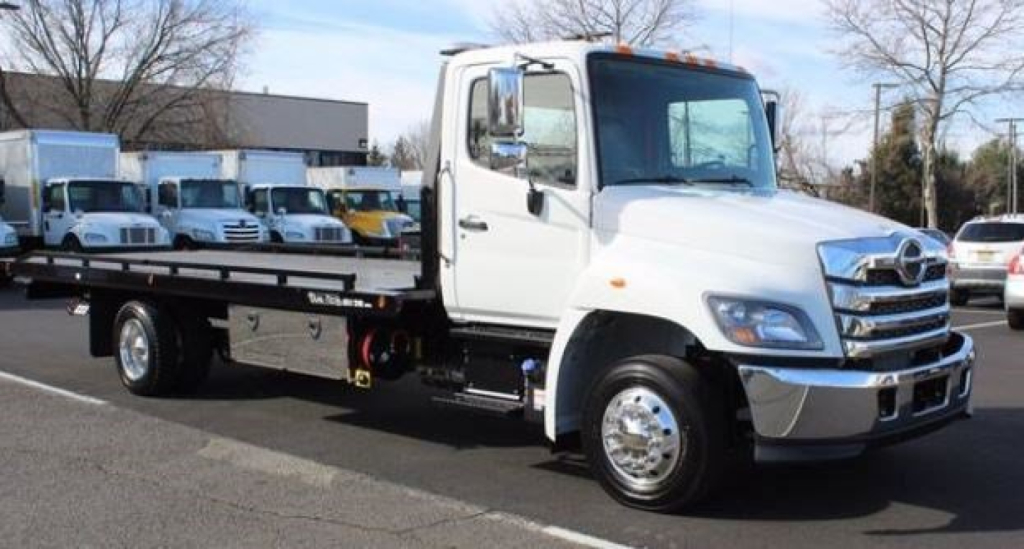
Selling a hino tow truck? List your hino tow truck for sale and reach thousands of commercial buyers.
Hino Tow Trucks
The chassis matters as much as the body. Many Hino tow trucks in this category run in the 25,500 to 26,000 GVWR range, which is a popular sweet spot for operators who want strong payload and towing capability without stepping into a heavier class than necessary. Typical specs include a diesel engine, Allison automatic transmission, 4x2 single-axle layout, air brakes, and air ride suspension. On earlier models you will often see Hino's 7.6L J08 engine, while newer L Series trucks may carry the Cummins 6.7L. Buyers should pay close attention to wheelbase, front axle capacity, rear axle rating, and suspension setup because those directly affect bed fitment, approach angle, ride quality, and how the truck handles with a vehicle on the deck.
Most Hino tow trucks for sale in this segment are equipped with a 21-foot or 22-foot steel rollback body from brands such as Jerr-Dan or Century. Common body specs include a 102-inch-wide deck, low-profile or XLP/LCG deck design, 6-ton rated carrier, 8,000-lb winch, and a 3,500-lb hydraulic wheel lift with L-arms. If your work involves lowered cars, all-wheel-drive vehicles, or frequent urban pickups, deck height and loading angle deserve extra scrutiny. An extra-low-profile carrier can reduce scraping risk and speed up loading. Toolbox size, removable rails, pylon style, lighting package, and wireless remote functions also affect day-to-day use more than many first-time buyers expect.
A good Hino tow truck buyer also looks beyond the headline specs and reviews service history, PTO and hydraulic performance, bed corrosion, winch condition, wheel-lift wear, and signs of frame stress around the body mounts. Air brake condition, tire size and load range, and cab equipment such as power mirrors, air ride seats, and visibility upgrades can make a noticeable difference for high-frequency recovery work. For operators covering local and regional routes, Hino tow trucks have long been valued for straightforward cab layouts, medium-duty drivability, and compatibility with well-known rollback body manufacturers. The best unit for the job usually comes down to matching the chassis rating and carrier configuration to the mix of passenger cars, pickups, crossovers, and light commercial vehicles you handle every week.
Frequently Asked Questions about Hino Tow Trucks
What are the most common Hino tow truck configurations?
The most common Hino tow truck configurations are rollback car carriers and light-duty wreckers built on Hino 258, 268, and L6 chassis. Many units use a 21-foot or 22-foot rollback deck with a wheel lift, which gives the operator flexibility to carry one vehicle on the bed and tow another when the body and local regulations allow. Single-axle 4x2 setups with diesel engines, Allison automatic transmissions, and air brakes are especially common in this category.
What GVWR range is typical for a Hino rollback tow truck?
A typical Hino rollback tow truck in this segment falls around 25,500 to 26,000 GVWR. That range is popular because it supports a medium-duty carrier body with enough chassis strength for daily towing and transport work while remaining practical for city and suburban operation. Actual usable capacity depends on the truck's curb weight, body design, axle ratings, wheel-lift equipment, and any tools or recovery gear carried onboard.
Why does deck design matter on a Hino tow truck?
Deck design affects loading angle, clearance, and the range of vehicles the truck can handle efficiently. Low-profile and extra-low-profile decks, often labeled XLP or LCG, are useful for sports cars, lowered vehicles, and cars with long front overhangs because they reduce the chance of bumper or underbody contact during loading. Deck width, rail style, pylon setup, and winch placement also influence loading speed, tie-down access, and day-to-day operator convenience.
What should buyers inspect on a used Hino tow truck?
A used Hino tow truck should be inspected as both a chassis and a recovery body. Buyers should check engine and transmission performance, brake system condition, suspension wear, tire condition, and any active fault codes. On the towing side, inspect hydraulic cylinders, hoses, PTO engagement, bed slides, winch operation, wheel-lift bushings, L-arms, controls, and frame mounting points. Rust on the deck, crossmembers, and toolbox areas can be especially important on trucks that worked in snowbelt or coastal regions.
Are Hino tow trucks good for local recovery and vehicle transport?
Hino tow trucks are well suited for local recovery, dealer transport, impound work, and general vehicle hauling because they combine medium-duty chassis durability with manageable cab size and turning characteristics. They are commonly chosen for operations moving passenger vehicles, pickups, SUVs, and light commercial units. The right fit depends on matching deck length, winch rating, wheel-lift capacity, and chassis GVWR to the type of calls the truck will handle most often.